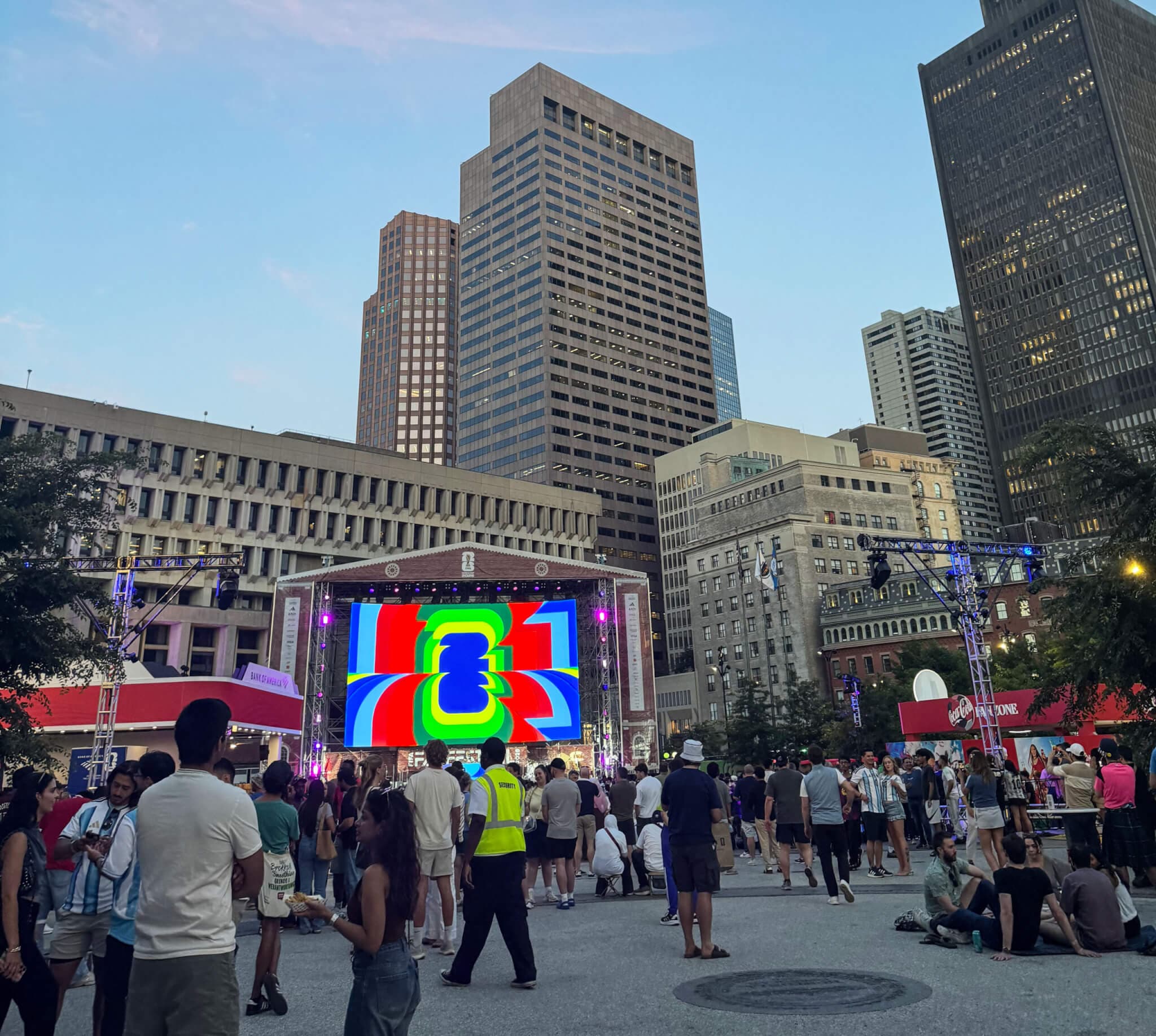
For months, the Massachusetts Office of Travel and Tourism (MOTT) has been hyping up 2026 as the summer for tourism and the local travel industry. The Commonwealth is organizing MA250 events to celebrate Massachusetts’s role in the American Revolution, preparing for Sail Boston, and, of course, hosting World Cup games.
Watching the technocratic pomp, bureaucratic maneuvering, and marshaling of resources needed to pull off these events raises something I’ve been wondering about: the conspicuous absence of arts and culture from Boston’s—and Massachusetts’s (or even the United States’)—tourism strategy, and, by extension, from Boston’s and the nation’s diplomatic strategy.
In many parts of the world, art and culture are pillars of tourism, diplomacy, national identity, and sometimes, as in Ukraine, national security. This has trade-offs. European museums and cultural institutions have been suffering from overtourism in recent years. The problem has prompted governments and museum leadership to get creative in implementing programs and policies that consider the roles museums play in educating local versus foreign visitors.
In Massachusetts, and particularly in Boston, local politicians like to say the city and state are leaders in the arts. But if Boston is failing to include arts institutions—institutions that are key to the city’s cultural life—in its tourism plans, doesn’t that make all the talk about Massachusetts being a leader in the arts just lip service?
In gearing up for the influx of summer visitors, the MOTT hosted the Governor’s Conference on Travel & Tourism in Danvers, Massachusetts, this March. Main-stage keynotes featured Governor Maura Healey; Joshua Friedlander, vice president of research at the U.S. Travel Association, a nonprofit representing the American travel and tourism industry; and Fred Dixon, president and CEO of Brand USA, the public-private partnership authorized by Congress to promote international travel to the US. The day’s presentations somehow managed to be both enlightening and disappointing, if not downright depressing.
The event kicked off with the governor taking pains to emphasize that the MA250 celebrations started with the commemoration of the Battles of Lexington and Concord, suggesting a desire to put daylight between the state’s celebrations and those organized by the Trump administration.
Friedlander presented granular data arguing that travel is a “core American export” and that travel-related inflation has remained in check. (Note that this event and Friedlander’s research occurred before the US’s June attacks on Iran and Spirit Airlines’ collapse sent airline ticket prices surging.) What was not included? The role of the arts in tourism to the US.
When asked during the audience Q&A how the arts and culture industry drives tourism in the US, Friedlander said this was not included in the U.S. Travel Association’s research. He even acknowledged the irony of excluding the arts from this research, given his past role as head of research at the Recording Industry Association of America. As if to underscore the slight, Dixon played Brand USA TV commercials showcasing its work to promote the US as a tourism destination. The commercials gave shout-outs to cowboy culture, Route 66, and Disneyland, but they made no mention of even one US museum. I started to wonder whether anyone trying to get Europeans to visit the US has ever met—much less spoken with—a single European person. If, as art critic Orit Gat has written, the World Cup creates a dynamic in which “nations perform themselves,” did the conference accidentally hold up a mirror to the US’s soft power—artistically bereft and content to rest on the laurels of twentieth-century infrastructure and twentieth-century corporate entertainment brands?
While the Museum of Fine Arts, Boston, and Louisa May Alcott’s Orchard House received shout-outs in a couple of sessions, none of Massachusetts’s marquee cultural institutions (the Boston Ballet, Boston Symphony Orchestra, Institute of Contemporary Art, Mass MoCA, or the MFA Boston) were included on the main stage. A rep from the MFA was in attendance, perhaps signaling the museum’s curiosity in MOTT’s 2026 tourism strategy. Notably, neither the MFA nor the ICA is marked as a site on the Boston 250 map, which the City and Bloomberg Philanthropies created to promote tourism to Boston’s historic sites. This is particularly odd since the MFA just opened a reinstallation of the Americas Wing in celebration of the 250th anniversary of the US.
It seems that Boston has discovered internationalism this summer, underscored by its whirlwind fling with the Tartan Army. The timing is ironic, as the City embraces a globalist view while transatlantic trust fractures and international alliances continue to collapse. Or perhaps the summer when the world came to Boston has come just in time, as diplomacy and international trust-building under the antagonisms of the Trump administration have increasingly shifted to subnational civic institutions.
As cities and states pick up the federal government’s diplomatic slack, try to revive their downtowns still suffering from post-Covid vacancies, and search for ways to plug gaps in faltering budgets, MA250 shows that the American political imaginary continues to overlook the value of culture in all its forms: as a social good, as a diplomatic tool, and even as a driver of tourism and the economy.
Local Headlines
Boston Art Review Makes an Appearance on WGBH’s Culture Show
Boston Art Review’s founder and editor in chief, Jameson Johnson, joined GBH Executive Arts Editor Jared Bowen on Wednesday’s Culture Show to talk about our Boston Art Radar map and our spring/summer 2026 edition of the magazine with a special section on Reconsidering the 250th. Listen / Watch Here.
MA Supreme Court Blocks Rent Control Vote
On Tuesday, the state’s highest court threw out a ballot question that would have enacted rent control. The bill would have repealed Massachusetts’s 1994 referendum that banned rent control and prohibited landlords from increasing rents by more than 5 percent or the rate of inflation per year, whichever was lower. Four landlords sued to keep the measure off the ballot. According to the court, the rent control question could not proceed because it would have exempted units in religious facilities.
Boston Budget Update
On June 24, the City Council approved the Mayor’s proposed change, technically a narrow veto, of the FY 2027 budget amendments package they passed on June 10. The change only affects the source of the funding at the Boston Transportation Department (BTD) that the City will use to partially reinstate some of the cut funding for popular programs like the Mayor’s Office of Arts and Culture. The $1.4 million, per the Mayor’s change will now come from BTD contractors’ budget rather than the agency’s personnel budget. The back and forth over just .02 percent of the Mayor’s FY 2027 budget concludes one of the most contentious city budget seasons in recent history, leaving the budget ready to be signed into law by the Mayor on July 1.
Lindeman Building Up For Sale
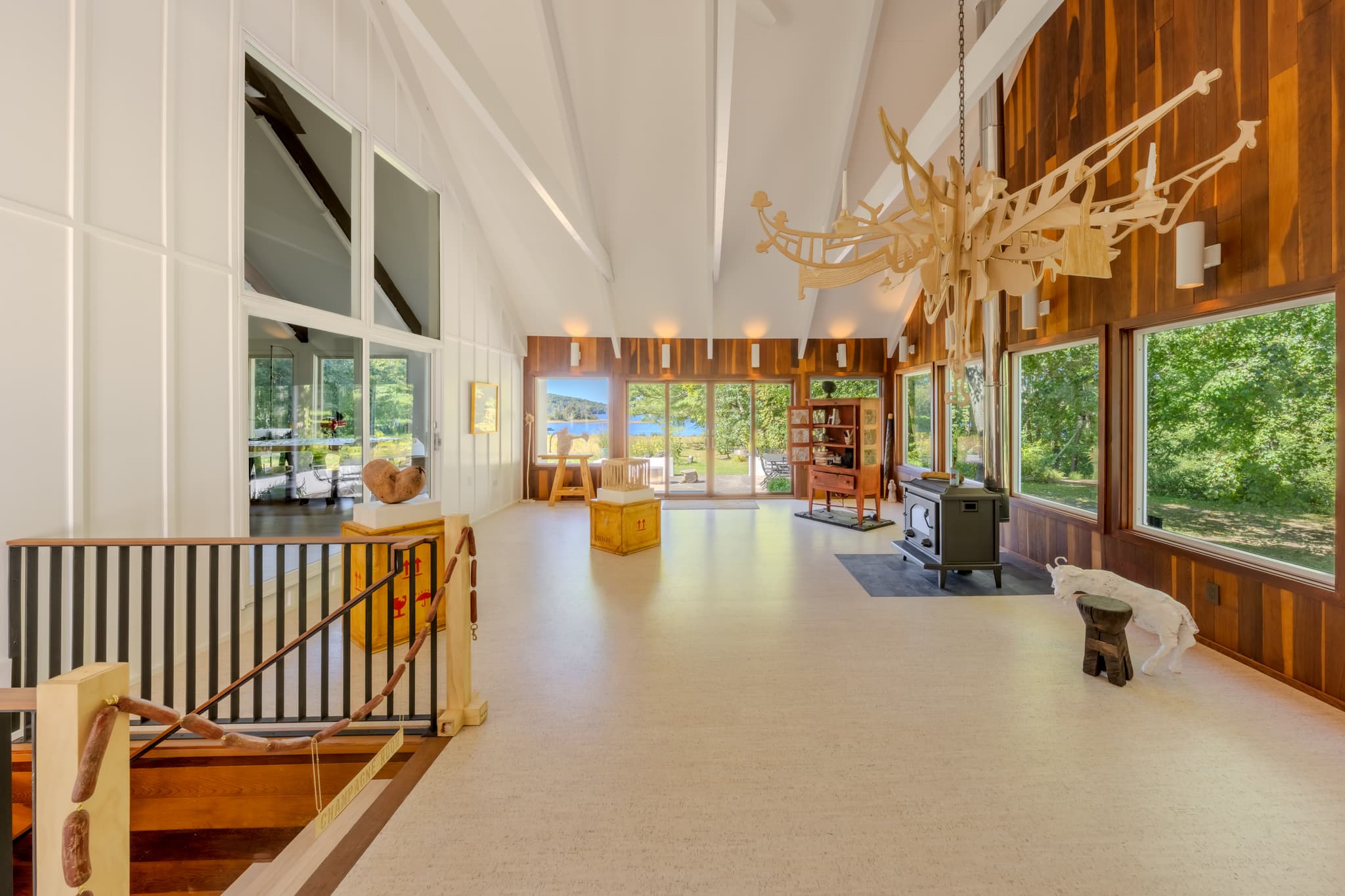
Home sweet Paul Rudolph brutalist home. Massachusetts has released an offering memorandum for the redevelopment of Boston’s 1960s Erich Lindemann and Charles F. Hurley Buildings. The state is seeking a development partner to transform the buildings into housing. The deal is not without complications, though. The roughly 6.5-acre site is home to the Department of Mental Health (DMH) and clinical treatment programs. Developers will need to reposition the property while also modernizing the DMH facilities—meaning the agency must be allowed to remain a tenant.
Somerville’s Central Street Studios is Preserved as an Affordable Artist Workspace!
The Arts & Business Council of Greater Boston has partnered with local artists and the Art Stays Here coalition to preserve Somerville’s Central Street Studios as artist studios. The project represents a cooperative effort among the City of Somerville, which contributed $600,000 toward the purchase of the studios; twenty-five artists who raised $65,000; and private donors. It’s an example of how Greater Boston cities are working with artists and advocates to halt the continued disappearance of arts spaces.
Free Thursdays at the Isabella Stewart Gardner
The Isabella Stewart Gardner Museum has announced a new Free Thursday Nights program. The program expands on the popular Free First Thursdays program, which had previously been limited to only one evening per month. People can visit the museum free of charge on Thursdays from 5–9 p.m. Advance registration is recommended.
National Headlines
The Department of Education’s Only Art Education Grant May Be Eliminated
Arts budgets aren’t just under threat in Boston. Hyperallergic reports that the House Appropriations Committee has approved a budget proposal that would cut the Department of Education’s (DE) budget by $8 billion, part of the Trump administration’s plan to shutter the agency. Americans for the Arts has recommended funding the arts education grant program, which could be defunded under the proposal, with a $40 million appropriation.
While the program and the DE come under threat, the approval of this appropriations plan is not, per se, a fait accompli. The Senate still has to file its budget, and then both budgets need to be reconciled before being signed into law.
Senate and House Pass Major Bipartisan Housing Law
The 21st Century Road to Housing Act, cosponsored by Massachusetts Senator Elizabeth Warren, has passed the Senate and the House. The bill, intended to address the housing affordability crisis, includes several provisions aimed at promoting new housing construction and, crucially, bans corporate investors who already own at least 350 houses from purchasing more single-family homes to rent out. The fast-tracking of the bill underscores that this is a key piece of legislation as both sides of the aisle head into the midterms. On Wednesday afternoon, President Trump canceled the signing of the bill and instead demanded that Congress first pass unrelated legislation to restrict online voting.
New SEC Rules
In 1955, the Securities and Exchange Commission (SEC) began requiring publicly listed companies to file earnings reports semiannually. In 1970, it began requiring companies to file quarterly earnings reports. These measures were intended to increase transparency for investors. In 2018, during his first term, President Trump began suggesting that these requirements be rolled back and that companies report earnings only every six months. Now the SEC is taking heed, proposing sweeping changes to several reporting and listing requirements, including changing filing requirements from every three months to every six months. The change is provoking significant debate over how to balance transparency with what lobbyists such as the U.S. Chamber of Commerce call overly burdensome regulations that prevent companies from listing on US stock exchanges. What’s at stake is keeping investors, including those with an individual retirement account, 401(k), or index fund, informed about companies’ standing.
On the Cusp of Leadership, Mid-Career Women Dream of Ditching the Arts
A new report by Artnet and the Association of Women in the Arts has found that nearly half of mid-career women are considering leaving the arts sector within the next five years. A survey of more than 2,000 women cites low pay, lack of transparency in decision-making, and the need for mentorship and improved tools to reduce administrative burdens as reasons to leave the sector. The talent brain drain and its causes amount to a structural talent pipeline crisis that, for many, is hard not to relate to.
Art Galleries Are Not OK
Former Art Basel Global Director Marc Spiegler penned an op-ed for The New York Times about the unsustainability of the contemporary art world’s economics. The art market chieftain who, in many ways, built today’s globalized art market, performed mental gymnastics in arguing for a return to a focus on and support for the local arts ecosystem. The piece is worth a read, even if it ultimately provoked a clap back from Barbara Pollack in Hyperallergic.
Barack Obama Presidential Center Opens
The new Barack Obama Presidential Center, which features a library and museum, opened this month. The approximately $850 million Chicago project is operated by the Obama Foundation, rather than the National Archives and Records Administration (NARA), which runs most presidential libraries. The historic management split—NARA will still manage Obama’s presidential archive—is prompting critics to warn of a troubling precedent of presidential libraries being distanced from accountability measures and historical debate. In keeping with the Obamas’ legacy and commitment to the arts, the campus features permanent works by 30 contemporary artists, including Marie Watt, Mark Bradford, Martin Puryear, and Nick Cave. The collection is curated by Virginia Shore, former chief curator of the State Department’s Art in Embassies program.
Iranian Artist Sentenced to 74 Lashes for Performing Without a Hijab
Iranian singer Parastoo Ahmadi was sentenced by an Iranian court to seventy-four lashes, and she and her band will be barred from performing or leaving the country for two years after she performed Iranian folk songs while wearing a black dress and no hijab. The crackdown on her personal and artistic freedoms comes amid ongoing ceasefire negotiations and signals continuity in the cultural policies implemented by Ayatollah Ali Khamenei’s government.
To Celebrate 50 Years of Democracy, Barcelona Gets Doused in Poetry
Chilean artist collective Casagrande celebrated fifty years since the end of Spain’s dictatorship by dropping 100,000 poems about freedom from a helicopter over the Barcelona Cathedral.
Opportunities
The City of Cambridge Is Soliciting Proposals
The Cambridge Community Preservation Act Committee is soliciting project proposals from organizations seeking Community Preservation Act funds. These funds can be used for affordable housing, open space, historic restoration projects, and recreation.