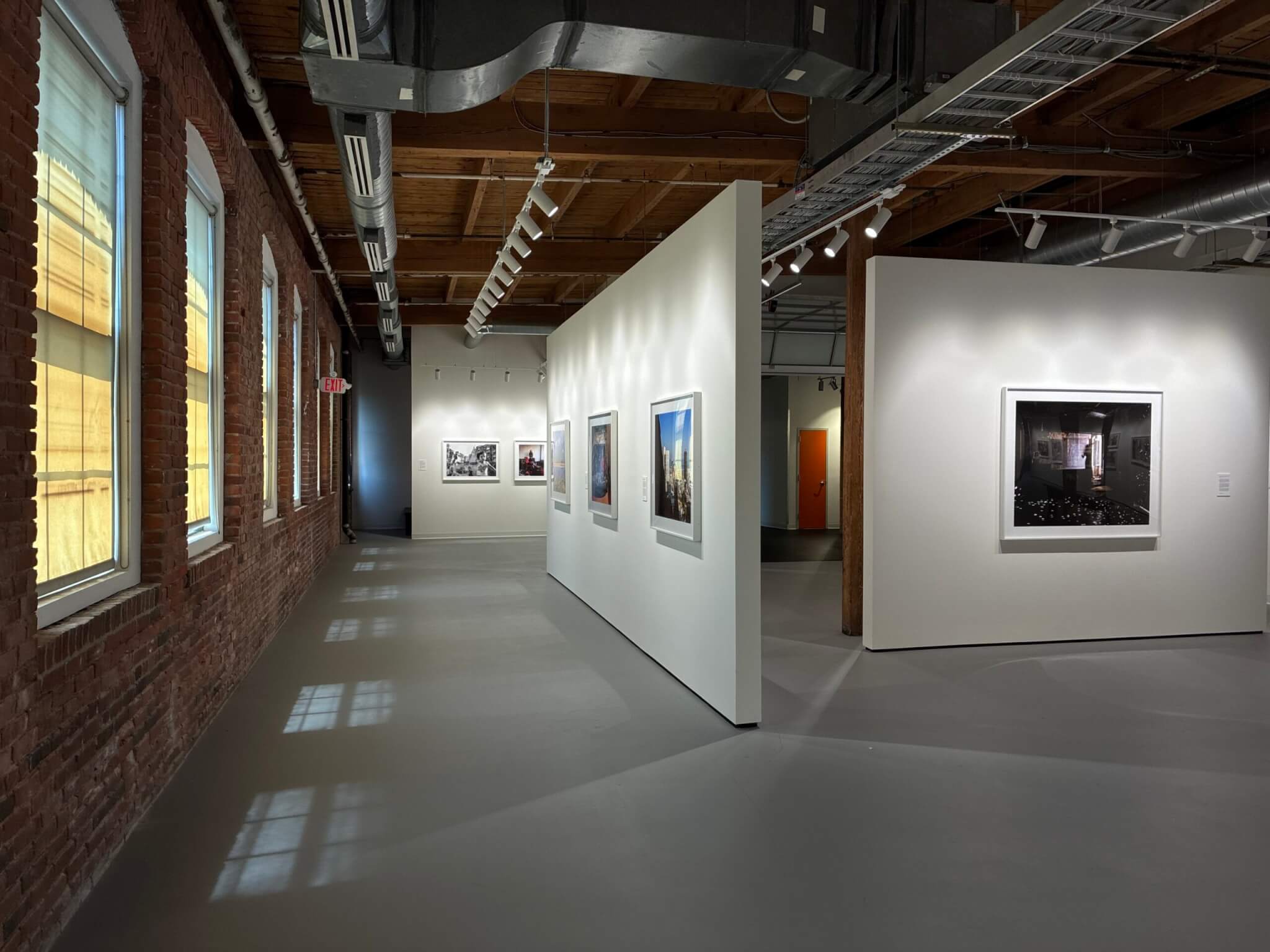
From its inception in 1806, the African Meeting House was the center of Black Bostonian life: It served as the African Baptist Church and housed cultural registers from day-to-day working to organizing and educating. The discussions held and sermons delivered within the building disseminated Black thought on abolition. The sound of the voices of brave, determined abolitionists carried through its interior without end. The building now operates as part of the Museum of African American History (MAAH) and on February 28, artist Jonathan González’s suite for a minor meeting, a site-specific performance and sonic work, brought its architecture to life. The performance was commissioned by MAAH to accompany the artist’s print series by the same name, now on view in “Magical Thinking, of Systems and Beliefs” at Tufts University Art Galleries (TUAG).
At its core, the weaving forms of the performance echoed the African Meeting House’s longstanding multidisciplinary ethos. To be present at the site was to engage with its actionable possibilities. It involved citing and sighting. Indeed, González cited many sources of Black art-making and the abolitionist movement, including figures like Sarah Grimké and Frederick Douglass, who were shaped by Boston’s Black community. Black art served as a reflection of the commingling of sonic and choreographic forms, allowing the varied artistic mediums to extend across one another in what González described as a cacophony. González attempted to make history legible through illegibility—using sound, speech, and movement—to access historically inaccessible memories without relying on an overwhelming physical presence. Their choreography acknowledged the site/cite/sight as confluent mechanisms of facing history.
Three days earlier, the panel “Surfacing Site” at TUAG brought González in conversation with MAAH’s Chief Curator and Director of Collections, Angela T. Tate, and playwright Phillip Howze to discuss the performance. González shared that their research for the piece began with the compositions of William Grant Still, who was involved with the African Meeting House and who Gonzaléz considers one of the earliest renowned African American composers. Still’s Suite for Violin and Piano comprised three parts, with each one honoring the work of a Black sculptor from the Harlem Renaissance: Suite: I. Suggested by Richmond Barthé, “African Dancer”; Suite: II. Suggested by Sargent Johnson, “Mother and Child”; and Suite: III. Suggested by Augusta Savage, “Gamin.” They noted that Still was “trying to think about canonizing these Black visual artists who were struggling at the time.” González used these same titles to structure their own suite.
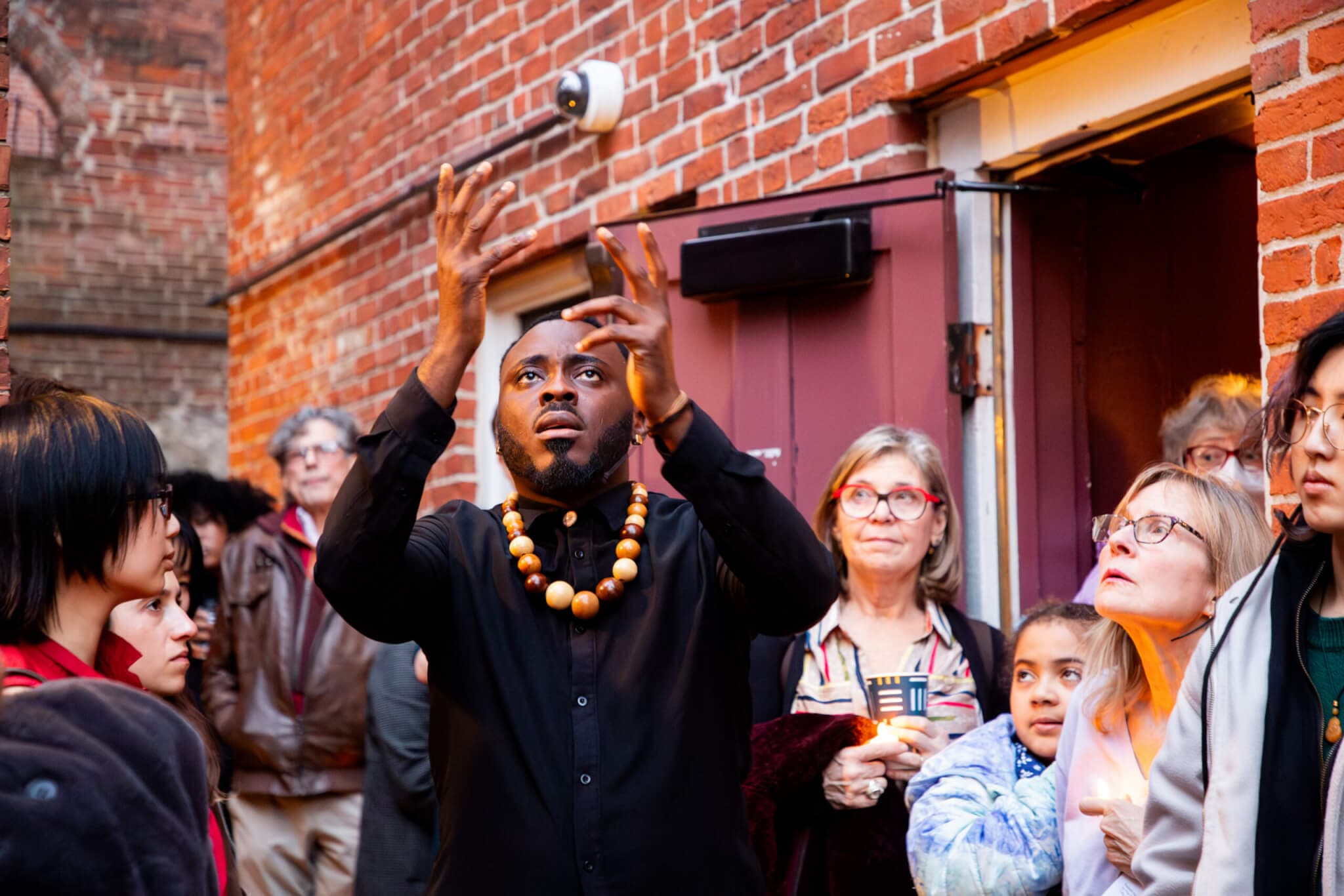
Performance view of Jonathan González with Ogechi Okoye, Ifeanyi Epum, Valentine Umeh, suite for a minor meeting, February 28, 2026, African Meeting House, Museum of African American History and Tufts University Art Galleries. Photo by Cat Lent.
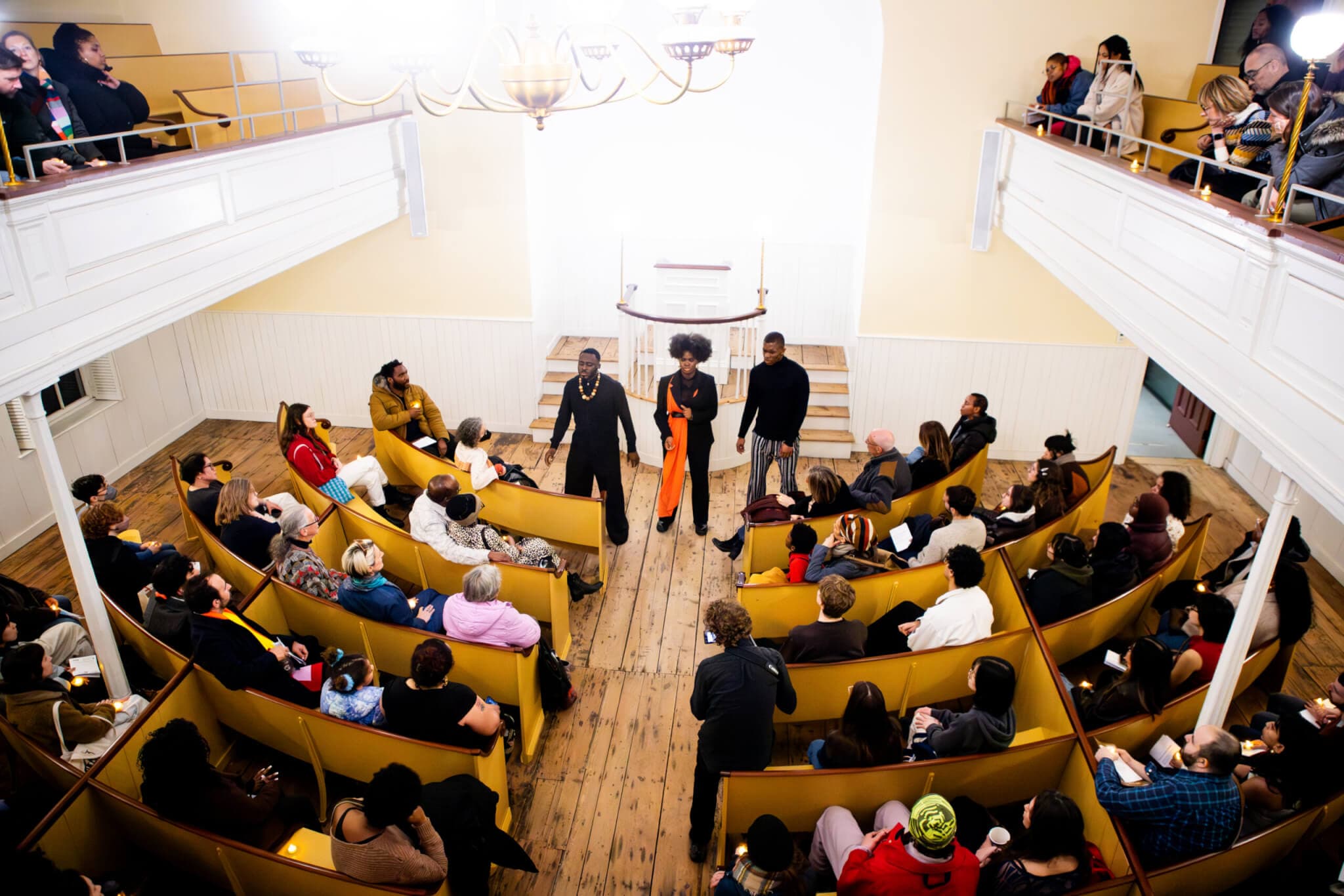
Performers Ifeanyi Epum, Ogechi Okoye, and Valentine Umeh offered their bodies as primary instruments for a performance in three parts and in three areas of the site—Gamin, outside near Joy Street, Mother and Child, inside a spacious room on the building’s ground floor, and African Dancer, upstairs in the sanctuary.
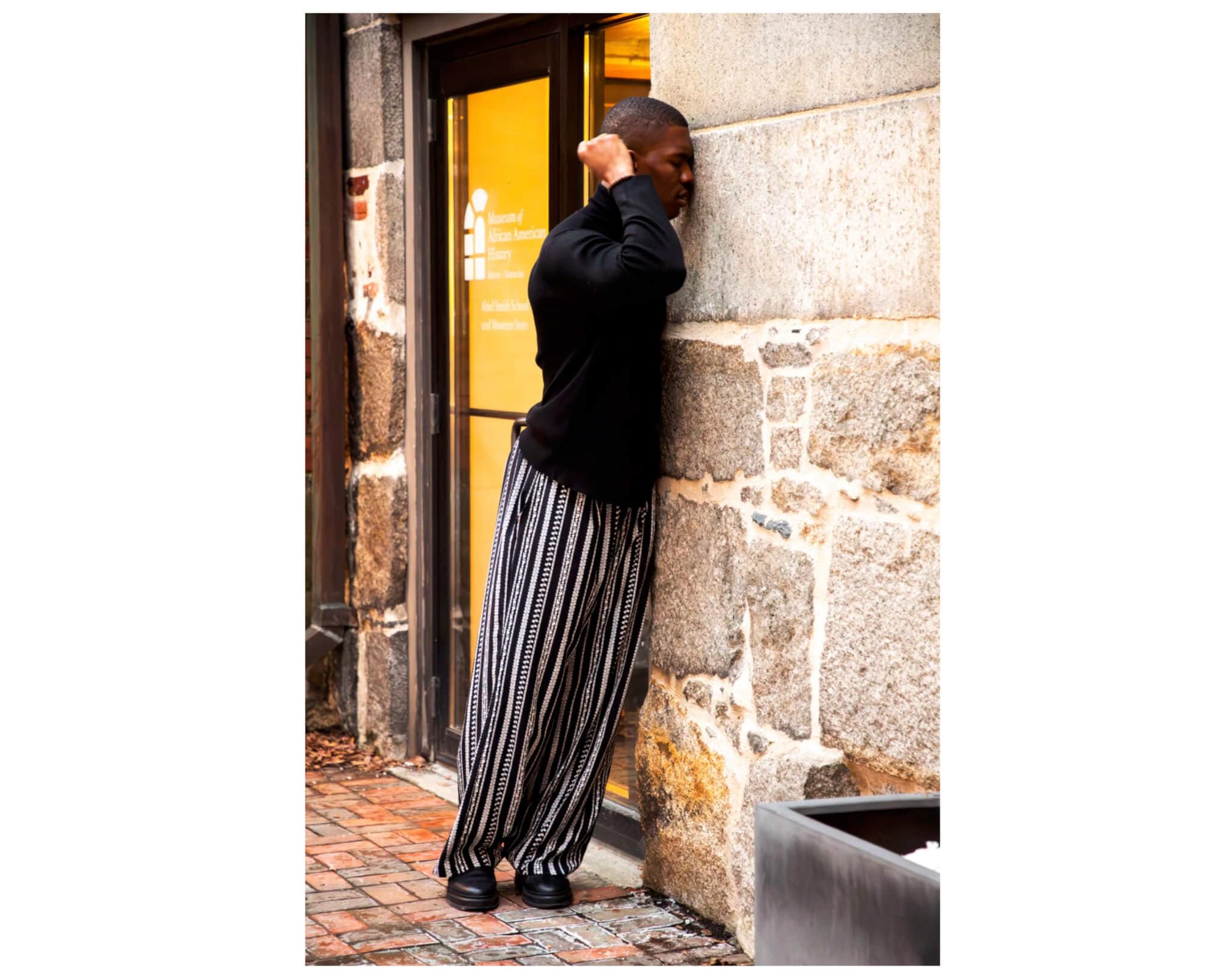
At the start of Gamin, members of the audience could rarely see all three performers at once around the edges of the African Meeting House. Each performer stood at a different position, distanced from the others, performing independent choreography while exploring the surrounding streets. Audience members could catch varying glimpses of each performer or opt to focus their attention on one for the duration of the performance. I focused my eyes on Umeh, the first person in my line of sight, as he solemnly traced his fingers across the building’s exterior, pressing his ear to the stone wall and pounding on it with a tight fist. At times, he moved suddenly, as if in fear—what was he anticipating? It seemed as if phantoms were ushering him to listen to the building itself. I could not see Epum and Okoye, but I could hear the distant sliding and stomping of their feet on the pavement. At the TUAG panel, González mentioned that the performers referenced the story of Mrs. Dorsey, a formerly enslaved woman who took shelter in the house. The title of Augusta Savage’s Gamin is a French term for a streetwise child, or “street urchin.” To be streetwise was to be constantly alert, cautious of one’s surroundings. Umeh’s frantic movements, then, performed Mrs. Dorsey’s own necessary street smarts to evade being captured.
Performance view of Jonathan González with Ogechi Okoye, Ifeanyi Epum, Valentine Umeh, suite for a minor meeting, February 28, 2026, African Meeting House, Museum of African American History and Tufts University Art Galleries. Photo by Cat Lent.
The three performers finally came together at the end of Gamin, moving the performance to the main walkway outside of the building’s entrance. They moved varyingly in unison and in response to each other through breaths, grunts, claps, and laborious dance. As we transitioned inside and through hallways for the second part of the performance, Mother and Child, they sang toward the walls and columns as if they were addressing the building directly. Artist Sargent Johnson’s numerous works depicting a mother embracing a small child were potent here as the performers began distinct operatic harmonies in an arrangement of Roland Hayes’s composition of the African American spiritual “Lit’l Boy.” The song narrativizes the somber story of a lost young boy who could very well be the subject of Johnson’s works.
We proceeded to the sanctuary for African Dancer and the performers’ volume rose as we ascended the stairs. With heads thrown back and eyes closed, the performers mirrored Richmond Barthé’s sculpture of the same name, featuring a figure in the ecstasy of dance. Their body movements drew upon traditions of West African dance that were popularized in the United States by Sierra Leonean performer Asadata Dafora. Rather than singing, they used their voices to imitate the mechanical sounds of the trains that were used by Black people migrating north to Boston seeking refuge from the violence of the Ku Klux Klan in the Delta South.
González, Epum, Okoye, and Umeh activated the Museum of African American History through embodied scholarship to engage with its history. Through seeing and citing those who came before them, González unearthed the import of the African Meeting House as a site of both refuge and activism. suite for a minor meeting was minor, subtle in tone, as it unveiled the nuances of everyday life in the African Meeting House.