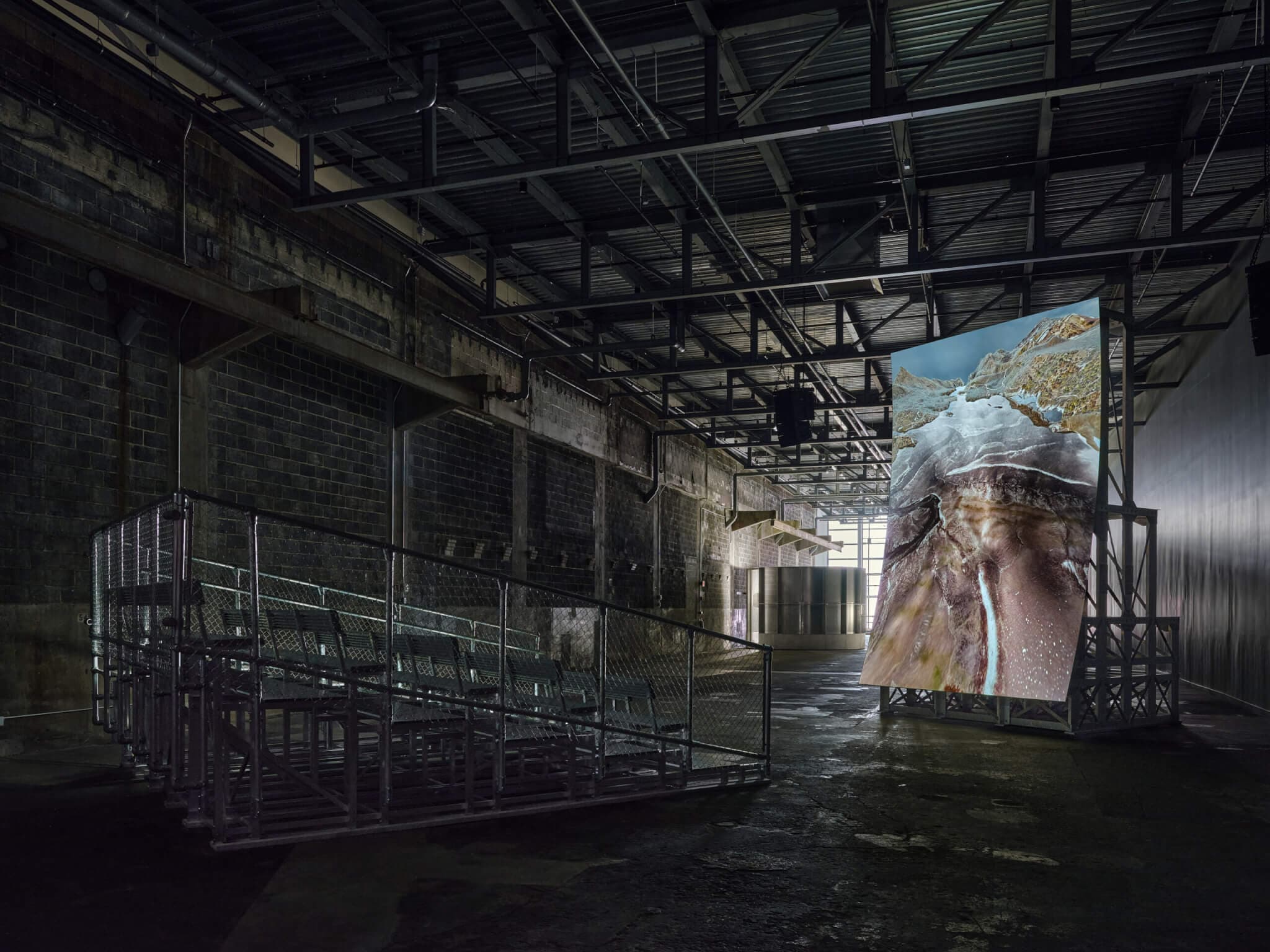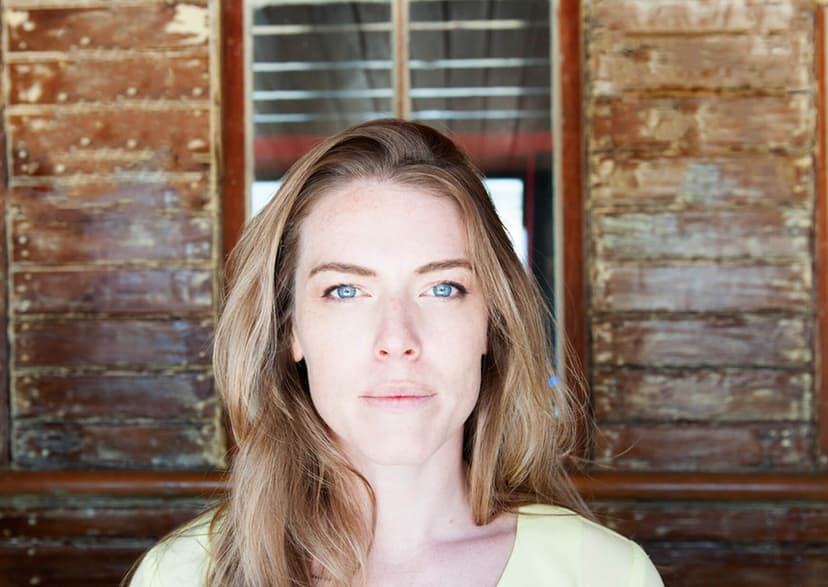
On Thursday night at a public talk presenting her work at the Harvard Art Lab, Cuban dissident performance artist Tania Bruguera said about the value of public institutions, “under dictatorship the rules change.” By this she meant that in times of crisis, even flawed public institutions—that in more stable times we might interrogate—need to be protected and invested in as places that allow for freedom of speech and expression.
Her words have been sitting with me as it’s only the second issue of ArtWonk and already the challenge of producing a bi-weekly column is revealing. Even after years of witnessing relentless brutality unleashed on Palestine, the news of the US bombing of the girls school in Iran, killing over 175 children and teachers as well as the US-led bombing in Isfahan damaging world heritage cultural sites, has left me sick, paralyzed, and drawing a blank. What is our role as citizens of a country that bombs civilians—children—and causes the destruction of human cultural history in a clearly illegal war? While our senators play unimaginative politics and demand votes seeking (and failing) to limit executive overreach with the intent to stop this war, it’s pretty clear as the conflict tips regional it’s going to be a challenge to get the kinetic toothpaste back in the proverbial tube. Whither local art and art journalism indeed.
Here at home, two art policy events were held in Greater Boston: Creative Sector Day at the Massachusetts State House and the public launch of the results of local planning agency MAPC’s two year long (2022–2024) Making Space for Art study mapping cultural spaces in Boston, Cambridge and Somerville, but we’ll save diving into this one for another week.
With standing room only in the State House great hall, MASSCreative Executive Director Emily Ruddock kicked off roughly an hour-and-a-half-long formal agenda of talks including addresses by the Legislature’s Tourism, Arts, and Culture Committee co-Chairs Senator Paul Mark and Representative Sean Garballey as well as by David T. Slatery, acting executive director of the Mass Cultural Council.
For a sector whose bread and butter is event production and is quick to make claims about the hallmark of its societal value being the power of emoting and bringing people together in shared experience, the shared experience and emotion of the day was staied and the call to action landed a bit vague —itself an achievement given the existential threats the arts currently face from the combination of Trump administration targeting arts institutions, the cost of living crisis, and now an expanding war. With nonprofit policy-adjacent outfits like New England Foundation for the Arts (NEFA) and independent arts organizations tabling at the event, BAR included, none of MA’s marquee arts institutions (think ICA, MFA, BSO etc.) lent their starwattage pizzazz to the effort.
For now, MASSCreative’s policy agenda is focused on passing the proposed PLACE and Creative Space acts. This is a deliberate strategy in response to MA’s legislature being on something of a cruise control of leftist gridlock. Despite having a democrat supermajority, it’s been ranked in recent years the least productive in the US by DC think tank Fiscal Note. Massachusetts was called “arguably the least transparent state government in the United States” by Forbes. The situation is so bad it prompted the Boston Globe to take a singing puppet to Beacon Hill to lament the legislature’s expensive and habitually sluggish response to Freedom of Information Act (FOIA) requests.
Brian Boyles, Executive Director of Mass Humanities wrapped the day by invoking John Lewis saying “democracy is not a state, it’s an act.” His appeal: Call your senators. Call your reps. Tell them who your audience is, your budget, and who you work with.
Uncomplicated as it sounds, elected representatives’ offices tally calls and emails. These tallies can impact how they vote.
The Headlines This Week
Praise Shadows Art Gallery Moves to Boston
In a coup for the Mayor’s Office of Arts and Culture and people who care about art and happen to live in Boston, Praise Shadows relocated to Downtown Boston after five years in Brookline. One of the few, if not the only, area contemporary art galleries to participate in the international fair circuit, the move to a 2,000 sq. ft. space is a bold risk on an area outside of the Newbury and SoWA hubs. The new space is situated at the intersection of Chinatown, the Leather District, and the Financial District. It was inaugurated by a celebratory crowd with the opening of the group exhibition “Summoning” on Friday night.
Law Suit Against the Alleges NEH and DOGE violated First and Fourteenth Amendments UsingChat-GPT
A new lawsuit by the American Council of Learned Societies, the Authors Guild, the American Historical Association, and the Modern Language Association alleges that two Department of Government Efficiency (DOGE) entered the National Endowment of the Humanities and “used ChatGPT to identify grants associated with a disfavored and supposedly dangerous viewpoint: promoting “DEI.” The lawsuit was filed Friday in the United States District Court for the Southern District of New York and alleges violation of the first amendment for violating freedom of speech and freedom of expression, treating grantees differently based on their view points and that by cancelling the grants the NEH acted outside of its legal authority.
Ché Anderson to Lead Search for Mass Cultural Council’s Next ED
Governor Healey named Ché Anderson as council Chair. The appointment tasks the two-term Mass Cultural Council member and Worcester County representative, with leading the search for the state government art agency’s search for its next executive director, following the departure of Michael J. Bobbitt.
The Mass Cultural Council is governed by a nineteen-person board. Council members are citizens working in the arts and are appointed by the governor. They serve staggered three-year terms. Anderson has served on the Council since being appointed by former Governor Charlie Baker in 2021. In addition to his service on the Council, Anderson is the assistant vice chancellor for city and community relations at UMass Medical School and co-founding director of POW! WOW! Worcester, a public art and placemaking festival. Read the announcement.
Art Market Reports Just Dropped
Just in time for the pre-Basel, not-shopping shopping at the Venice Biennale, two new art market reports have dropped and the results are tepid. Bank of America, in partnership with ArtTactic, and UBS Global, in partnership with Art Basel and Arts Economics, both released their reports this week. BofA’s report, focused solely on the US market, found that although auction sales at the end of 2025 had risen 23 percent over 2024 figures, the increase was driven by blue-chip works, consignments from major estate sales, and the role of financial guarantees in the auction system. This points to a cautious market in which collectors are flocking to safety over speculation on new and emerging artists’ work. It also suggests they are holding works longer to protect returns, as opposed to the pandemic practice of short-term flipping.
The globally focused UBS/Art Basel report had roughly similar findings. Public auction results were up 9 percent, with greater activity in works priced over $10 million. The report also suggests that although gallery closings are dominating headlines, new gallery openings are eclipsing closings and that women artists are progressing toward parity in representation by galleries, now representing 45 percent of dealer rosters. The report calls out geopolitical shifts destabilizing markets as the main headwind and expresses uncertainty about the art market regaining “sustainable levels of activity.” Searching for signs of hope is where the report turns more speculative. It cites easing monetary policy, innovation in AI, and the “Great Wealth Transfer” as tailwinds without drilling down into the structural realities—or likelihoods—of each. The report was no doubt produced months before the US-Israeli strikes on Iran, nevertheless it is co-sponsored by the most important global art fair franchise, making it hard to interpret the optimism of their analysis as much more than self-invested magical thinking.
World’s Smallest Violin?: Firing of BSO Director Prompts Finger Pointing and Online Performance of Musician Protest
Crediting a “not aligned on future vision,” on Friday, March 6, Boston Symphony Orchestra President Chad Smith and board announced they will not be renewing Director Andris Nelsons’s contract. In response, a little-used Facebook page BSOMusicians, whose previous post dates to 2023, posted in “support of our beloved Music Director Andris Nelsons,” saying that they “strongly oppose the decision by the Board of Trustees.” The New York Times’ coverage cites Nelsons’s significant other commitments—including another music directorship position in Leipzig, Germany, and frequent global guest appearances, which have earned him a ranking of either the world’s first or second busiest conductor since 2017 by classical music website Bachtrack—as possible reasons. A Boston Globe op-ed credits the BSO shake-up to a broader cultural shift in Boston, reflected in Smith’s leadership, from “a once-tight community dominated by old Yankee sensibilities morphed over the past 40 years into a looser conglomeration of venture capitalists and private equity moguls.”
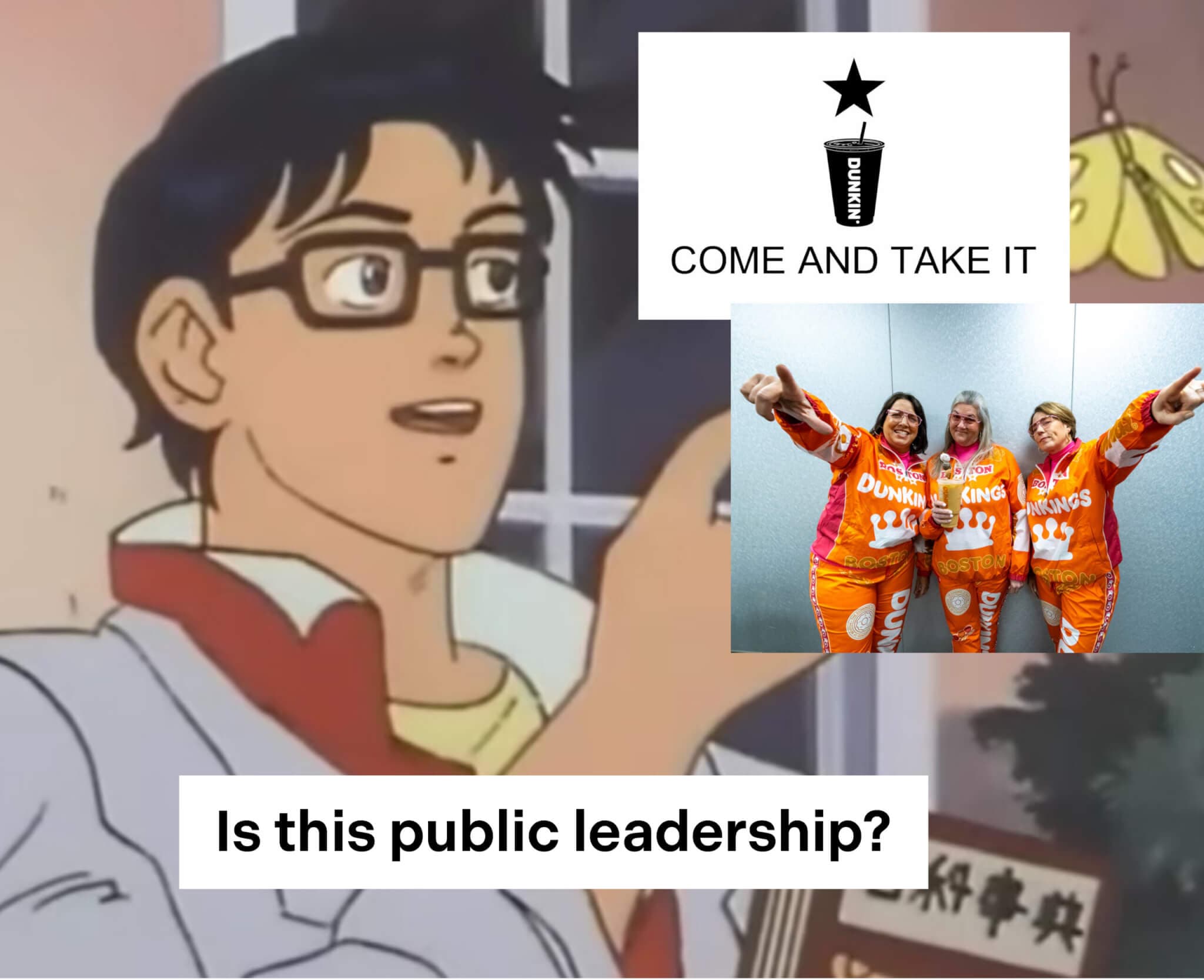
Governor Healey “Dunks” on RFK in MA Culture Social Media Meme War
Boston’s preferred mode of year-round-iced-caffeine intake, Dunkin’ Donuts (and Starbucks) came under fire by US Health Secretary Robert F. Kennedy, for its sugar and calorie content at his “real Food Rally” in Texas on February 26. Healey shot back with a designed-for-the-interwebs social media meme response and a video coming to the defense of what might be the state’s “stickiest” cultural export since the American Revolution.
Resources / Calls to Action
Mass Cultural Council Launches Virtual Convenings for the Creative Space Development Network Accelerator
In partnership with the Arts Stays Here Coalition, Mass Cultural Council is launching a series of panels and workshops to help arts professionals develop the policy and business skills needed to maintain and increase access to space.
Virtual working sessions will be held on the last Friday of each month at noon, kicking off on Friday, March 27, with a workshop about organizing and advocacy. Session topics have been announced through June. Read the full details.
City of Cambridge Hearing to Rezone for Arts
The City of Cambridge will host a hearing to receive public testimony on the city’s efforts to rezone Central Square as a cultural district. The stated objectives of the zoning changes are to preserve affordability, support small businesses through updated zoning policies, and ensure cultural uses remain viable businesses in the city’s expensive real estate market and high-pressure small business environment. Read more and register to attend on March 24, 2026 at 3:00 pm.