We’re finally settling into spring, and a slate of exhibitions across New England is taking up questions of form, memory, and revision. In Rockland, Sachiko Akiyama conjures a world of her own through sculptural environments anchored by the sea. At the New Bedford Art Museum, contemporary Mexican artists engage with activism aesthetics. In Cambridge, the List Center digs into artistic labor with a heady group show. And at local galleries, solo exhibitions by Meg Rotzel and Rania Matar are grounded in memory. This is a short window of shows either opening or closing within the next six weeks from today. See you out there.
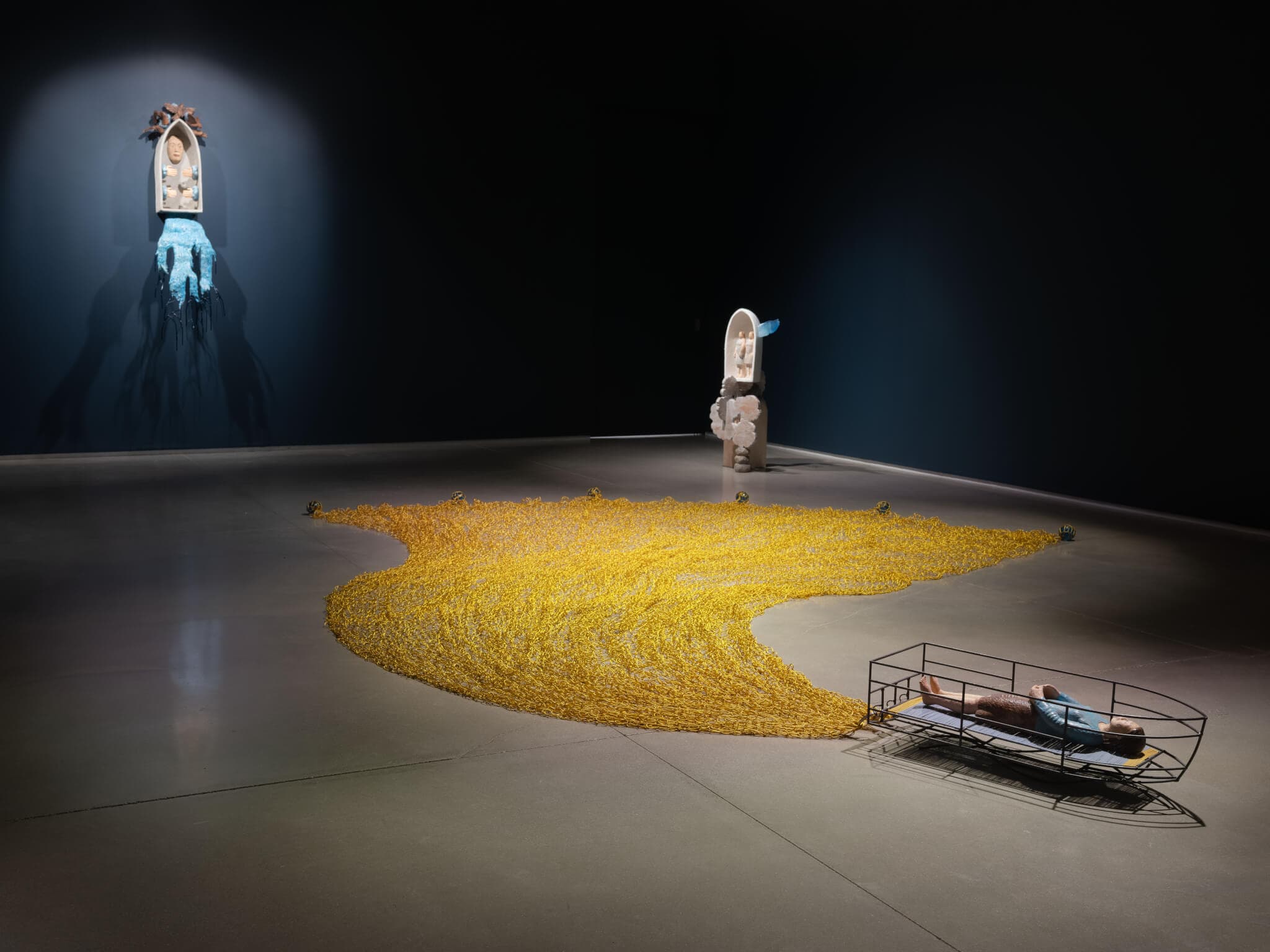
Installation view, “Sachiko Akiyama: You Were Always the Ocean,” Center for Maine Contemporary Art, 2026. Courtesy of the artist and the Center for Maine Contemporary Art (Photo: Art Index).
“Sachiko Akiyama: You Were Always the Ocean,” January 31–May 10, 2026
Center for Maine Contemporary Art
21 Winter Street, Rockland, ME
While it’s nearing the end of its run, sculptor Sachiko Akiyama’s solo exhibition at the Center for Maine Contemporary Art—“You Were Always the Ocean”—is worth a last-minute jaunt north. Comprised of five new sculptures—each featuring at least one female form—the show manages to conjure a world of its own, one that turns on the axis of This heart, this sea (2026), a large floor piece that spans a wide swath of the space. With a gleaming, handwoven net of golden thread wending its way through the wake of what could easily be perceived as a funerary vessel, the boat, much as the show itself, points viewers to consider what awaits us beyond expected horizons. —Jessica Shearer
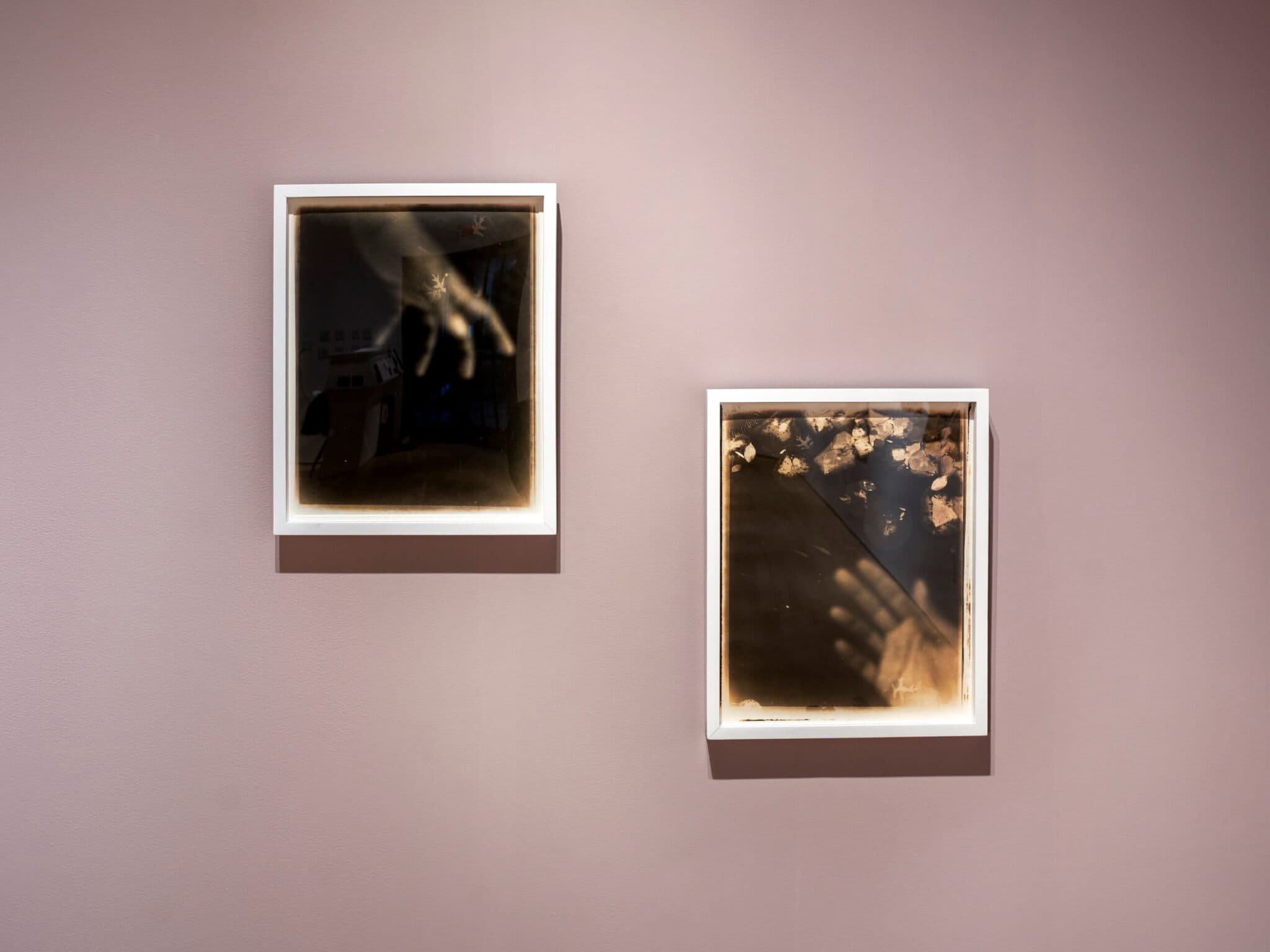
Felicia Megginson, (left) Permutation—Reach and (right) Permutation—Release, both 2002. Sepia and selenium toned gelatin silver prints from the series Alice Wasn’t Lost, She… Installation view, “Re-Framing Nature,” Providence College Galleries, Providence, RI, 2026. Photo by Scott Alario. Courtesy of Providence College Galleries.
“Felicia Megginson: Re-Framing Nature,” March 4–September 12, 2026
Providence College Galleries
63 Eaton Street, Providence, RI
What does it mean to be one with nature? In Felicia Megginson’s “Re-Framing Nature” at Providence College Galleries, she layers photographs to craft her answer. Subtle transitions between depths within singular images ask, what if our true selves are as vast as the sea, the sky, or a mountain range? What if we are as enchanting? In works like Manifestation – Woodlands 4 (2003) the self feels omniscient: Sunrays shine through a forest scene overlaid with Megginson’s face, close-up and stern yet soft. At once, she looks outward and becomes part of a place outside of herself. —Alisa Prince
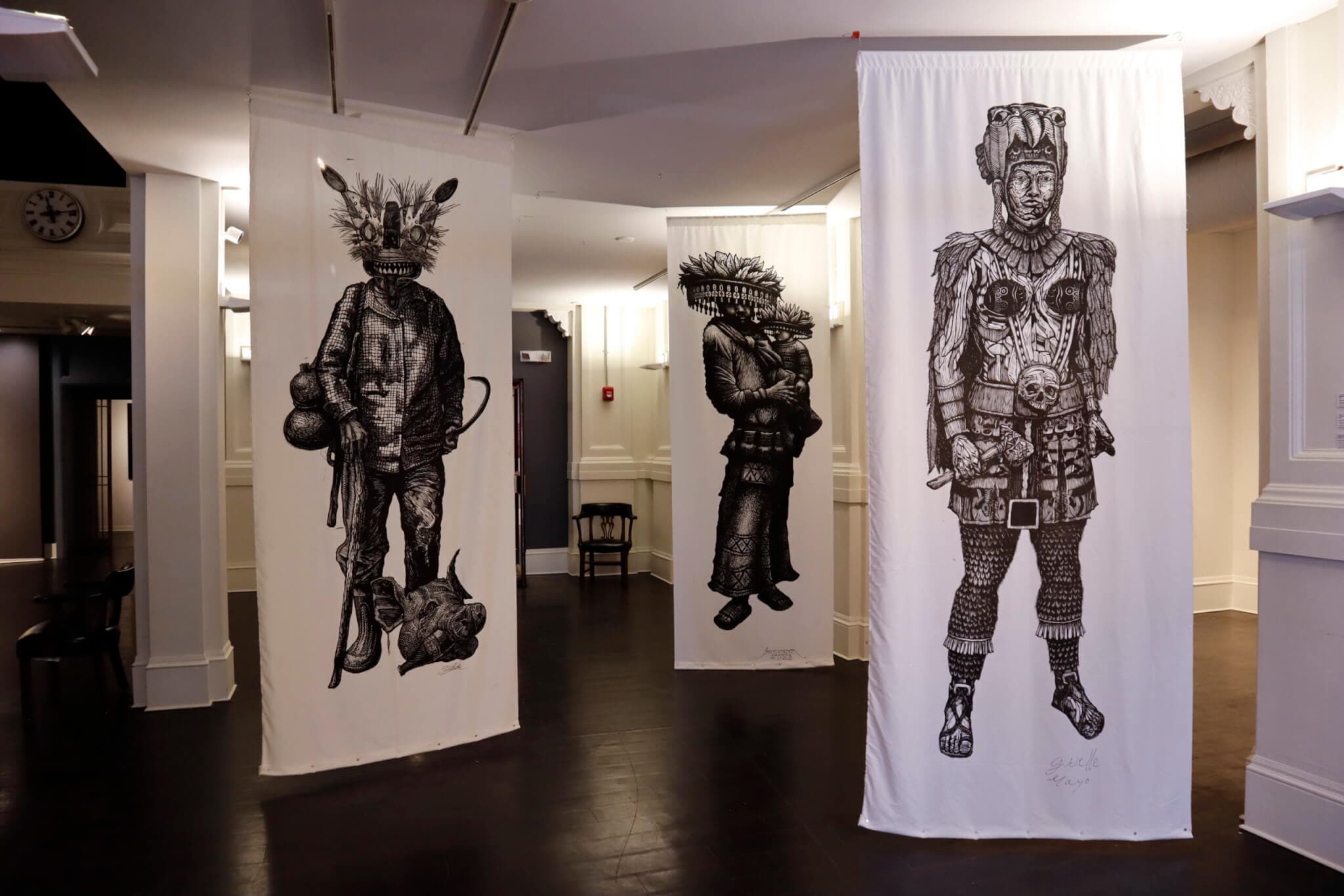
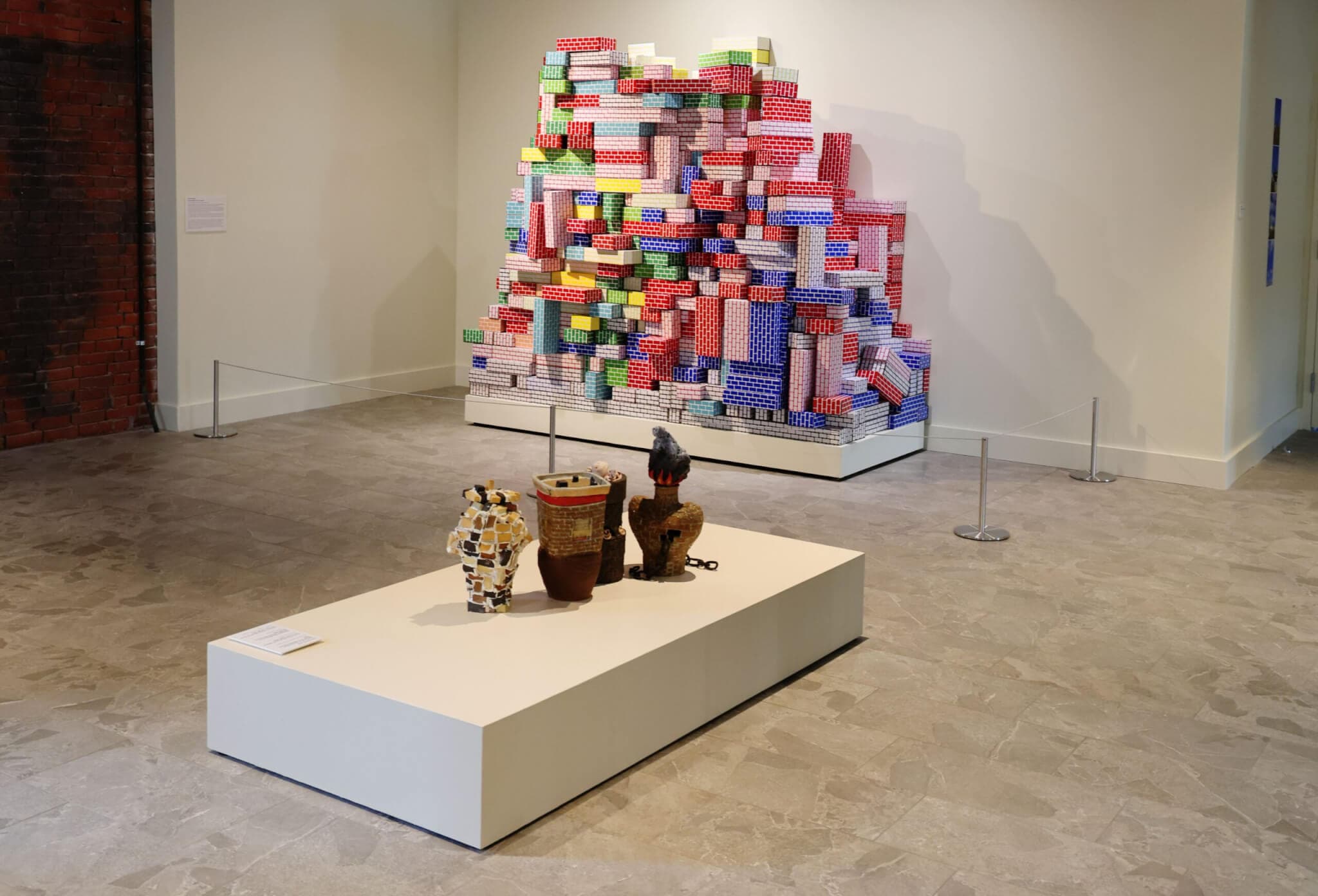
Installation view, “Resistance: Cultural and Political Narratives in Mexican Art,” New Bedford Art Museum, 2026. Courtesy of New Bedford Art Museum.
“Resistance: Cultural and Political Narratives in Mexican Art,” March 11–May 31, 2026
New Bedford Art Museum
608 Pleasant Street, New Bedford, MA
As the United States enters its semiquincentennial anniversary year, the region is full of shows spotlighting revolutionary acts and figures, many of which keep the focus narrowly trained on the contiguous fifty states. At New Bedford Art Museum, however, the lens shifts to our North American neighbors with “Resistance: Cultural and Political Narratives in Mexican Art.” While these artists may employ traditional practices, such as Jacobo and María Ángeles’s Oaxacan wood carvings, and/or classic methods of political revolt (see Mario Guzmán’s graphic prints), the works express contemporary dissent, underscoring the inherent potential of art that’s rooted in cultural legacies to meet—and challenge—the current moment. —Jessica Shearer
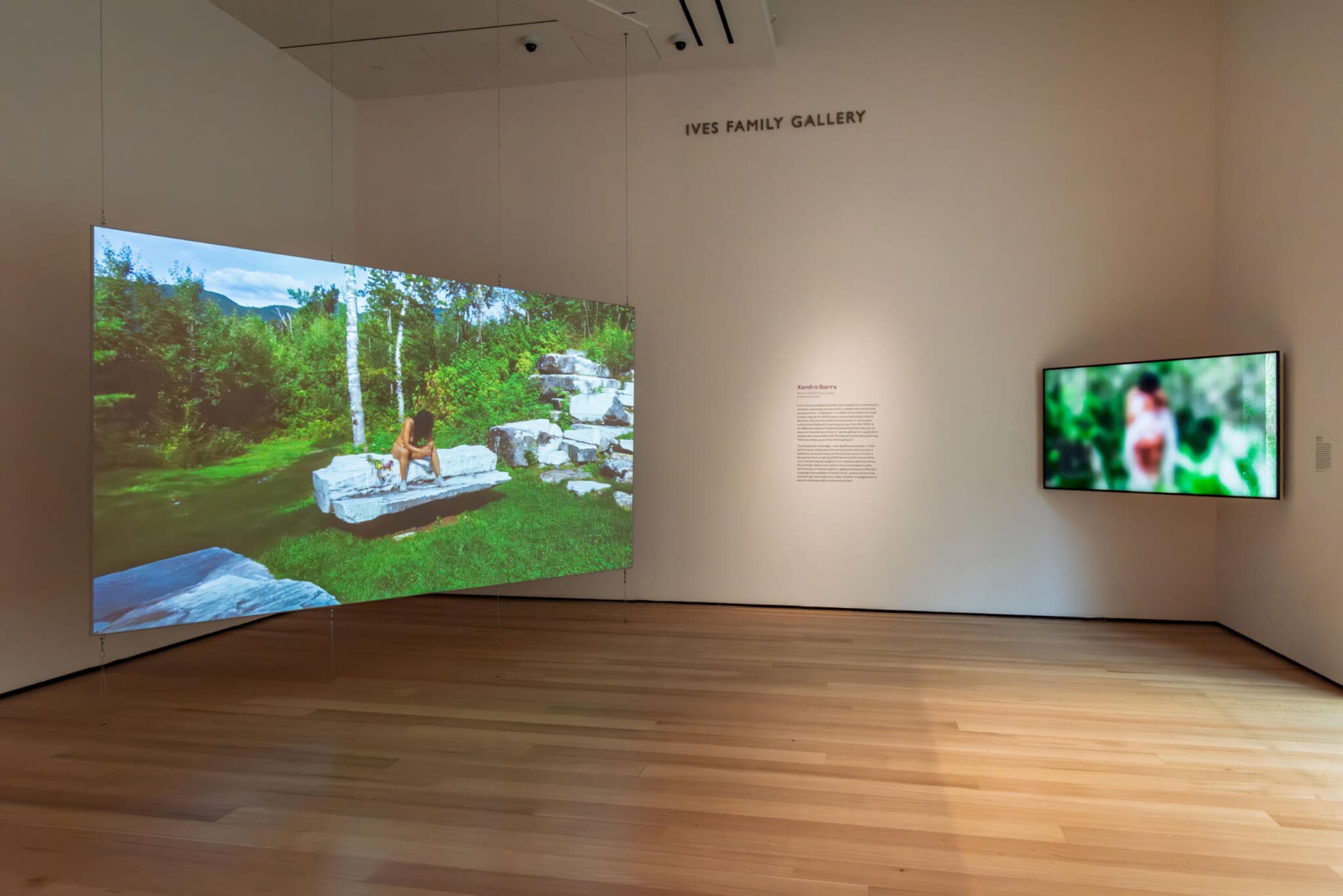
Xandra Ibarra, Turn Around Sidepiece, 2018. Installation view, “Subvert, Repair, Reclaim: Contemporary Artists Take Back the Nude,” MFA, Boston, Linde Family Wing for Contemporary Art, April 4–August 2, 2026. Photo © Museum of Fine Arts, Boston.
“Subvert, Repair, Reclaim: Contemporary Artists Take Back the Nude,” April 4–August 2, 2026
Museum of Fine Arts, Boston
465 Huntington Avenue, Boston, MA
Taking back something that was never really up for taking in the first place is a particularly charged starting point for the MFA’s latest contemporary exhibition. Curated by Carmen Hermo and Yutong Shi, “Subvert, Repair, Reclaim” brings together twelve artists across generations and disciplines to confront the long history of objectification embedded in the Western canon of art history—perhaps most succinctly articulated by the Guerrilla Girls’ 1989 provocation: “Do Women Have to Be Naked to Get into the Met. Museum?”
Working against and within the museum’s own collection, the exhibition treats the MFA itself as a site of subversion. It is exuberant and cheeky (pardon the pun), but also pointed and intimate.
Historically, the nude female figure is rendered anonymous, fixed in time as an ornament or object of observation. Xandra Ibarra’s performance video Turn Around Sidepiece (2018) greets visitors at the entrance, her body spinning naked atop a marble plinth as she cycles through poses lifted from the “classics” hanging just down the hall in the Salon gallery. Nearby, Joiri Minaya’s site-specific installation registers the trace of her own body dragged across a freshly painted wall, leaving behind smudged impressions that refuse the clean distance of representation. —Jameson Johnson
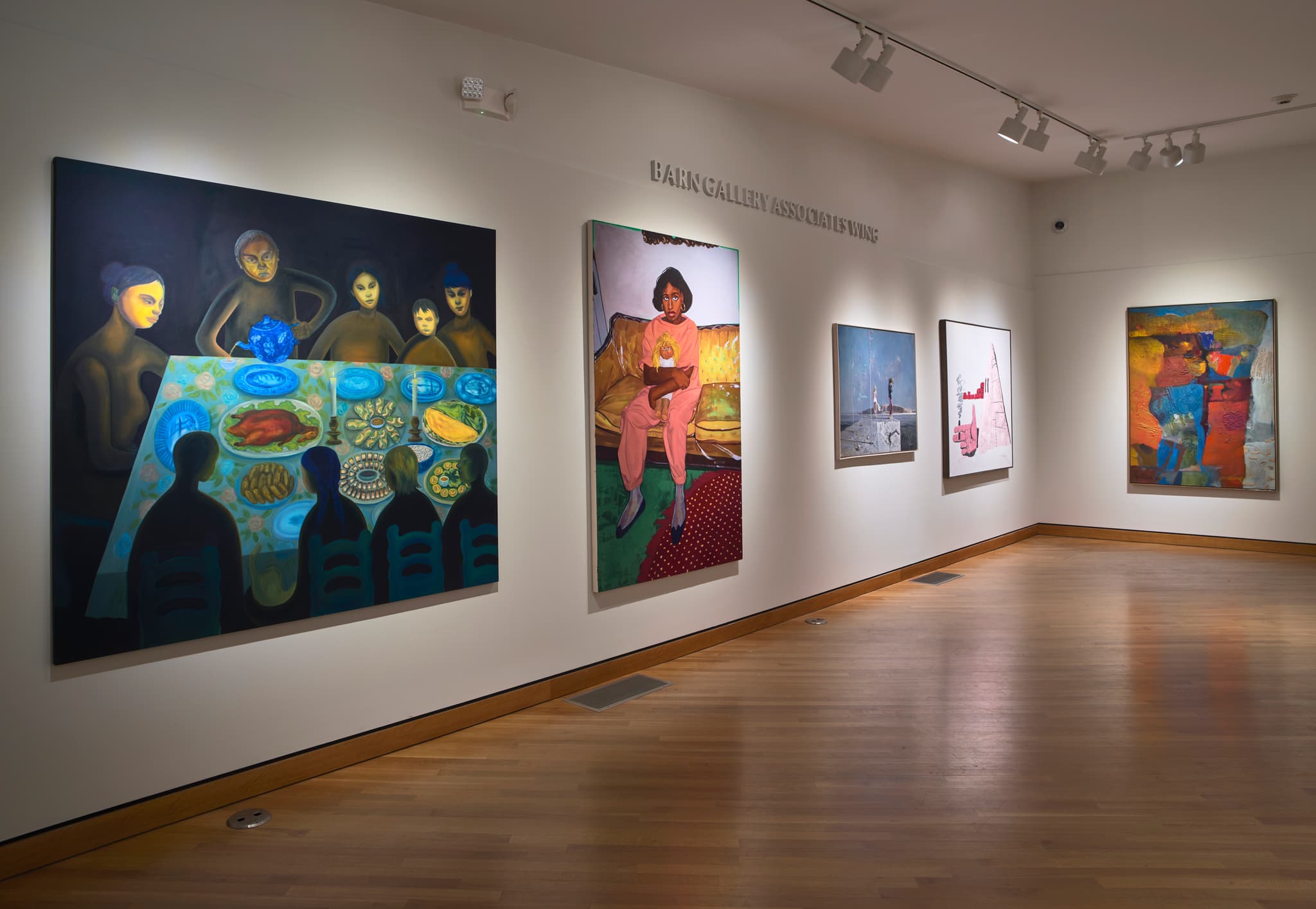
Installation view, “American Conversations,” the Ogunquit Museum of American Art. Photo by Luc Demers. Courtesy of the Ogunquit Museum of American Art.
“American Conversations,” April 10–November 15, 2026
Ogunquit Museum of American Art
543 Shore Road, Ogunquit, ME
“American Conversations” is among a number of exhibitions engaging the US’s approaching 250th anniversary, seen from the Ogunquit’s perch overlooking the Atlantic. Rather than treating the moment as celebration, the exhibition examines how ideas of “America” have been formed and revised over time. The show is structured around rotating pairs of works that place historical and contemporary pieces in direct relation to one another. Bringing together artists such as Lois Dodd, Alexander Calder, Philip Guston, Marsden Hartley, and Cara Romero, these pairings shift how each work is read—sometimes subtly, sometimes more directly. The Semiquincentennial hangs over the exhibition as a moment of reflection, less a fixed milestone than a prompt to revisit what those founding ideas have meant, and continue to mean, in practice. Seen this way, “America” emerges less as something settled than as something continually reimagined. —Ava Mancing
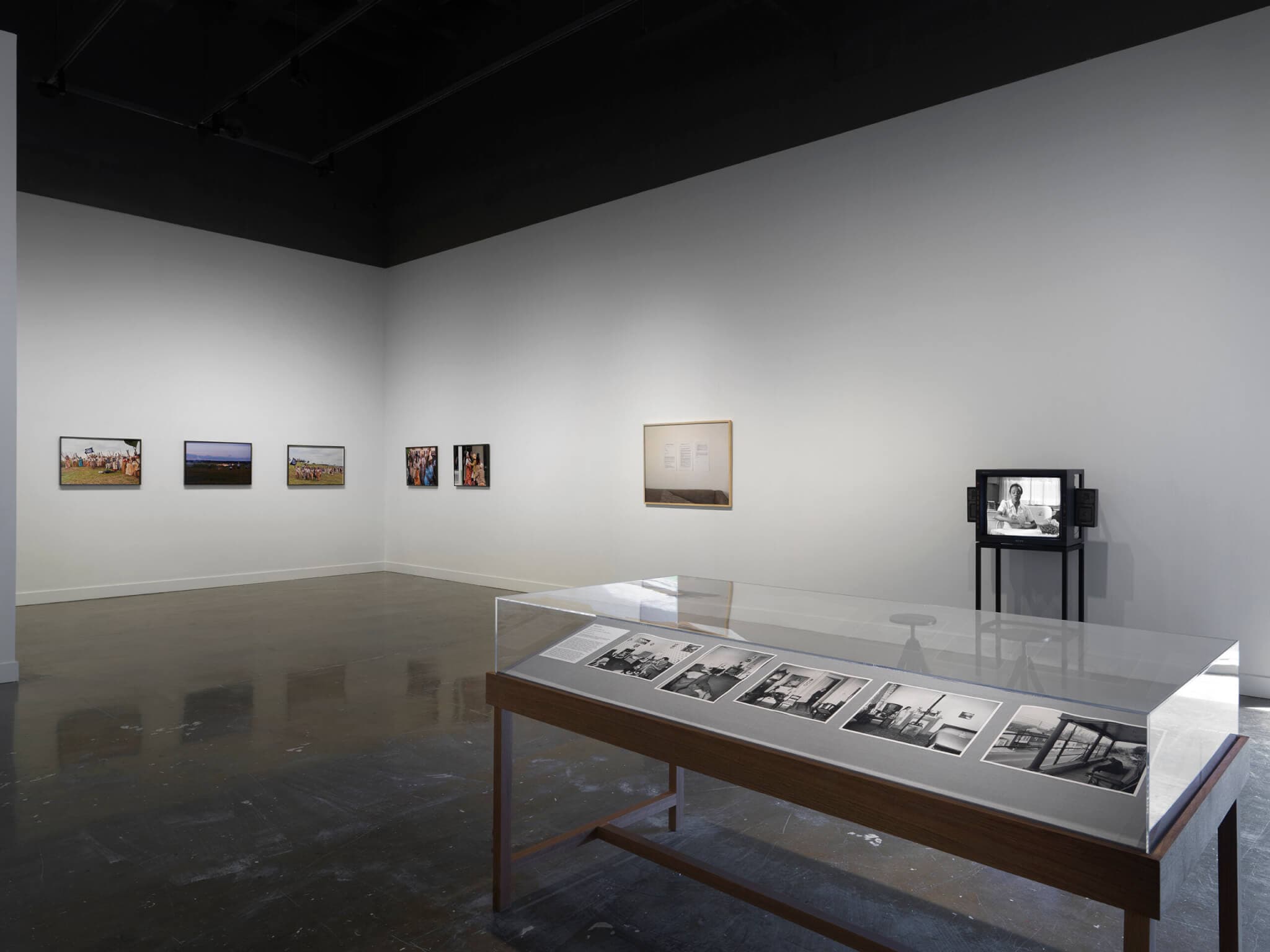
Installation view, “Performing Conditions: Artistic Labor and Dependency as Form,” MIT List Visual Arts Center, 2026. Photo by Dario Lasagni. Courtesy of MIT List Visual Arts Center.
“Performing Conditions: Artistic Labor and Dependency as Form,” April 11–August 12, 2026
MIT List Visual Arts Center
20 Ames Street, Cambridge, MA
Perhaps my favorite aspect of visual art is the inherent exchange, the viewer and the work (and by extension the artist) in dialogue—what Toni Morrison calls “the dancing mind.” A new exhibition at the MIT List takes this relationship one step further while elucidating the hazards of creative labor, particularly in racially extractive systems (the arts, the economy, the world at large). The show challenges the dynamics that condition both the pieces and their makers, and highlights works that rely on the engagement of another to fulfill their functions or achieve their final states. Featuring more than twenty-five artists across a wide range of media, “Performing Conditions: Artistic Labor and Dependency as Form” pairs historic standouts such as Elizabeth Catlett’s linocuts and Senga Nengudi’s R.S.V.P. series with work made as recently as this year by Sophia Giovannitti, Cally Spooner, Constantina Zavitsanos, and others, forming a concatenation of works that highlight what it means to do the work—a process that implicates us all. —Jessica Shearer
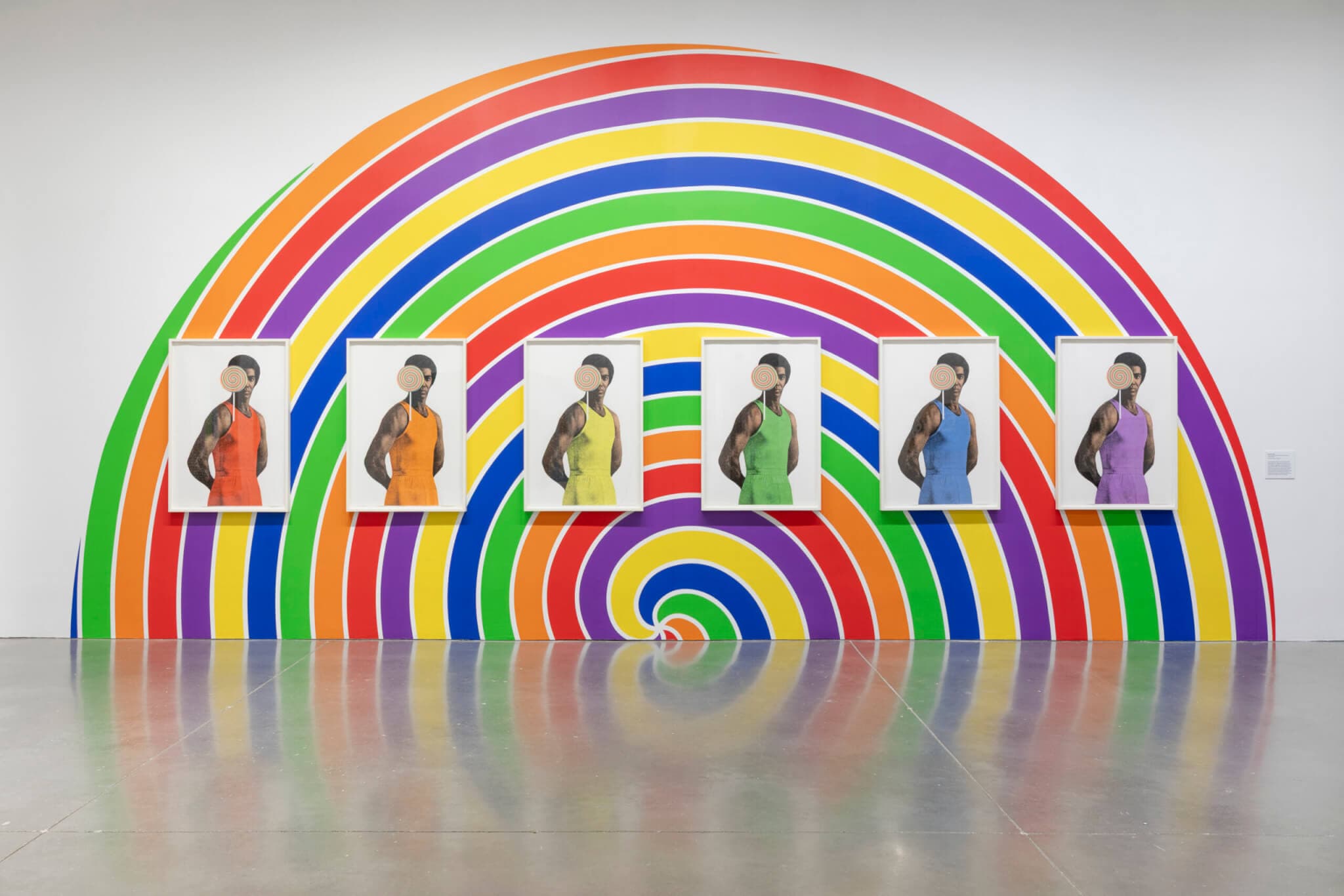
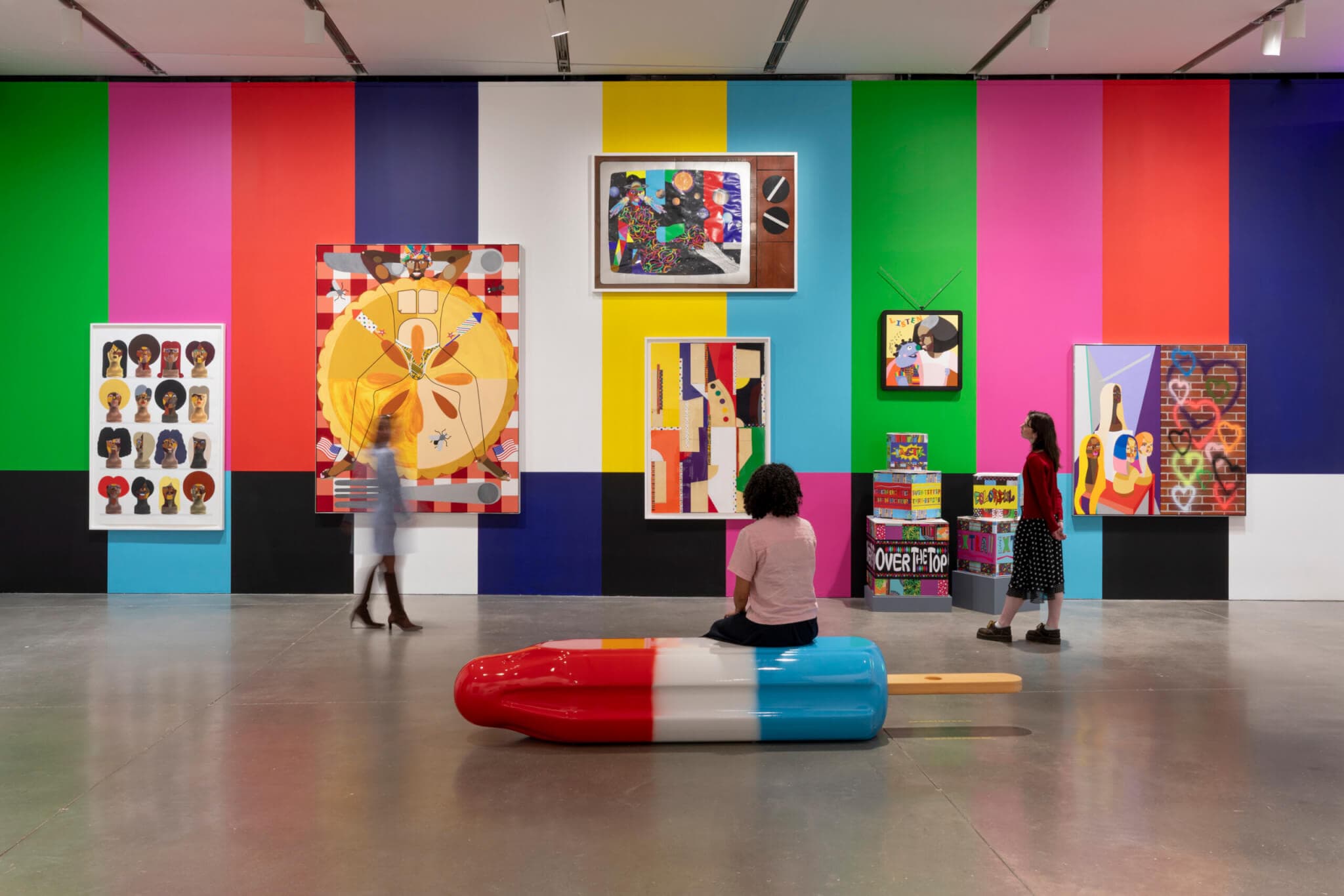
Derrick Adams, Eye Candy, 2023. Six-panel screen print with relief and collage on paper, custom wallpaper, six parts, 45 x 30 inches (114.3 x 76.2 cm). Installation view, “Derrick Adams: View Master,” Institute of Contemporary Art / Boston, 2026. Photo by Mel Taing. Courtesy the artist and Gagosian. © Derrick Adams
“Derrick Adams: View Master,” April 16–September 7, 2026
Institute of Contemporary Art / Boston
25 Harbor Shore Drive, Boston, MA
In the colorful world that is “Derrick Adams: View Master,” Black life is free, joyous, and leisurely, and on full display. Like the stereoscope for which the show is named, multiple images work in tandem to create an immersive visual experience. To do so Adams employs painting, collage, video, sculpture, and performance throughout the show. The artist’s signature geometric blocks of color and contrasting patterns transfigure the familiar, unlocking points to pause on for reflection and appreciation of the everyday. This mid-career survey is an extraordinary moment to explore the work of an artist who has skillfully built his own vernacular. —Alisa Prince
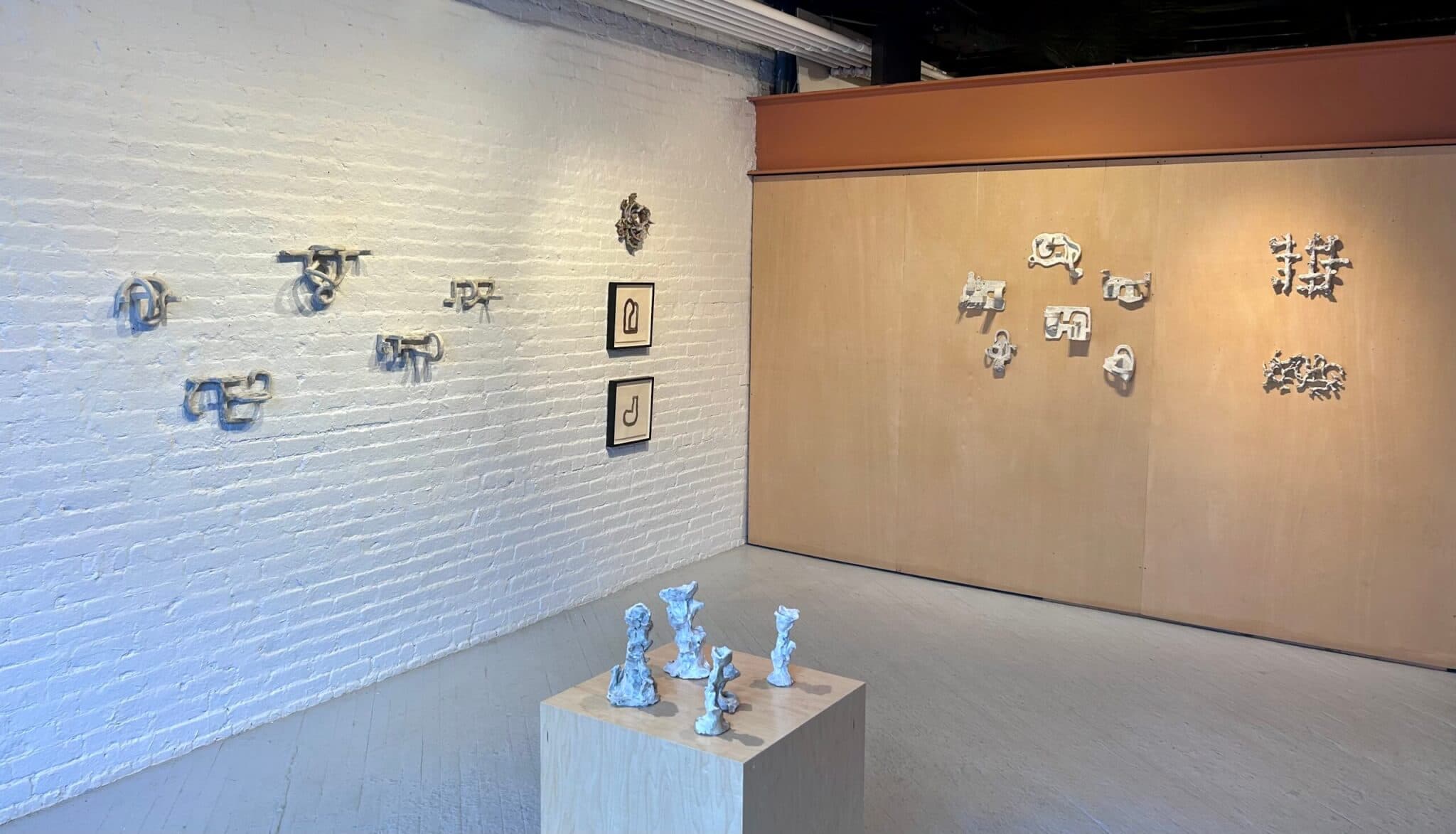
Installation view, “Meg Rotzel: Drawings in Clay and Ink,” Gallery VERY, 2026. Courtesy of Gallery VERY.
“Meg Rotzel: Drawings in Clay and Ink,” April 18–May 16, 2026
Gallery VERY
59 Wareham Street, Boston, MA
Meg Rotzel is interested in drawing for its simple gestures that allow for complex ways of thinking and communicating. The clay forms on view alongside drawings on paper at Gallery VERY may read as sculpture, but she approaches them as drawings—shaped and fired with slip rather than glaze. Slip, the watery slurry of discarded clay, becomes both material and method. Working with what ceramicists call reclaim, the amalgam of a studio’s discards and remnants, Rotzel folds a logic of reuse into the work itself.
The resulting pieces are both atmospheric and grounded; they operate within a language of image-making. The grid, for example, is a prominent force, but appears alongside organic forms. The works feel architectural, but also awkward and inviting in their irregularities and synchronicities. Regardless of what you find in their forms, it’s less about the end result and more about the process of getting there. —Jameson Johnson
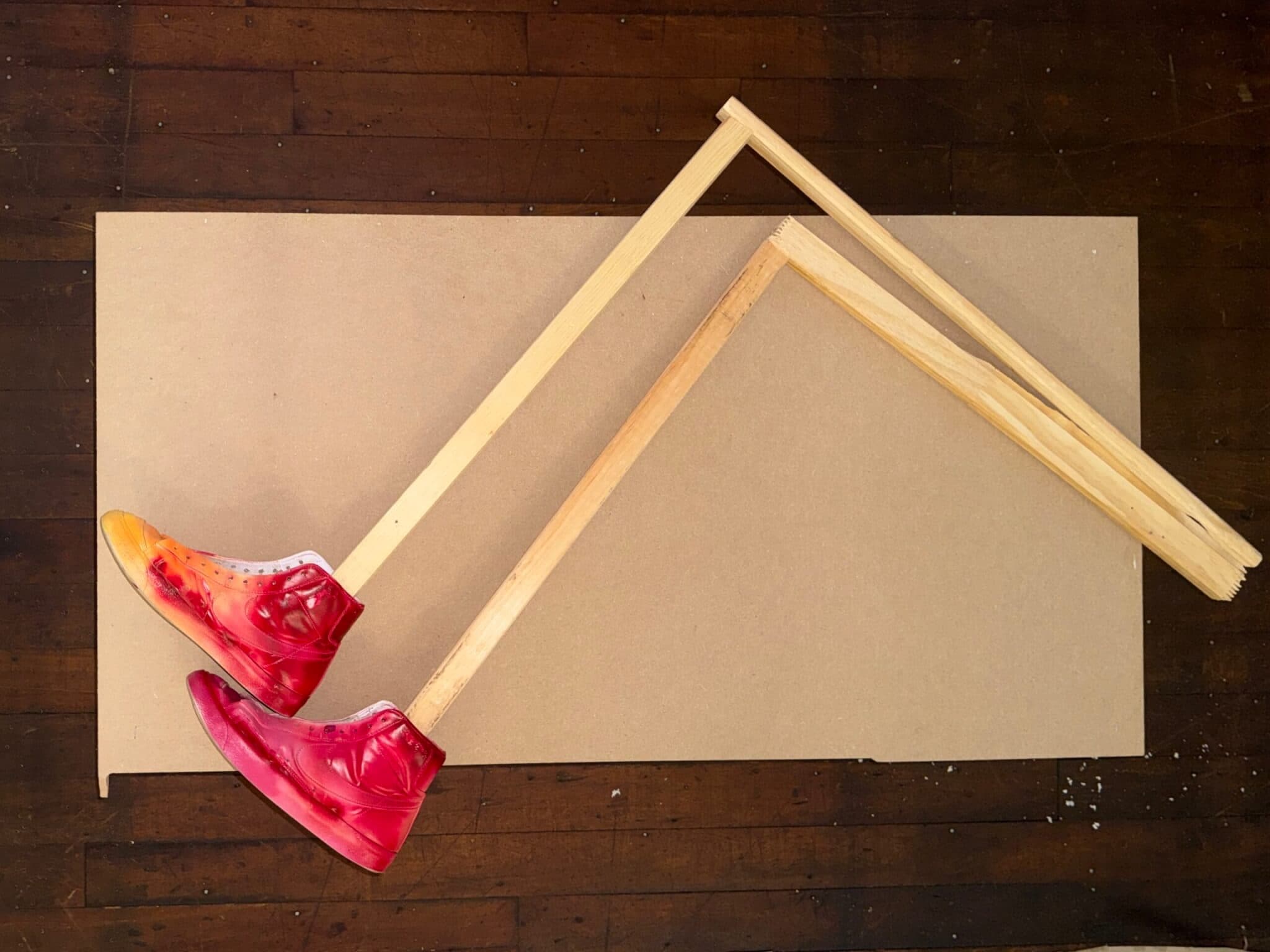
Pre-installation view of “Michael E. Smith” at MASS MoCA. Courtesy of MASS MoCA and the artist.
“Michael E. Smith,” May 2, 2026–Mid-2027
MASS MoCA
1040 MASS MoCA Way
Michael E. Smith’s installations often feel unsettled, with objects that appear loosely staged rather than fixed in place, sometimes almost as though they’re looking back. In North Adams, the Providence-based artist will continue his use of found, everyday materials, treating them as sculpture arranged into spare compositions. Smith’s work is built on unlikely pairings, bringing familiar elements—furniture as well as household and industrial materials—together in ways that resist fixed meaning. For this exhibition, he will again work without a set plan, completing the installation only once he is in the gallery space. Forms will be added, taken away, zhuzhed and zhuzhed again during installation, through an ongoing process of adjustment, forming what Smith refers to as “the poem.” A close-by car wash will also be drawn into the project through a handful of activations—an unexpectedly fun shift that will extend the work beyond the walls of MASS MoCA. —Ava Mancing
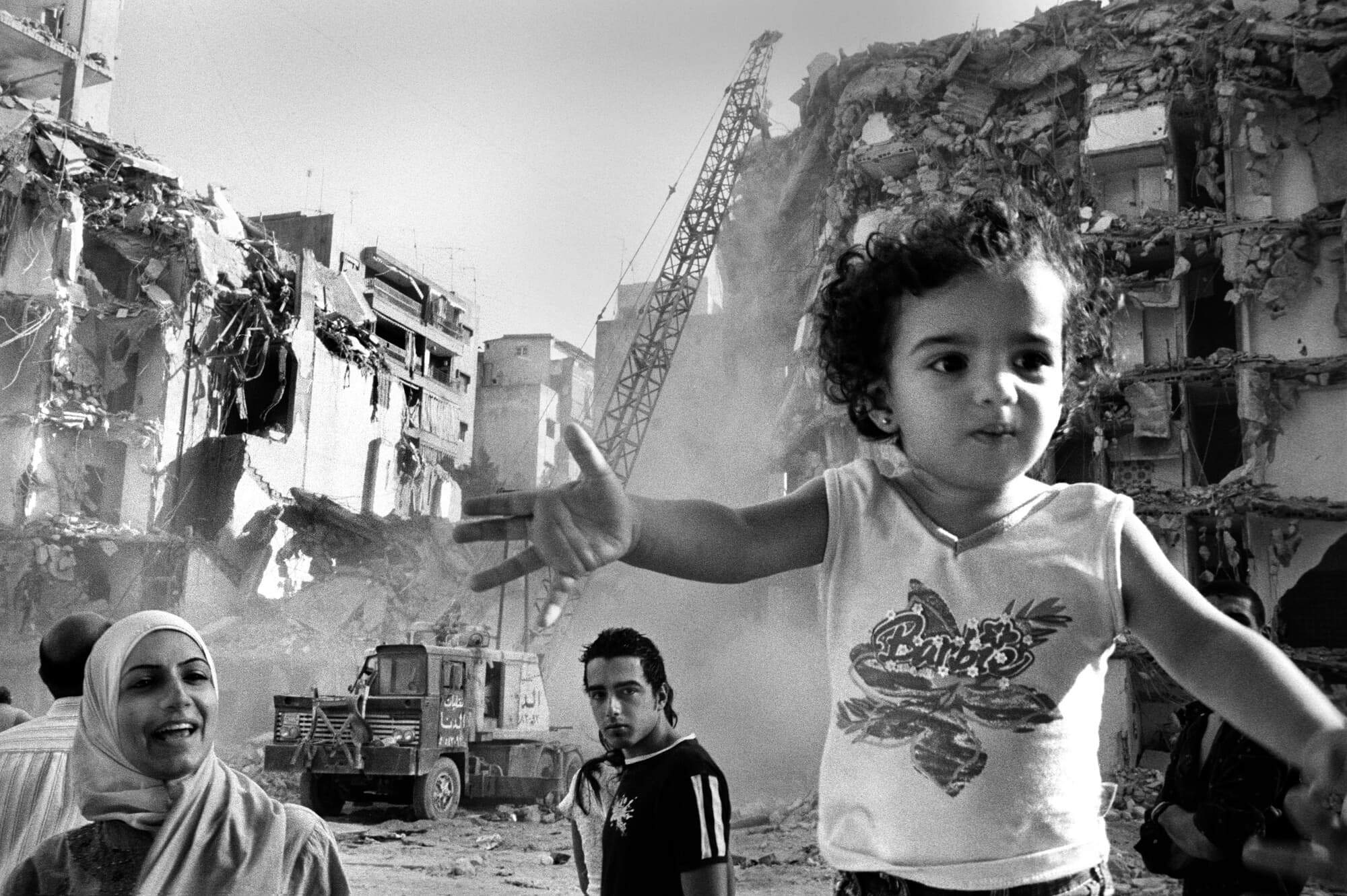
Rania Matar, Barbie Girl, Haret Hreik, Beirut, Lebanon, 2006. Signed and inscribed on artist’s label. Archival pigment print, image: 24 x 36 inches, paper: 30 x 45 inches. Courtesy of Robert Klein Gallery.
“Rania Matar: Where Do I Go?,” May 9–September 19, 2026
RKG x SEA-DAR: The Project Space
580 Harrison Ave, Fourth Floor, Boston, MA
“Where Do I Go?” is the inaugural exhibition in Robert Klein Gallery’s new project space inside Sea-Dar’s 4,500-square-foot SoWa headquarters, where Rania Matar presents over forty photographs drawn from nearly two decades of work. Each photograph is shaped by the long aftermath of Lebanon’s Civil War and ensuing conflicts with neighboring Syria and Israel.
The show coincides with the release of Matar’s latest book of the same name, published on the occasion of the war’s fiftieth anniversary. Bringing together recent images with selections from her earlier series Ordinary Lives, the exhibition traces a return to subjects and sites across time. In one pairing, a young girl photographed in Beirut in 2006 reappears eighteen years later—no longer a child but still within the same precarious terrain.
Working across interiors, thresholds, and landscapes, Matar attends to the spaces people inhabit as they navigate what it means to stay, to leave, or to remain in between. Her subjects—often girls and young women—meet the camera with steadiness, asserting presence and intimacy within environments shaped as much by memory as by circumstance. —Jameson Johnson