As June begins to turn up the heat, so too does the Trump administration. Two recent news items show how the administration’s policy is affecting the arts sector in Boston and beyond.
First, the National Park Service has ordered the removal of informational panels from the Bunker Hill Monument featuring quotes about immigration, suffrage, and abolitionist and anti-war efforts. Second, Trump’s Department of Education proposed new guidelines that will imperil “almost half of graduate art programs,” according to The New York Times.
The importance of the latter can’t be overstated.
According to The New York Times, the rollout of the Department of Education’s proposed Accountability in Higher Education and Access through Demand-Driven Workforce Pell: Student Tuition and Transparency System and Earnings Accountability rule would “calculate the earnings of alumni four years after graduation to see whether they earn more than the median salary for working adults aged 25 to 34 who have a bachelor’s degree.” The new rule would end federal student loans and support for programs that consistently fail the test, including eligibility for Pell Grant funds. If approved, graduate programs would presumably need to look for a workaround.
As a major driver of employment in the sector, graduate art programs are a source of income and economic stability for professional artists, particularly in Boston and other cities that lack a robust network of commercial galleries. The National Endowment for the Arts estimates that teachers make up nearly 21 percent of all workers with secondary jobs as artists. Should the United States lose half its graduate arts program employers, it could trigger an industry death spiral. As artists lose teaching income, this would presumably cause more grad programs to fail regulatory reviews.
Taken positively, perhaps this could prompt arts programs to explore fundraising to make their programs tuition-free or to seek ways to support alumni in increasing their earnings to help pass this test. But it’s anyone’s guess how viable that will be.
The intersectional reality that jobs in the arts are jobs—and sometimes youth jobs—was thrust into the spotlight at City Hall on Wednesday.
Wednesday’s hearing was expected to be long, volatile, and consequential in the ongoing struggle between council members seeking to maintain checks and balances on the mayor’s power and the mayor’s aim to keep City Council compliant.
The timeline here is important: City Council was required by law to vote on its amendments to Mayor Wu’s proposed FY 2027 budget by midnight on Wednesday. Failure to do so would have meant the mayor’s budget would be automatically approved. Leading up to the vote, the games and political plot thickened. Over the weekend, Councilor Benjamin Weber, chair of the Ways and Means Committee, was accused of an ethics violation: voting on grants overseen by the Mayor’s Office of Immigrant Advancement that have supported the International Institute of New England, the nonprofit where his wife works. (Councilor Weber denied the allegations and recused himself from voting on the budget amendment package on Wednesday, citing guidance from the State Ethics Commission that would impact his wife’s organization.)
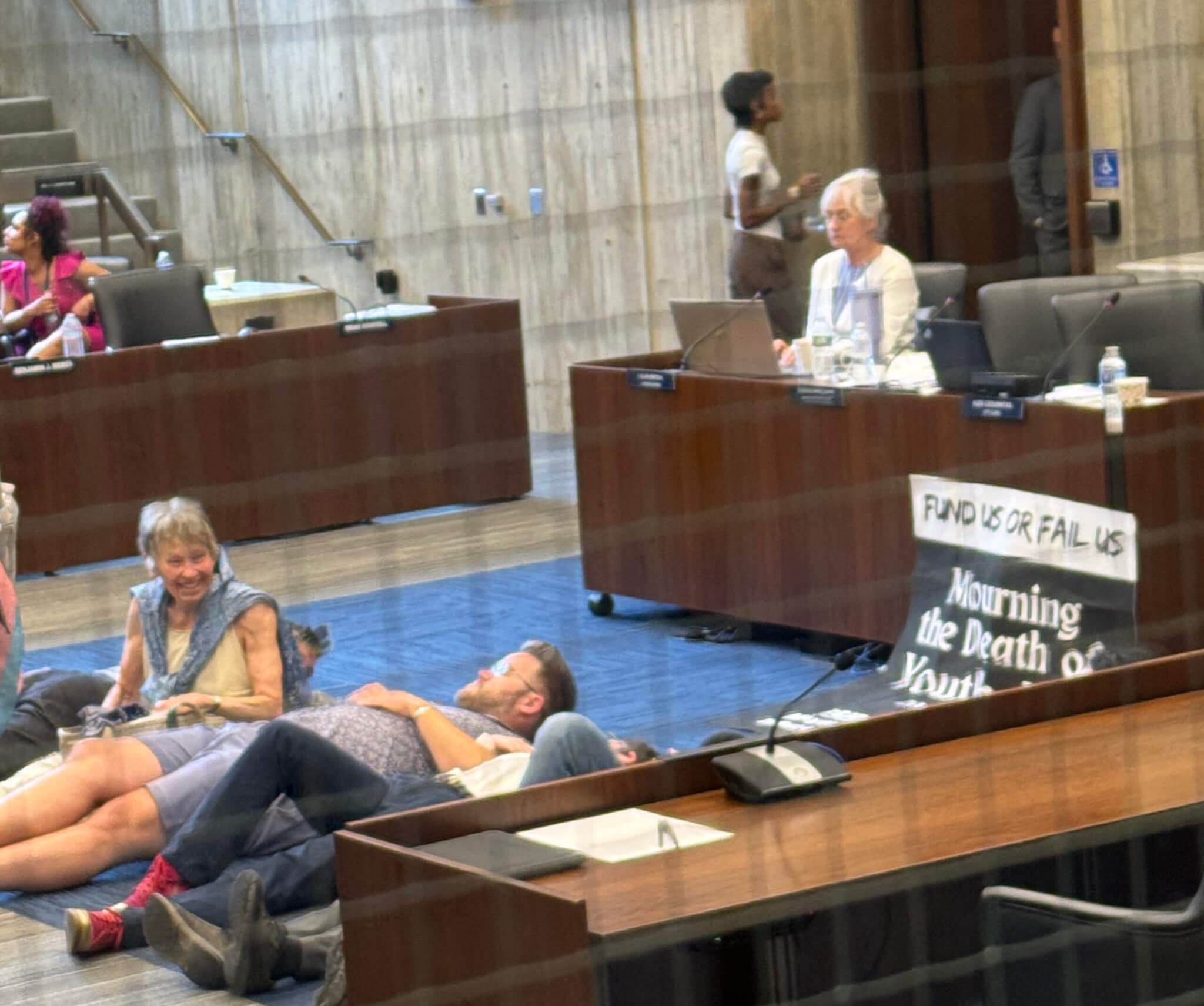
As City Council prepared to vote on Councilor John FitzGerald’s proposed amendment package, protestors entered the chamber, chanting “fund us or fail us,” and staged a die-in. The Council recessed, and the police ultimately cleared the chamber and arrested eight protesters.
When the sessions gaveled back in, voting and deliberations began on Councilor FitzGerald’s amendment package that would reallocate $1.4 million from the Boston Transportation Department to restore funding to several programs.
And then something strange happened: Councilor Miniard Culpepper took the floor. “Something happened when [the protesters] took over. Everybody left, and it was like smoke. They came back in, then we ended up with this [the current amendment package]. And I feel like I’m being told, ‘Take this, or you don’t get anything,’ because this is not the package that I went to sleep with last night, excited about. But something happened when everyone went out, and we came back,” he declared.
Supporting Councilor Culpepper’s claim that “something happened” during the recess, Councilor Julia Mejia posted a video on her Instagram, in which she announced that she saw the Wu administration’s “intergovernmental relations person” speaking to Councilor Weber. “That means there is some negotiating happening—as usual. So we will find out when you find out because apparently no one’s really talking to anybody,” she said. The accusation lends credence to Boston Policy Institute’s charge that Councilor Weber’s amendment package was designed by the Wu administration. The administration had been actively pressuring the City Council to pass Councilor Weber’s amendment package, going so far as to warn that if it didn’t, it would trigger layoffs.
The mayor has secured private funding to help offset cuts to the youth jobs program, veterans affairs, and senior programs. Councilor Erin Murphy weighed in on relying on private funding for government programs: “Anytime something completely goes away, you often never get it back. … But private donations cannot replace a dependable city commitment. … Once a line disappears, it becomes much harder to bring back, and history shows it almost never comes back.”
Through a series of amendments, the Council voted to restore $825,000 of the $1.2 million cut from the arts budget. As for next steps, the mayor must now either approve or veto City Council’s amendments before the June 30 deadline.
This Week’s Wonk
Local Headlines
All Eyes on Maine
With November’s midterms fast approaching, control of Congress will hinge on just a handful of seats. Given the tight margins, even a couple of seats will be enough to tilt the scales.
Northern Maine, Hold My Sam Adams.
On Tuesday, Democratic Senate hopeful Graham Platner won the primary, securing his spot in the race against incumbent Republican Senator Susan Collins. Mainers’ choice between Platner and Collins means more than just their representation in DC. While the Democratic Party has only begrudgingly accepted Platner’s candidacy, the race is becoming a key battleground in the fight to win back the Senate in the midterm elections.
Maine’s 2nd Congressional District is also up for grabs, with Democratic Representative Jared Golden retiring this year. The Republican candidate, former Governor Paul LePage, handily secured the Republican nomination, while the Democratic nomination race is so fragmented that The New York Times predicts it could be a week—or even two—before the votes are tallied.
All Three MA Gubernatorial Candidates Refuse to Release Tax Returns
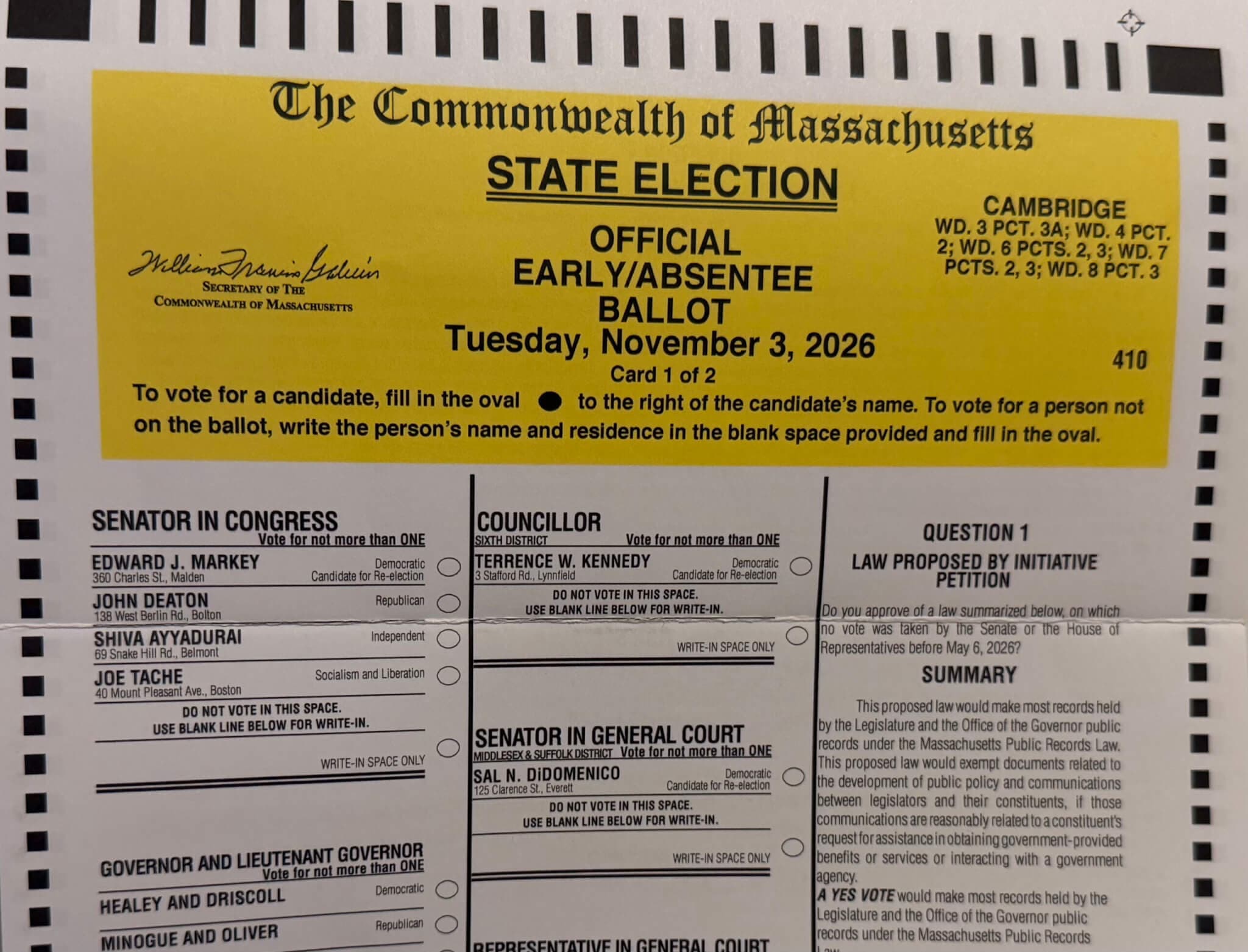
As November 3 barrels toward us, it’s easy to forget that voters in most New England states—New Hampshire, Maine, Massachusetts, Rhode Island, and Vermont—will also determine their governor at the ballot box.
The big news in the Massachusetts gubernatorial election is that none of the three candidates making their case to voters was willing to release their tax returns to The Boston Globe. It’s an interesting twist, given that all three vowed to bring more transparency to state governance.
Yet Another FIFA Flop: MA Fumbles Extending Drinking Licenses for World Cup
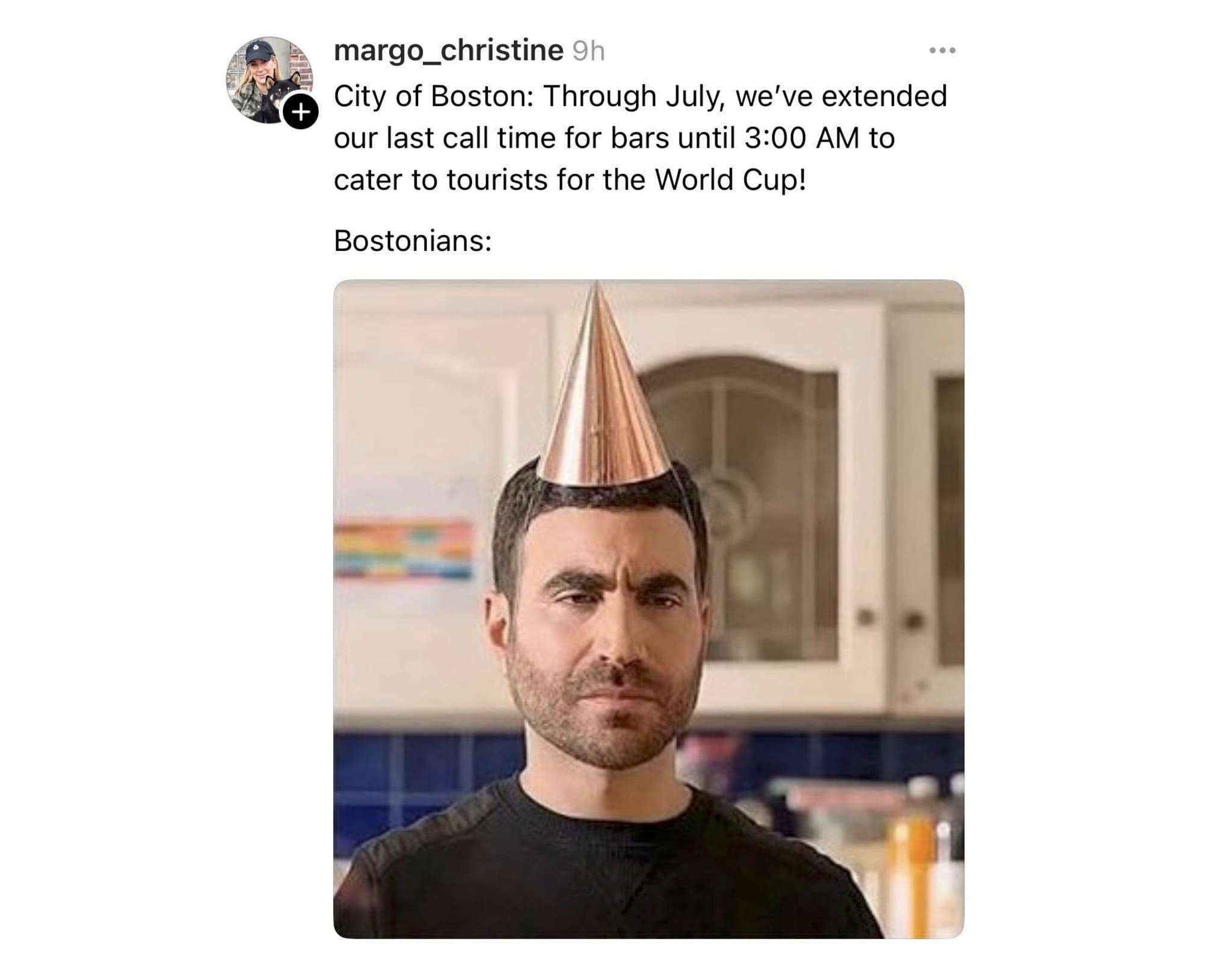
The World Cup kicked off yesterday, and in the run-up to the event, Governor Maura Healey signed a temporary state law extending liquor license hours. The law allows bars to stay open until 3 a.m. and permits drinking in public in designated areas through July 31. Great news, right?
Turns out it’s more complicated than “bartender, another” at 2:01 a.m.
The law, signed just days before the World Cup kickoff, hasn’t given city officials or business owners time to prepare. Cities and towns have to opt in, extend their licenses, and set up designated areas for outdoor drinking. Bar owners need to figure out staffing and supplies. According to The Boston Globe, some cities, including Cambridge, seem more willing to take advantage; others, such as Brookline, do not. All in all, the law’s short duration seems to be causing too much upheaval for too little reward.
Arson Investigation and Possible Hate Crime at Boston’s Museum of African American History
The Boston Police Department and federal authorities are searching for a suspect following a suspected arson at Boston’s Museum of African American History. According to reports, a man set a package of supplies for the museum’s upcoming Juneteenth celebration on fire. The police are requesting the public’s help in identifying the suspect.
Trump Censors Bunker Hill Monument
The National Park Service has ordered the removal of three quotes it has deemed ‘woke’ from the Bunker Hill Monument, which commemorates the Revolutionary War. The order was sparked by a visitor complaint about a quote related to women’s suffrage. Following a review, three quotes were slated for removal. One is from a suffragist journal highlighting the hypocrisy of slaveholders who claimed to be “lovers of Liberty.” Another affirms the right of foreign-born US citizens to be treated equally to native-born citizens. The third states, “We, as Vietnam Veterans, strongly feel that the United States should cease to build memorials to death and begin to glorify life.” The quote that provoked the complaint was allowed to stay.
The removal of these quotes falls under President Trump’s 2025 Restoring Truth and Sanity to American History executive order, which has, most notably, targeted the Smithsonian for review of exhibitions and materials designed to educate the public about US history.
New England Foundation for the Arts Receives $1 Million from the Mellon Foundation
The Mellon Foundation awarded New England Foundation for the Arts a two-year, $1 million grant in recognition of Executive Director Harold Steward’s leadership. The gift comes as the organization celebrates its fiftieth anniversary and the launch of a new strategic plan.
MA Passes Landmark Consumer Data Privacy Bill
A “landmark” data privacy bill banning the sale of personal geolocation data without explicit consent passed by unanimous vote in the Massachusetts House and the Senate. The bill was supported by the ACLU of Massachusetts, while the Associated Industries of Massachusetts (notable members include Amazon, Bank of America, Fidelity, Google, and Microsoft) lobbied against it.
MA’s Middle Class Has “Tipped Into the Abyss”
The Boston Globe reports that a new study by the MassINC Policy Center has found that Massachusetts’s middle class is getting trounced. According to the article, “Within five years, the income needed to maintain a middle-class standard of living for a two-parent family with two school-age children in Massachusetts jumped nearly 50 percent.” The study is part of a growing body of evidence that the cost of living is driving outward migration from the state. It cites a report by the policy center MassBudget, which states that “almost nine out of every ten outmigrant households … had a household income below $200,000 a year.”
Need a glass-half-full perspective about the affordability crisis and the exodus of young people from Massachusetts? Governor Healey is now backing a repeal of the state’s 1980s ban on happy hour.
National Headlines
Colorado Passes New Legal Structure for Artists
A bill establishing a new legal structure for artists to form Colorado Artist Companies, or A Corps, was signed into law. It allows artists from any state or country to form an A Corp, a subset of a limited liability company (LLC), as long as they have an in-state registered agent. The A Corp structure differs from other LLC or S Corp legal structures by automatically protecting IP, requiring that an artistic mission be established as part of the A Corp’s governance, and ensuring that the artist control 51% of voting shares. While technically possible before, the A Corp creates a default template that allows artists to quickly and easily create a business structure without the effort and expense of lawyers. The A Corp was created by Yancey Strickler, the cofounder of Kickstarter.
BIG Week In AI
There’s been a lot of talk about AI this week. SpaceX’s IPO, on track to be the largest in history, is set to coincide with the Nasdaq’s rollback of rules that created a “fast entry” for newly listed stocks. It would expose roughly 30 percent of Americans’ 401(k)s to significant risk. This single IPO has the potential to mint the world’s first trillionaire and/or crash the global economy.
Meanwhile, Vermont Senator Bernie Sanders has proposed legislation to create the American A.I. Sovereign Wealth Fund Act, which would give the public a direct ownership stake in the profits tech companies predict they’ll make from AI. Harvard professors Nathan Sanders and Bruce Schneier have another idea.
Meanwhile, as OpenAI prepares for its IPO, the US government is considering taking a stake in the company via donated equity. This would make it explicitly invested in the company’s success—and it would put the administration’s thumb on the scale as other AI companies compete in the space.
AI-linked stocks now account for 45 percent of the S&P 500’s market cap. This means that these IPOs, whether successful or not, will have major implications for the US economy, affecting everyone, investor or not.
Maybe I’m Just a Geriatric Millennial, but the Potential End of Social Security’s Trust Fund Has Me Nostalgic For When “No Future” Was Just a 2000s Skate Company
The annual financial report released by the trust fund for Social Security announced that it expects to run dry in six years, by the end of 2032. The program, which has taken hits from declining birthrates, changes in tax code in the “Big Beautiful Bill,” and Trump’s immigration policies, is taking in less in taxes than it owes.
Pace Gallery Reduces Roster and Staff, Suggesting the Art Market is Not, in Fact, Back, Baby
Last month’s auction results were meant to signal that the art market has recovered. But an announcement from mega-gallery Pace that it is cutting 50 artists from its roster, eliminating roughly 50 staff members, and renting out its 8,600-square-foot London gallery space speaks to how the market is, in fact, not healing—and that major structural issues remain. The art daddy’s Substack offers a solid breakdown of recent gallery closures.
Calls to Action
MASSCreative Creative Sector Summit: Art, Culture and Creativity as Civic Infrastructure
June 12, 9:30 a.m.–5:30 p.m.
New Bedford, MA
View the schedule and register here.
#ARTSTAYSHERE: A Community Forum on the State of the Arts in Somerville
June 15
Warehouse XI, 6:30–8 p.m.
Register here.
Philanthropy MA: Massachusetts Healthy Democracy Forum
June 16
Online, 11 a.m.–12 p.m.
Register here.
Remembering Hilde Lynn Helphenstein
The international art world lost its satirist-in-chief.
The passing of Hilde Lynn Helphenstein, otherwise known by her nom de guerre, Jerry Gogosian, prompted an outpouring of eulogies and profiles—from ARTNews and Air Mail to Vanity Fair—emphasizing the impact of her work.
The passing of the internet-famous art-world commentator—loved by many but seemingly known by few—seemed to mark not just the end of her life but the end of an era that I suspect we have already been grieving. The response to her death calls to mind the public response to the tragic, premature deaths of Amy Winehouse, Princess Diana, and other culturally emblematic yet troubled women.
I met Hilde in 2016, during an artist residency on Jean and Agnès Varda’s 140-year-old converted ferry houseboat—allegedly haunted by the ghost of Alan Watts—in Sausalito. She was interning at the now-shuttered San Francisco Gagosian Gallery. On the boat that was once home to Timothy Leary and Watts, surrounded by quirky totems and artist-made cat sarcophagi with glowing red eyes, she told me about her previous performance as a fictional gallerist, Water McBeer, the precursor to Jerry Gogosian. Her exuberance for how the contemporary art world’s twin economic engines, ego and desire, revved up slippages between reality and fiction was then evident. She ground into it, making it her material.
Hilde began Jerry Gogosian two years later, in 2018, as an anonymous meme account on Instagram. It quickly evolved into an all-encompassing conceptual artist project (think Amalia Ulman or an internet version of Orlan, but perhaps more akin to method acting). Jerry Gogosian’s cutting humor struck a nerve and met its moment, calling out the art world’s hubris and bluster. In retrospect, the project was representative of a moment in time when a meme could humorously reveal an unacknowledged truth yet still be relatively harmless (or so we thought), when art was still a viable business (or so we thought), and when there was still belief in the power of art to bring people together (or so we thought).
I think Hilde’s passing hit so many so hard because it heightened a shared sense of loss and tapped into nostalgia for that near-term past: the pre-COVID, pre-AI, pre-NFT, pre-prediction-market art world—a time before both consensus reality and the international rule-of-law-based order broke down and inflation shot up.
Yes, back then, relationships were also transactional. And systems were manipulated. But I think Hilde’s death and the way she fell victim to the digital realm—broken not just by the internet but also on the internet (she had been in treatment for internet addiction, and her last video post made it clear she was in need of help) have been particularly triggering because Hilde and her work are being read as symbolic of a collective innocence that has been lost, shattered by the platforms setting the boundaries of the experience of life lived increasingly online.