Games, they are afoot—and I’m not talking about soccer.
Memorial Day signals the unofficial start of summer. In Boston, the holiday signals rounding the bases on budget legislation. Tensions this budget season have been particularly high as Boston’s City Council weighs its looming decision: rubber-stamp Mayor Wu’s proposed budget, which includes several cuts to programs popular with Boston residents, or reject it and request amendments.
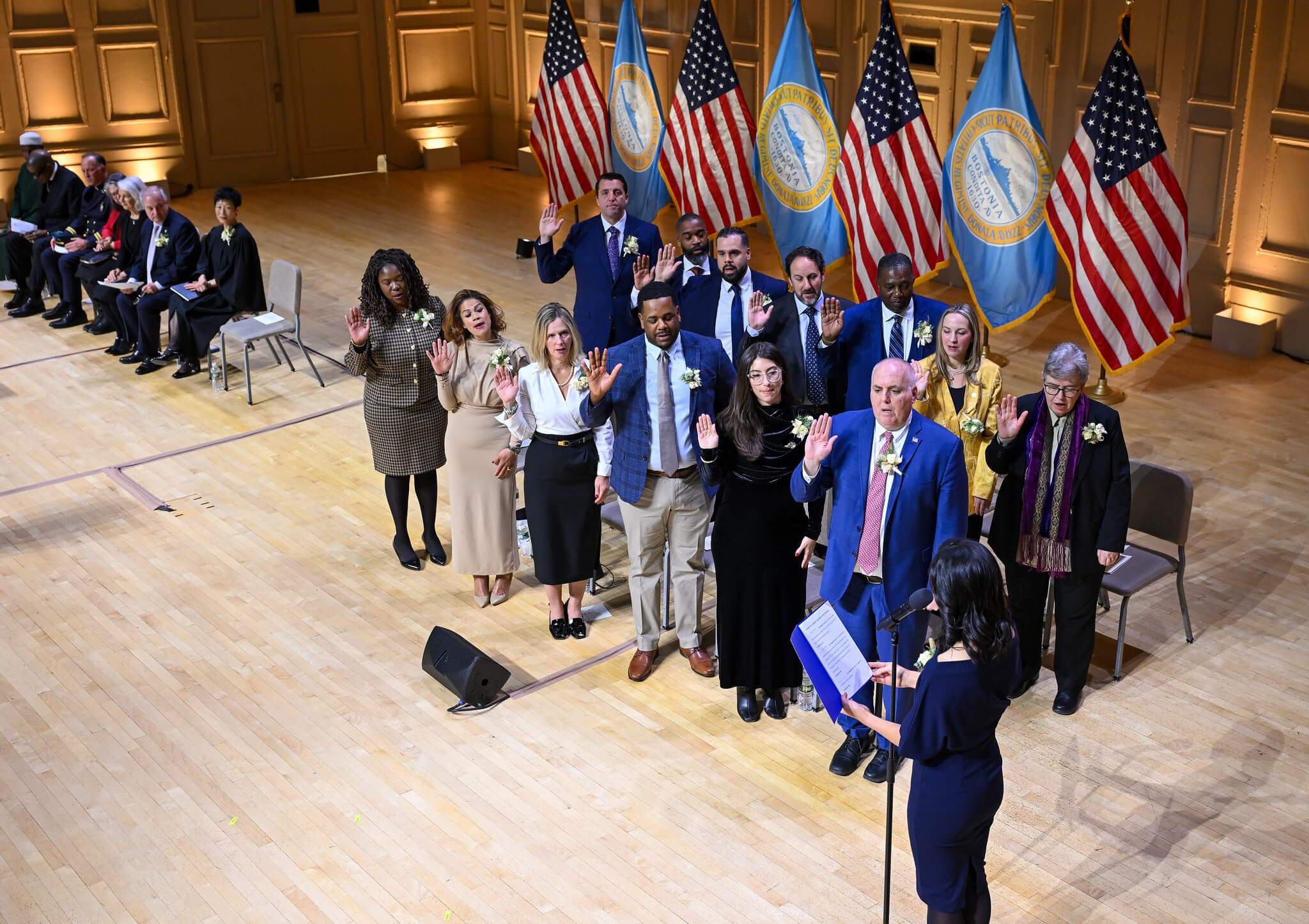
A motion to reject Mayor Wu’s budget failed to pass on May 20, with the thirteen-member council deadlocked. Councilor Gabriela Coletta Zapata, who is currently on maternity leave, was absent.
In an attempt to quell any possible rebellion and to whip up the votes needed to pass her proposed budget, Mayor Wu sent a letter to City Council on May 14, accompanied by a memo by Corporation Counsel Michael Firestone, reminding councilors of their budget process obligations and timeline. Both documents were made public by the nonprofit policy think tank Boston Policy Institute. Together, the communiqués suggest the mayor’s willingness to punitively enforce Boston’s law requiring a balanced operating budget. The takeaway of both documents is clear: Send the budget back for revisions, and you may find yourselves facing public backlash to even deeper cuts to programs, as Mayor Wu’s office could revise its estimate for the city’s fiscal year 2027 income downward.
The fight over the budget is about more than how tough financial choices will impact the city. The real story here is how the City Council’s budget decision is revealing schisms between Wu-aligned council members and a coalition of Wu critics. To this end, the power battle stemming from the budget debacle is best understood as an extension of allegations that Mayor Wu “meddled” in the January City Council elections to ensure the selection of someone who would keep the Council at heel. The implication is that Councilor Brian Worrell’s campaign, which had been critical of Wu, was undermined in favor of Wu-aligned Councilor Coletta Zapata. The night before the election, the coalition supporting Councilor Coletta Zapata’s candidacy fractured. In a dramatic late-night scene less than 24 hours before the vote, Councilor Liz Breadon was put forward as the “compromise candidate,” making her the first openly LGBTQ+ Boston City Council president.
Under the previous president, Councilor Ruthzee Louijeune, the Boston City Council was considered more deferential to Mayor Wu. With City Council leadership changing in January, we’re faced with a classic axiom: “Never let a good crisis go to waste.”
The City is facing real financial difficulties stemming from increased expenditures, such as additional snow removal and increasing healthcare costs, and decreasing revenue from a collapsing commercial real estate market and the Trump administration’s diversion of funds from sanctuary cities. What is at stake here—between the lines of the budget battle—is how the mayor might curb the City Council’s checks on her power. These cloak-and-dagger moves on the City’s governance chessboard come amid accusations that the mayor is consolidating power—and that she’s discovered a taste for retribution, as detailed by the Boston Globe’s editorial board. All the while, members of the community, including artists and Black Bostonians, are questioning Mayor Wu’s leadership.
It’s a head-scratcher of an about-face for a mayor who was so popular at the end of 2025 that she was effectively reelected uncontested after Josh Kraft, the son of Patriots owner Robert Kraft, dropped out of the race. Then there is the Emerald Necklace Conservancy affair: Following a feud over the planned rebuilding of White Stadium, Mayor Wu broke with a twenty-one-year tradition of granting the nonprofit a permit to host its “Party in the Park” fundraiser, triggering a fear among nonprofits—which are often dependent on the City for funding and event permitting—of speaking critically about the mayor.
As for the budget, the Boston City Council has until June 10 to make a decision. It is already starting a working group to review possible amendments, which will kick off on May 28. The City Council has until June 24 to finalize the budget with the mayor, who must sign it into law on July 1.
This Week’s Wonk
Local Headlines
The Boston Foundation’s CEO and President Steps Down
There’s been a changing of the guard for Boston’s philanthropic community. Lee Pelton, the Boston Foundation’s president and CEO, announced that he will step down, effective August 31. Pelton, who joined the organization in 2021 and led it through a multiyear strategic planning process, is best known for his work addressing the region’s racial wealth gap. Details about the search for a new CEO have not yet been announced.
MA Remembers Barney Frank
Former Massachusetts Democratic Congressman Barney Frank passed away on May 19. He is remembered as an advocate of LGBTQ+ rights and as a cosponsor of the Dodd-Frank Act, which regulated banks in response to the 2008 financial crisis.
Wu Withdrew as Harvard Law Class Day Speaker in Solidarity with Graduate Student Union Strike
Mayor Wu withdrew as a Harvard Law School Class Day speaker after graduate student union organizers urged her not to cross the Harvard Graduate Student Union-United Auto Workers picket line during the union’s ongoing strike, according to The Harvard Crimson. The mayor was the only speaker to have stepped down, leaving two comedians and a former presidential nominee to test the optics of crossing the picket line on their own.
JFK Library Announces Profile in Courage Award Nominees
Boston’s John F. Kennedy Library and Museum announced the nominees for its Profile in Courage Award, celebrating JFK’s legacy of political courage. Given the targeting of cultural institutions—specifically ones that bear the Kennedy name—by the Trump administration, it was politically courageous of the library itself to nominate Trump “adversaries”: former Chair of the Federal Reserve Jerome Powell and the people of the Twin Cities, Minnesota.
State Millionaires Tax Surpasses Revenue Expectations
In 2022, Massachusetts voters approved the Fair Share Amendment, otherwise known as the “millionaire tax.” Similar to bills in California, New York, and Washington, D.C., the amendment adds a 4 percent tax on annual income over $1 million to help fund public education and transportation. The tax has been controversial, with some arguing that it has triggered an exodus of high-income earners from the state. Others point out that the tax has already surpassed the $2 billion the state estimated it would raise. So far, it has raised more than $3 billion in revenue this fiscal year.
Broader Wonks
LA28 Finally Announces Cultural Olympiad Plans
LA28, the organization administering the 2028 Summer Olympics, announced its long-awaited plans for the arts and culture program known as the Cultural Olympiad. While the plan so far offers only the vaguest outline beyond posters and subsidized entry to certain cultural events, it highlights the absence of culture in Boston’s FIFA plans. Boston—nay, Foxborough—has not announced any plans to engage local cultural institutions in hosting the hordes of tourists it’s expecting for the once-in-a-generation crossover event of soccer, Tall Ships, and semiquincentennial celebrations.
DNC 2024 Election Autopsy Triggers Leadership Crisis
As we head into the midterm elections, CNN has published the Democratic Party’s election autopsy. The typo-riddled report, which failed to mention Biden’s age and Gaza, is widely seen as a sign of how lost the party’s leadership remains, even at a critical juncture in the election cycle. The debacle has renewed calls for Democratic National Committee Chair Ken Martin to resign.
Homeland Security Secretary Threatens International Travel in Sanctuary Cities
In a meeting with travel executives, Secretary of Homeland Security Markwayne Mullin reiterated his threat to withdraw U.S. Customs and Border Protection officers from airports in sanctuary cities. No timeline has been announced, though The Atlantic reports it would likely come sometime after the World Cup. Mullin’s comments seem to have taken Secretary of Transportation Sean Duffy by surprise, causing confusion about whether the administration is aligned on this policy. Boston was not explicitly named, but since it’s a sanctuary city, it could be targeted.
The Art Market is Back, Baby! But This Time, It’s Thanks to Financial Engineering by the Auction Houses
Auction houses were delighted to report a “$2.5 billion comeback” in spring sales, thanks in no small part to third-party guarantees and nutso viral ad campaigns. Danaïde, a bronze head by Constantin Brancusi (formerly owned by media magnate S.I. Newhouse), brought in $107.6 million. To celebrate the art market’s “comeback,” tag us in your best impression of that bananas Christie’s video starring Nicole Kidman, and we’ll repost our favorite on our Instagram.
Calls to Action
The Arts Activate Boston Coalition is calling on the public to raise awareness by May 29 about the impact of Mayor Wu’s proposed budget cuts on Boston’s arts and culture sector. The coalition is asking people to take action by emailing the City Council and sharing their opposition to the proposed cuts.