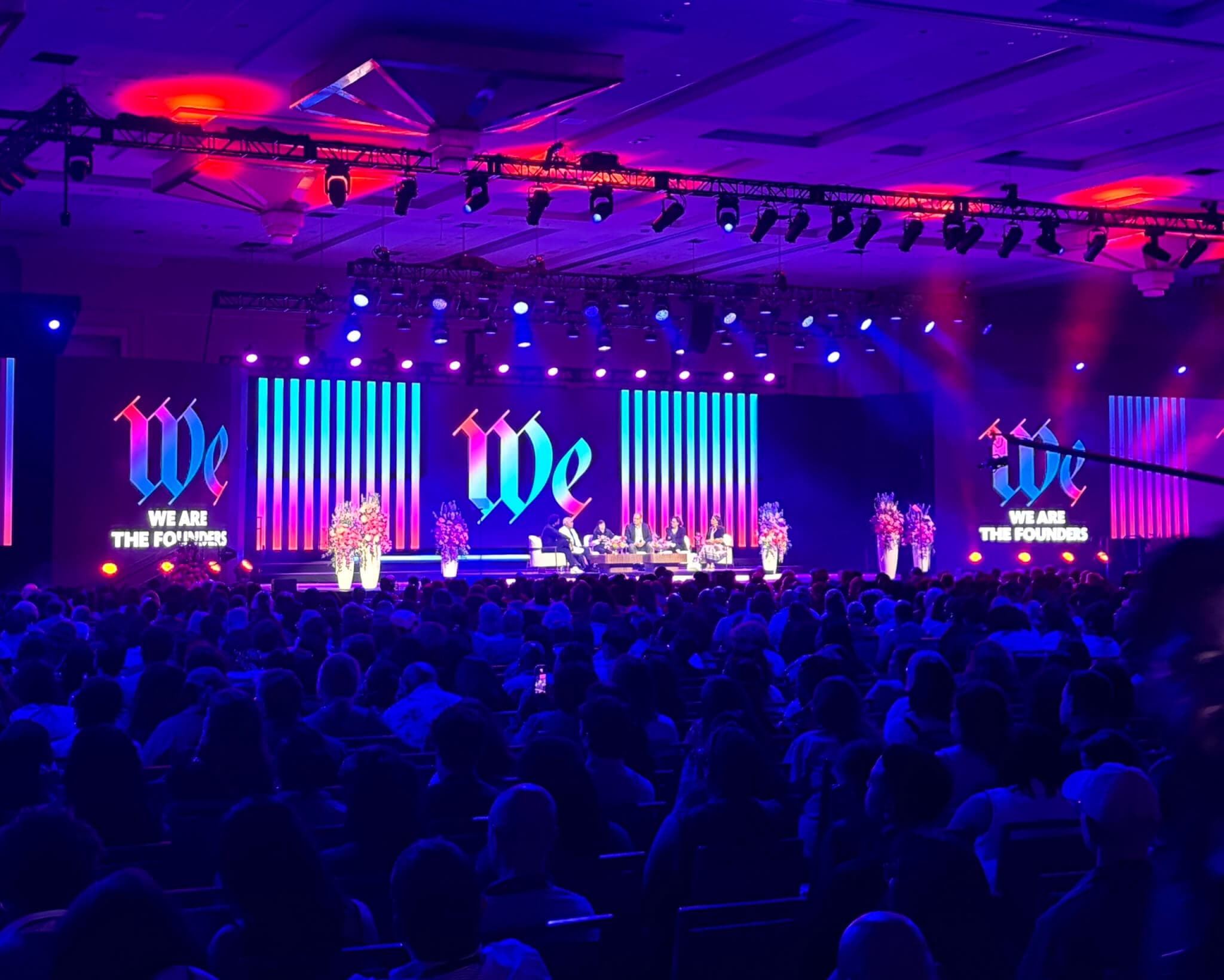
On an April afternoon after Qingming (tomb sweeping holiday) on the Pao Arts Center balcony, over a hundred community members from Boston Chinatown, artists, activists, scholars, alongside several Buddhist venerables from the Thousand Buddha Temple in Quincy, chanted the heart sutra while offering fruit and incense at an altar to their ancestors. For many of those separated from family and without access to burial grounds, this was a gathering to both mourn and celebrate ancestry with ritual guidance and spiritual company. Contextualized by the exhibition opening of “Temple of Our Ancestral Dreams,” on view through June 19, 2026, the site-specificity of the community center activated Chinatown as a diasporic temple and communal refuge, while evoking what Audre Lorde called “biomythography”—a weaving together of history, biography, and myth. The gathering encompassed accounts of physical place within the safe space of mythologies dreamed up in the hearts and minds, and thus materialities, of those who inhabit it.
What was originally proposed as a series of public performances throughout Boston Chinatown by the curators Wenxuan Xue and Sung-Min Kim became a larger project honoring “ancestors,” emphasized by Xue and Kim as “those who have come before us—blood, chosen, and place-based ancestors, those who have dreamed of our existence today.” Elders, Asian American activists, soybeans, and displaced tombs as kin feature as throughlines in works spanning a range of media by an intergenerational group of local artists: Lani Asunción, Feda Eid, Kenneth Eng, Zhonghe (Elena) Li, Joanna Tam, Yolanda He Yang, Ying Ye, and Michelle “Mimi” Zhang.
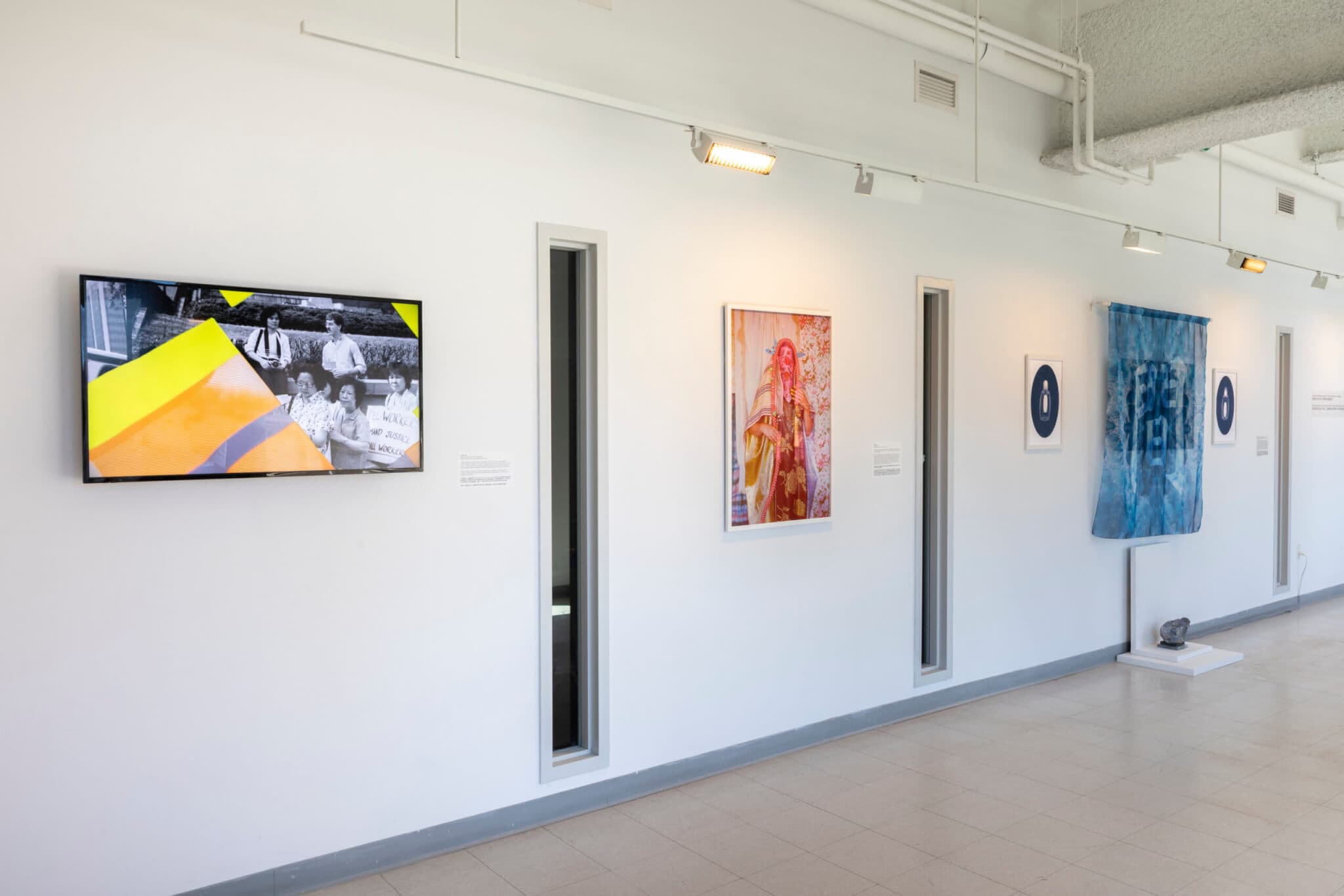
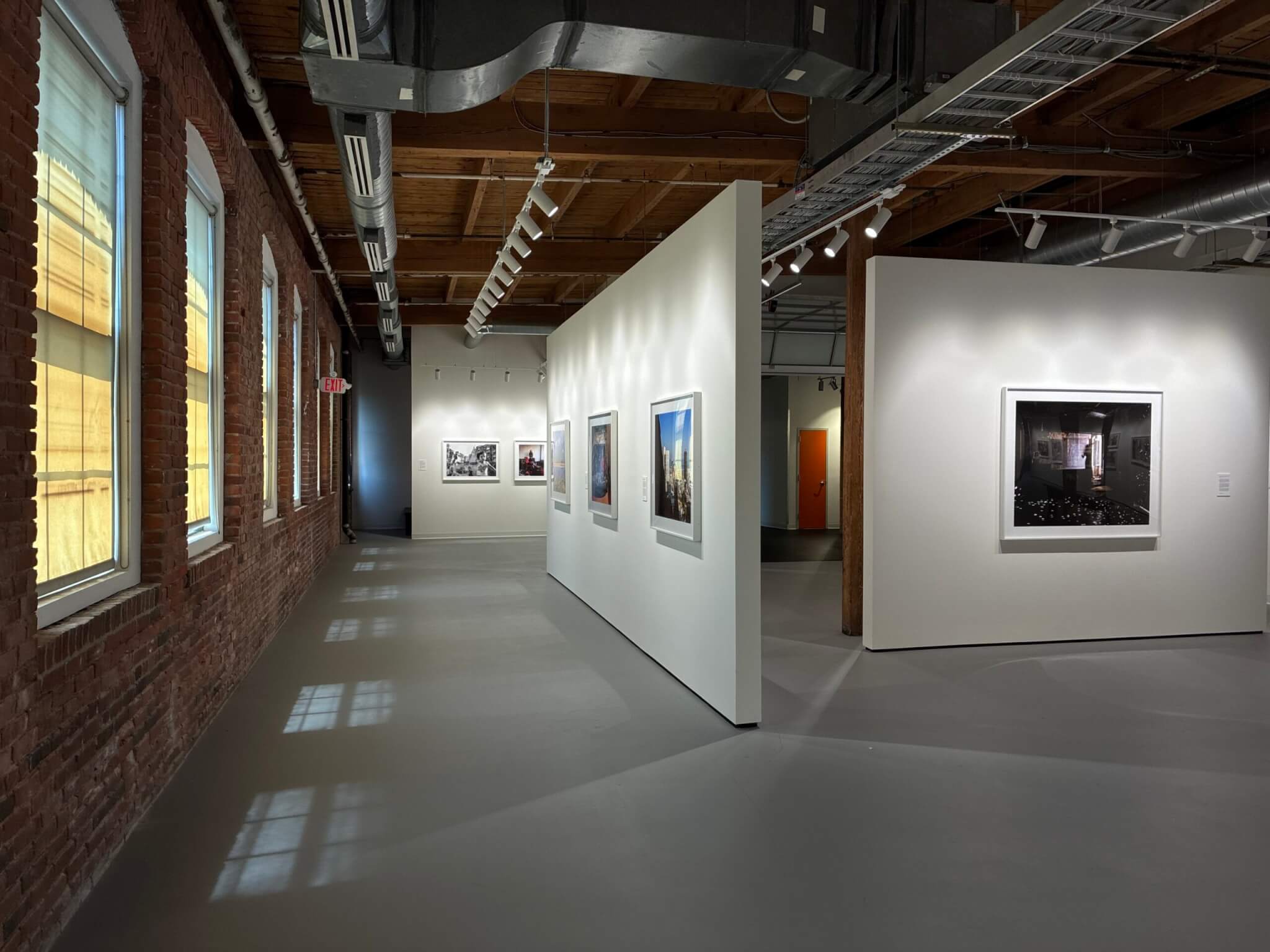
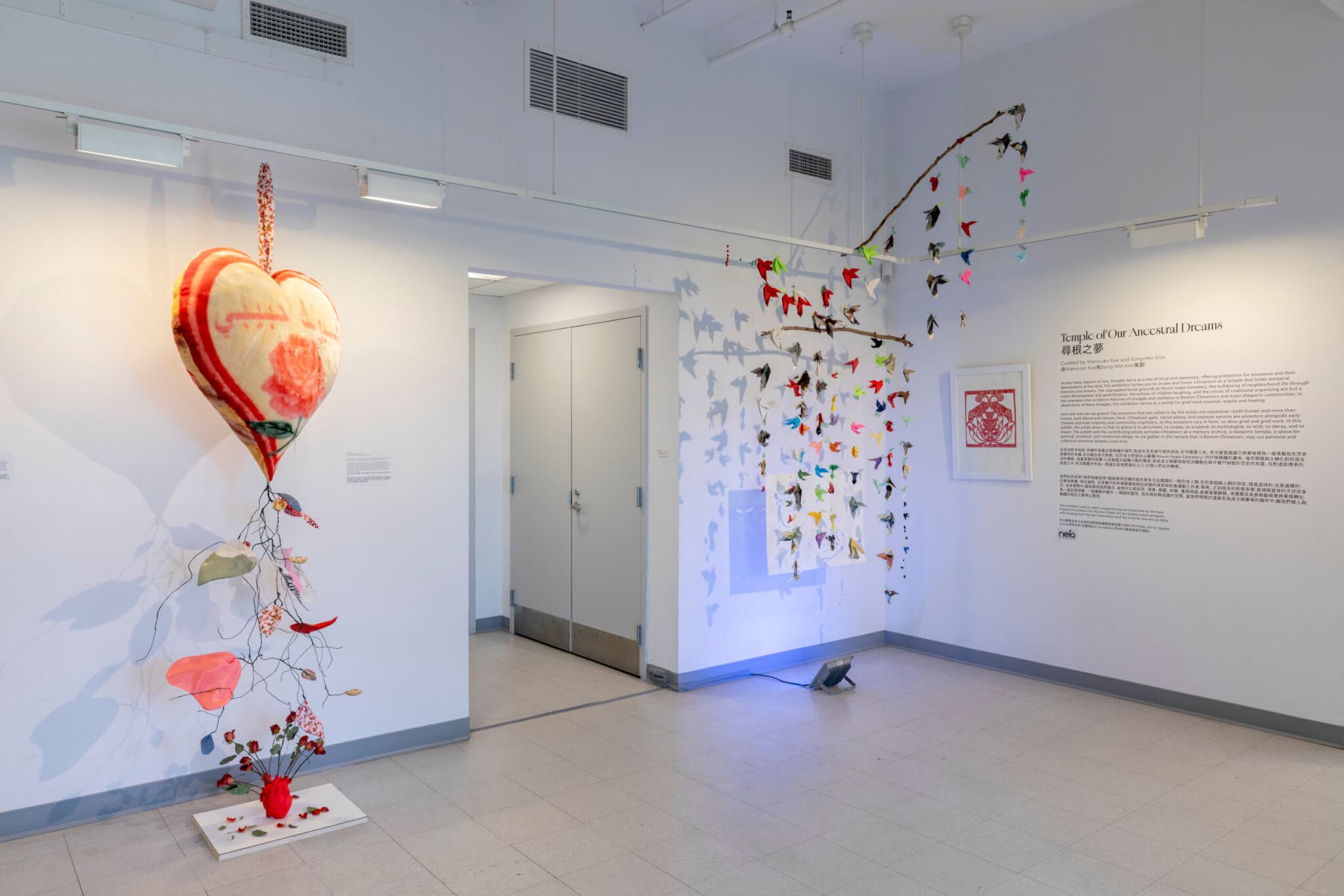
Installation view, “Temple of Our Ancestral Dreams,” Pao Arts Center, Boston MA, 2026. Photo by Mel Taing. Courtesy of Pao Arts Center.
Continuums of resilience despite struggle—including segregated burial grounds at Mount Hope, the bulldozing of neighborhood life through urban development and gentrification (e.g. Boston’s Big Dig to public housing projects), grassroots labor to community organizing against war and violence—resound throughout the exhibition. In turn, they evoke the Chinese character ren 忍, meaning “to endure,” which I have long held spiritually dear, its radicals placing a knife’s edge over a heart. In the great work of life and death, the collective work of grief begins in the exhibition space via a monitor screening Eng’s most recent documentary film on the Mount Hope Cemetery Restoration Project, which involves the identification and restoration of more than 1,500 Chinese immigrant tombstones, including of the unidentified original immigrants from China who settled in the Boston area. In solidarity with Gaza, Eid created لعيونك حبيبي For Habibis Eyes (2024), a hanging, soft-sculpture heart from a decorative lebanese blanket, common in homes in the global south, which are more and more used to wrap the bodies of deceased children of war. The petals beneath reference Arabic sayings such as “we come from the earth and to the earth we will return.” Folk artist and museum educator Li’s work, Returning to the Shore — Peace and Compassion (2026), highlights the craft of papercutting as a way of life, art that is meant to be touched, broken, and lived with. Tam’s Visibility Studies (Activists Inspired) (2025) series examines the nuances of invisibility, hypervisibility, and “scapegoating” in relation to safety for AAPI communities. Rituals and public programs are reflected in Zhang’s interactive altars, He Yang’s performance sweeping the Chinatown gate in honor of those who do so every day as an act of sustained community care, and Ye’s engagement with her family’s cooking and farming heritage in a soy-to-sprout-to-paste installation. Together, these works render the recalling of ancestors in “Temple of Our Ancestral Dreams” full circle.
“Temple of Our Ancestral Dreams,” is on view through June 19, 2026, at Pao Arts Center, 99 Albany Street, Boston, MA.