Felicia Megginson’s photography embodies the flora of her environment. Through self-portraiture, Megginson leaves remnants of herself and loved ones in her prints. Hands, faces, and shadows grace her artwork, blending harmoniously with the branches, waters, and meadows that compose Megginson’s milieu. Megginson is a Providence-based photographer whose oeuvre evinces keen contemplations of herself communing with nature. What I find most compelling is her ability to capture the vitality of nature through her photography: tree branches rustling above a creek, water rippling, leaves glowing in the sunlight.
Visitors feel immersed in Megginson’s imagining of these natural landscapes in “Re-Framing Nature,” her solo exhibition at the Reilly Gallery in the Smith Center for the Arts at Providence College. On view through September 12 and organized by Carol Stakenas, director and chief curator of the school’s galleries, the show traces Megginson’s photographic work primarily from 1998 to 2004.
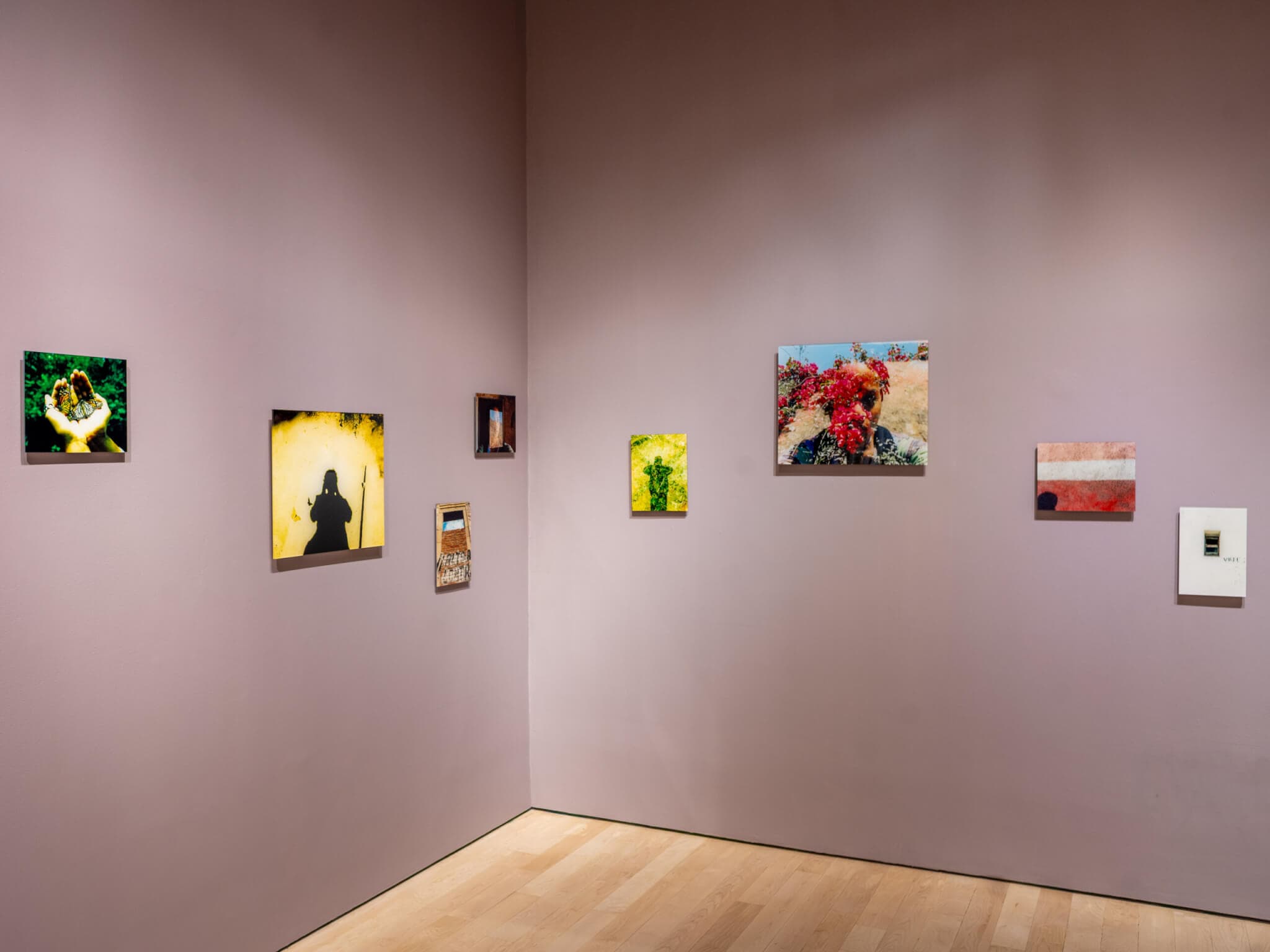
Among her earliest works is Megginson’s Nature, Girl series (1998–99). These self-portraits are introspections of Megginson’s wanderings through natural landscapes she encountered, including Brooklyn and Tepoztlán. She moves not just as an observer but as a thriving part of her environment. In these chromogenic color prints, her face is obscured by branches and flowers—coalescing with the flora. Claw (1998) depicts a hand suspended over a grassy area sprinkled with leaves. Traces of the surrounding foliage seem to imprint themselves onto the hand, which appears to melt into the earth, as if the two are one.
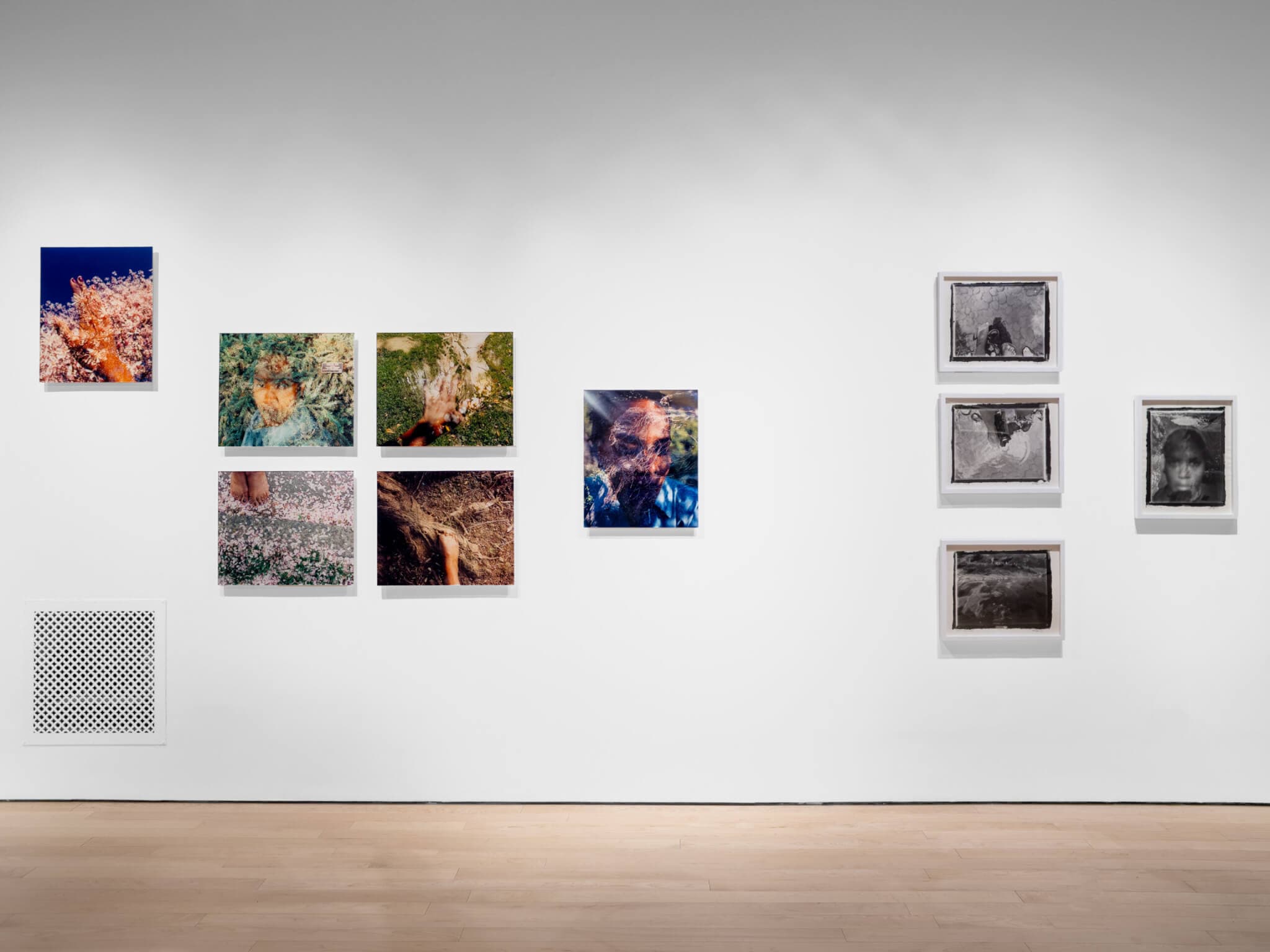
Installation view, “Felicia Megginson: Re-Framing Nature,” Providence College Galleries, Providence, RI, 2026. Photo by Scott Alario. Courtesy of Providence College Galleries.
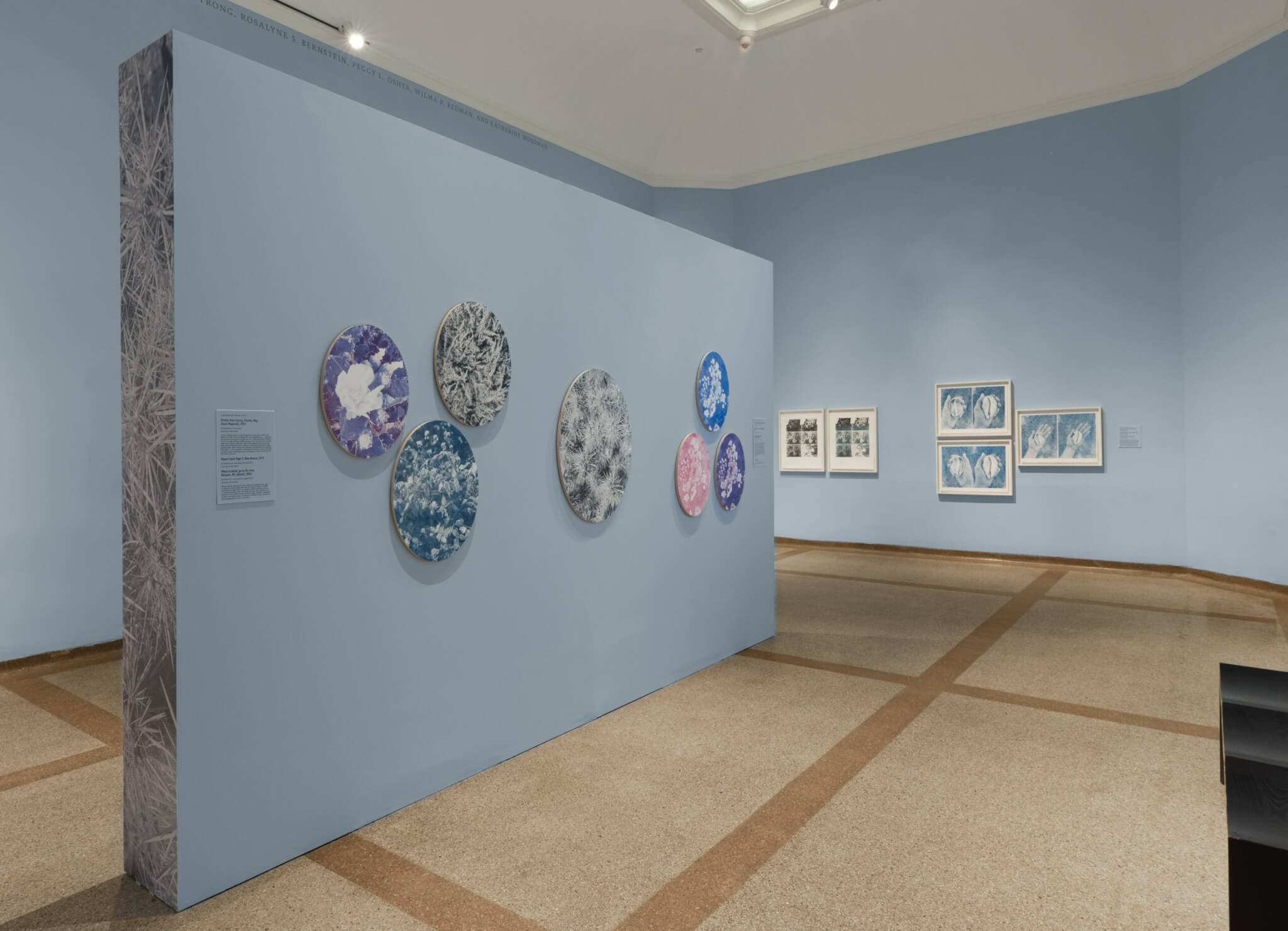
From 2001 to 2004, Megginson pictured her world in black-and-white and sepia tones in her Alice Wasn’t Lost, She… series, continuing to overlay her self-portraits on images of nature. These toned gelatin silver prints appear more transient as her body glows in shades of gray and white amid darker plants in the backgrounds. Consequently, spirituality is powerfully embedded in these prints. The body of work is broken up into four thematic series titled Communion, Permutation, Manifestation, and Transformation—suggesting that Megginson experienced an important awakening during her explorations. In Manifestation—Woodlands 4 (2003), Megginson’s face illuminates between the tree branches, transporting viewers to the artist’s experiences adventuring through the woodlands.
For Megginson, a Black American woman, wanderings through landscapes represent an intentional connection to her ancestors and her own present reality living in the United States. On her website, she notes that with the Nature, Girl series, she aimed to subvert stereotypes about Black women’s connections to nature. Specifically, she sought to combat the idea that outdoor activities are reserved for white people. Megginson emphasizes that Black women can also be “nature girls.” As women’s studies scholar Katherine McKittrick writes, “…black geographic subjects differently produce space within this context of domination and objectification: specifically, the seeking out of alternative geographic options, and the coupling of geography with black matters, histories, knowledges, experiences, and resistances.” Megginson is barefoot in nature, wholly immersed in the terrains and waters of her environment. Her movements are whimsical yet steady and marked—a privilege that Megginson’s enslaved ancestors were not afforded.
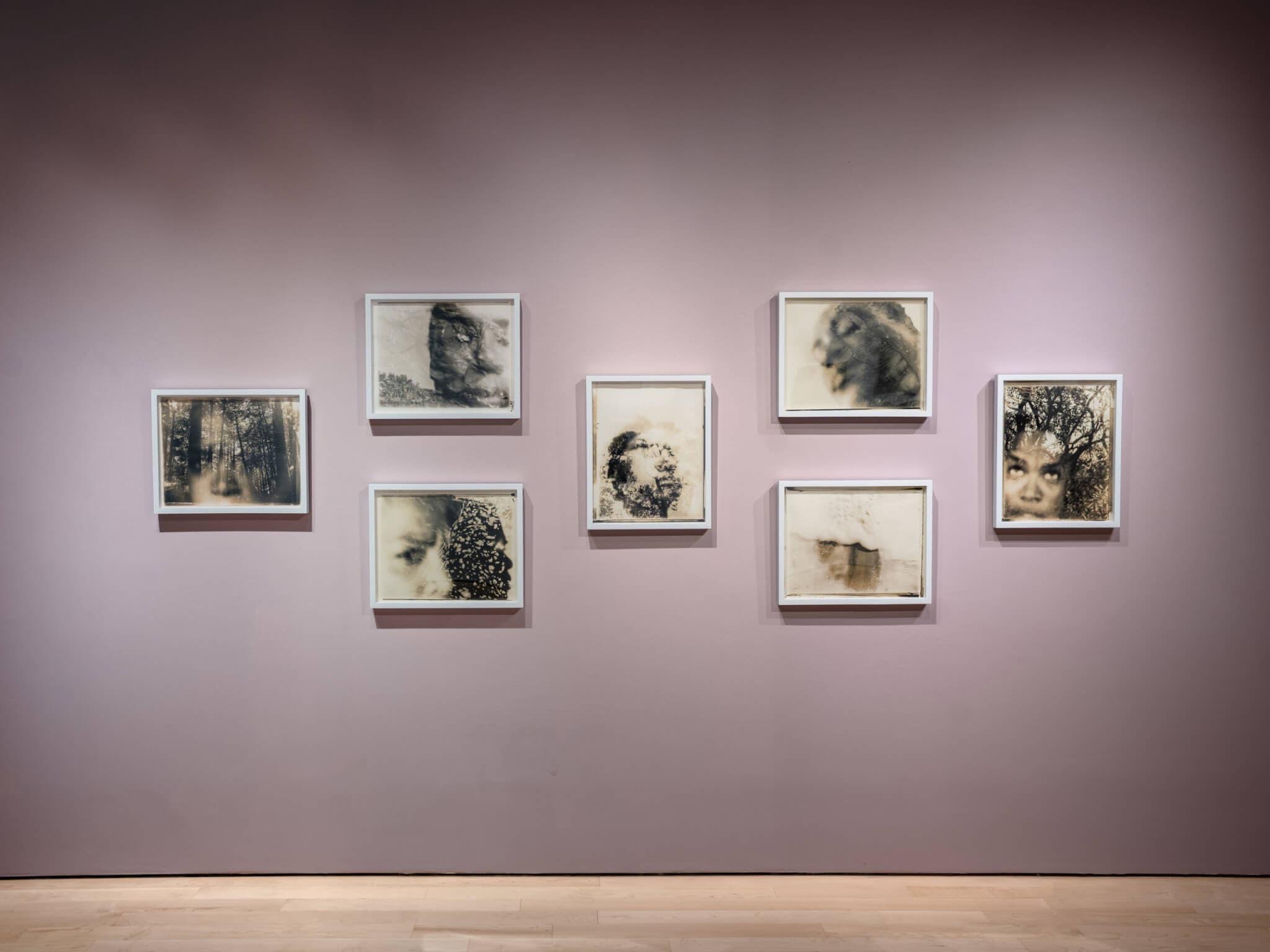
Felicia Megginson, Manifestation and Transformation series, 1999–2004. Installation view, “Felicia Megginson: Re-Framing Nature,” Providence College Galleries, Providence, RI, 2026. Photo by Scott Alario. Courtesy of Providence College Galleries.
Visitors can journey through locations in Brooklyn, Manhattan, and Woodstock, New York, by flipping through pages of The Shadow Box (1999–2000), a boxed portfolio. Quotes by Gaston Bachelard and Ralph Ellison are included in the artist’s statement, emphasizing the importance of immersion in nature. One quote by Bachelard states, “In the forest, I am my entire self. Everything is possible in my heart, just as it is in the hiding places in ravines.” Each page of Megginson’s book reveals a site with a new ambience. Another highlight of the exhibition is a video installation titled Kinetic Drawings (2019–22). This short film features different bodies of water in Rhode Island as well as Venice, Italy. Some parts of the film are slowed down and zoomed into rippling surfaces, while others move at a faster pace, widening to broader views of shoreline. Even though the locations are distinctive, they are interconnected in the video and only differentiated by the wall label.
“Re-Framing Nature” harmonizes Megginson and the landscapes she occupies. Visitors can ruminate on the artist’s ever-evolving exploration of her natural environment. Her self-portraits envision a bridge between Megginson’s present and her ancestors’ past as she sojourns—blossoming into a more conscious version of herself.
“Felicia Megginson: Re-Framing Nature” is on view through September 12, 2026, at the Reilly Gallery in the Smith Center for the Arts at Providence College, 63 Eaton Street, Providence, RI.