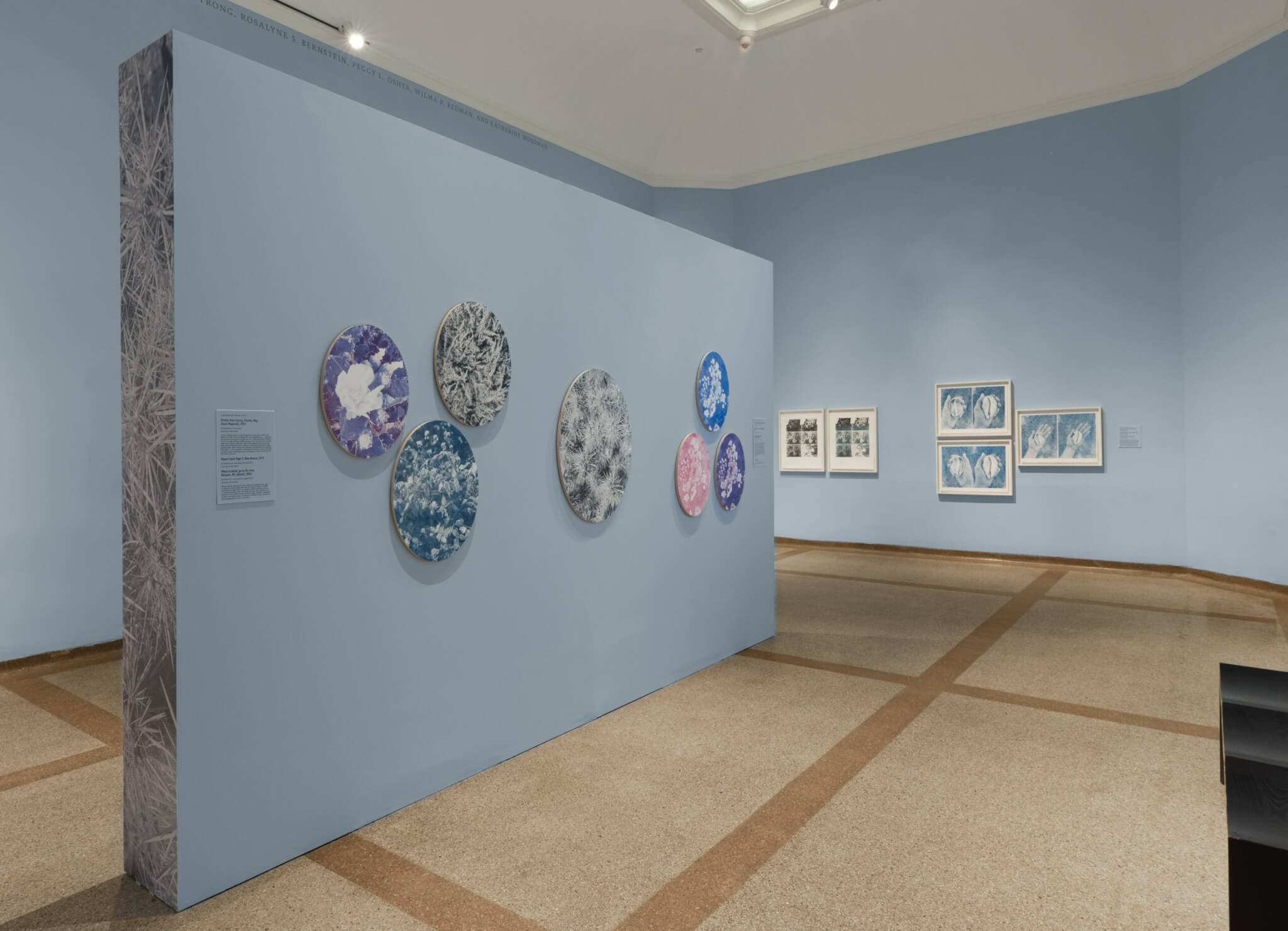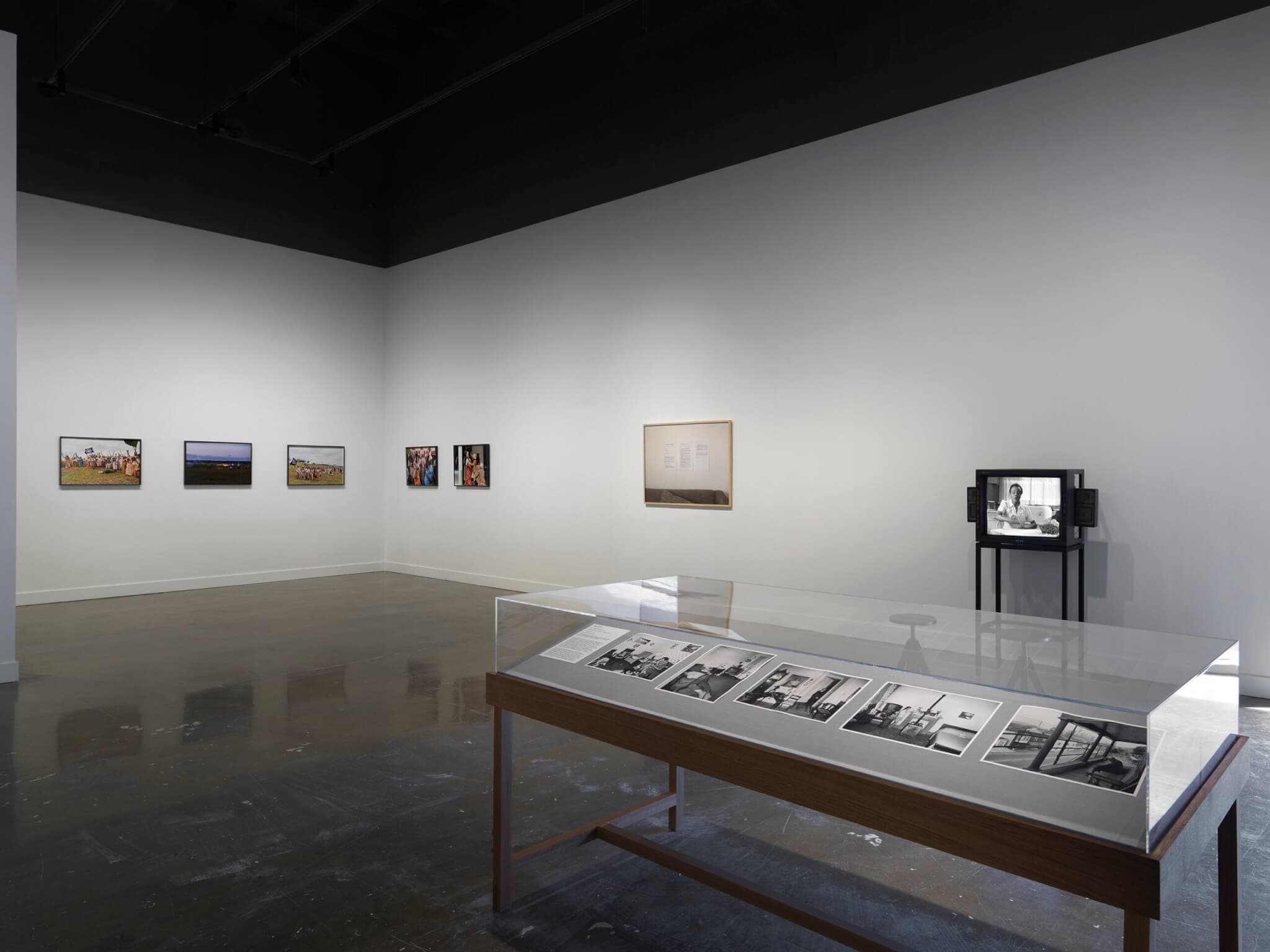
“Performing Conditions: Artistic Labor and Dependency as Form” is an ambitious exhibition of twenty-five artists and collectives that considers diverse sites of labor shaped by the national and global transformations of the last two decades. Following the 2008 financial crisis, Occupy Wall Street, and political and labor organizing, MIT List curators Natalie Bell and Ramona Ngin are interested in a different form of institutional critique that insists on the material conditions of artmaking. Recognizing the labor of art debunks what they refer to as “the myth of art’s autonomy” by foregrounding the social, political, and historical conditions that shape its production and consumption. Simultaneously, the exhibition suggests a reconsideration of debt and dependency outside of neoliberal models, seeing it as constitutive to collective and community life over generations rather than merely debilitating. While “Performing Conditions” is expansive in its interpretation of labor in ways that can be very generative, the differences are at times underplayed. In other words, there seems to be an important distinction between the labor of art and art about labor, even if the two often intersect. Or for that matter, labor within the art world, in its varied forms, and labor beyond it—even if the tools and language being used can seem similar. The broad definition of labor risks abstracting it into something that can feel a little too heady and less grounded than the exhibition’s intent.
The notion of the contract—within and beyond the art world—emerges as a central node in the exhibition, both as a physical object but also as an organizing structure that shapes economic and legal conditions; its pervasiveness throughout is crucial to demystifying the art world. As a formal agreement, often intended to be legally binding, the contract can be simultaneously protective and restrictive. In I, The Artwork (2016), Yazan Khalili outlines some of these contradictory elements; despite its attempts at clarity and definitiveness, there is much that is defined by context and open to interpretation. The framed photograph documents a three-page contract pinned up casually above a couch. The informality of this domestic setting is in tension with the formulaic language the text employs. As the title suggests, the agreement seeks to define the relationship between the art object and its owner, asserting the former’s independence from the artist. Contrary to the normal requirement that a contract relies on human signatories, Khalili insists on the agency of the artwork, perhaps compromising the “legality” of the document itself. The contract attempts to protect the political integrity of the artwork, ensuring that it is not exhibited in contexts that counter its political position. However, its fragility renders its efficacy questionable.
The transactional nature of the art world is underscored through works that attempt to entice the audience into contractual agreements, sometimes enlisting them as performers. For Nine Hour Delay (2012–58), Irena Haiduk (under the “oral corporation” Yugoexport) produced a few hundred pairs of Borosana shoes, ergonomic pumps designed in 1960s Yugoslavia to be suitable for nine hours of work on the production line and required for women across the public sector. The shoes were distributed at the opening to recipients who contractually agreed to only wear the shoes when working. Similarly, Mon Mon Bag (2016–) required that participants carry the black or beige handbag—containing currency designed by Haiduk (Nula Bill, 2026) in reference to the hyperinflation of her childhood—throughout the exhibition’s opening. Through this participation, audience members not only become performers, but also workers of sorts; the artwork is dependent on the relationship that emerges from this exchange.
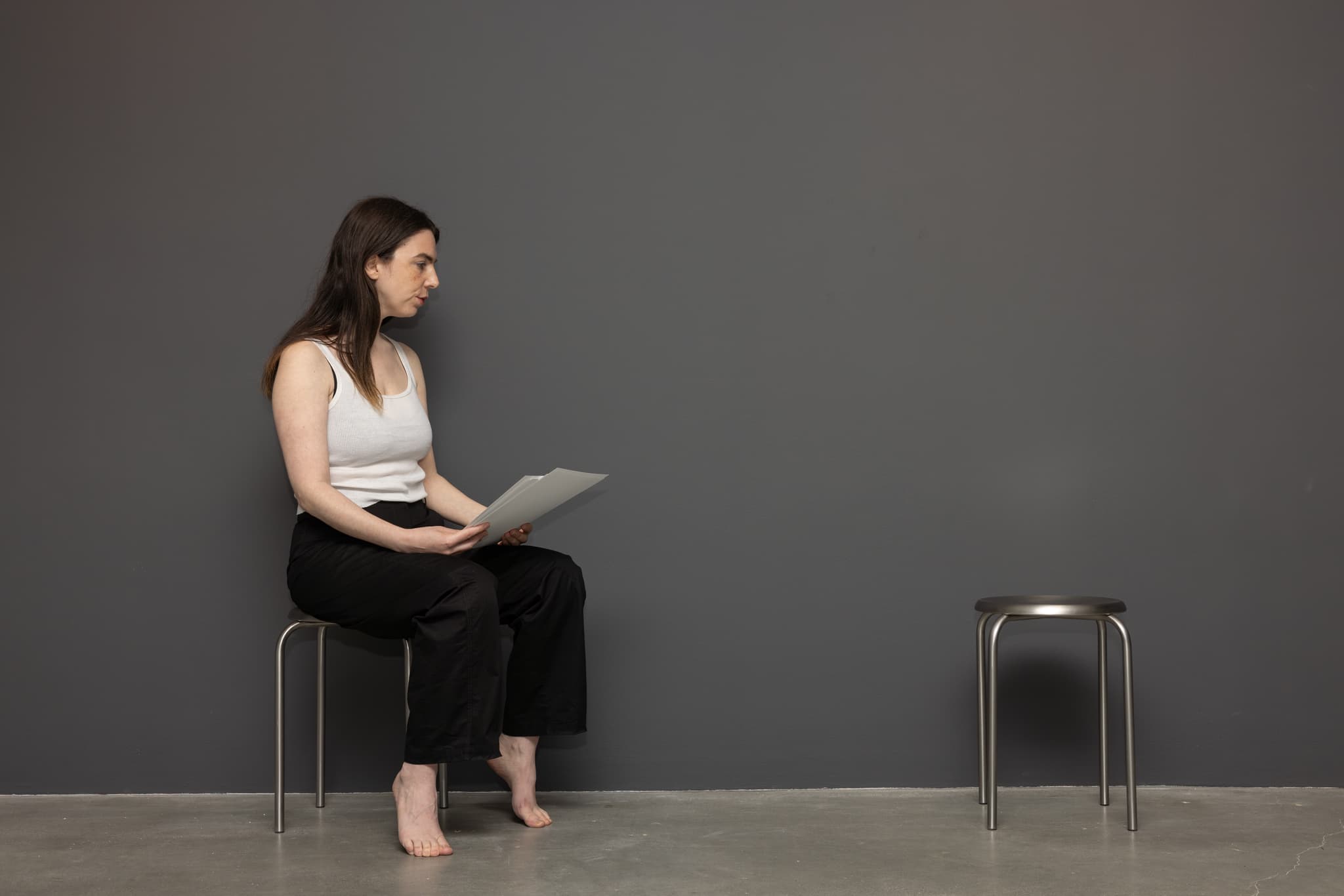
Sophia Giovannitti, Contract, 2026. Performance at MIT List Visual Arts Center, Cambridge, 2026. Photo by Melissa Blackall. Courtesy MIT List Visual Arts Center.
Transparency seems to be an immediate goal of several of the works. Rather than transformation of the art world, they reveal its infrastructure and even attempt to co-opt some of its tools and strategies. Sophia Giovannitti identifies and aggravates the tensions that exist between artists and audiences/collectors by activating tools that are not usually used by artists. She required audiences to sign a nondisclosure agreement in order to be admitted into Confession Prototype 1 (2025); a similar agreement is required to view the recording of this performance as part of “Performing Conditions.” Admission into the new iteration of Contract (2026), which ran from May 5 through 10, cost $1136.63.
Similarly, through a series of “context-contingent” scores that are reinterpreted in relationship to the specific institution, Ghislaine Leung makes visible the often invisibilized labor of exhibition-making on which the art world depends. Viewers can find evidence of Maintenance (2025)—holes in the walls, shavings of wall text, paint on the floor—throughout the exhibition, as the score dictates that the “space is left as it is” from the previous show. Elements of Leung’s score intermingle with surrounding artworks, at times easy to miss, blurring the conventional boundaries between individual pieces. As we exit the main exhibition space, we encounter Budgets (2025) which puts on full display a detailed breakdown of the expenses of “Performing Conditions.” Both scores walk a fine line since the “truths” they reveal are entirely dependent on the cooperation of the spaces in which they are exhibited, a limitation which ultimately reveals the ability of art institutions to accommodate and even celebrate such exposition, raising questions about the conditions of the exhibition’s own critique.
Oftentimes this relationship of dependence goes both ways, especially as art spaces face increasing uncertainty. As part of the seven-year project The Employee (2018–25), artist Joshua Schwebel hired performer Camille-Zoè Valcourt-Synnott as a part-time grant writer for Forest City Gallery (FCG) in Ontario. The year-long employment/delegated performance was funded by a grant Schwebel obtained from the Canada Council for the Arts. None of the grant applications on behalf of the gallery were successful; however the project culminated in a publication and comprehensive email archive. On exhibit in “Performing Conditions” is a video of the employee as she carries out the day-to-day tasks over webcam, alongside the contract between Schwebel and FCG and various email exchanges concerning the project. The Employee brings to the fore the precarious reality of the gallery, an artist-run space that has relied on public funding for fifty years and depends on the labor of one part-time employee.
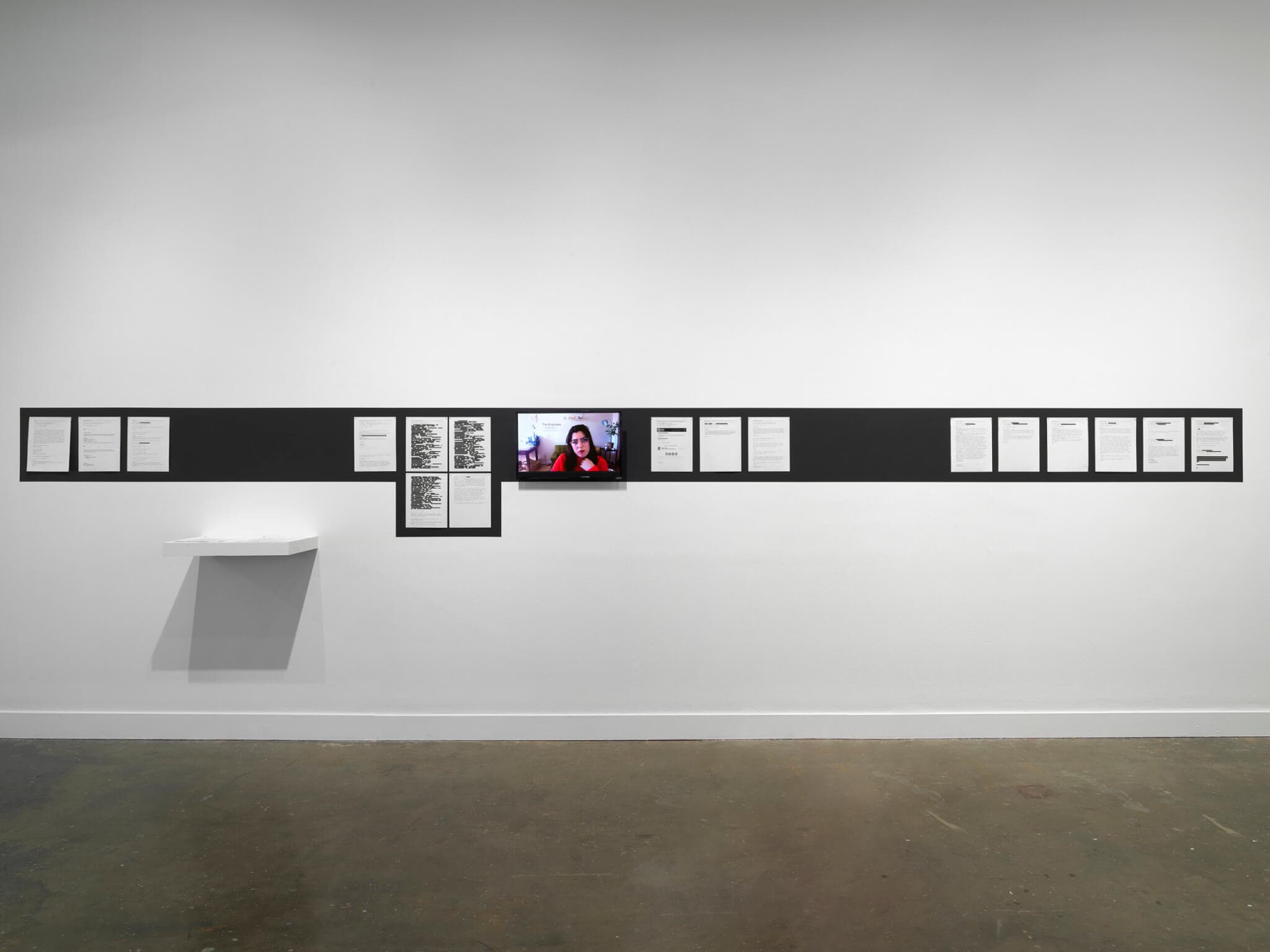
Joshua Schwebel, The Employee, 2018–25. Installation view, “Performing Conditions: Artistic Labor and Dependency as Form,” MIT List Visual Arts Center, Cambridge, 2026. Photo by Dario Lasagni. Courtesy MIT List Visual Arts Center.
Cassie Thornton attempts to give a physical form to the underplayed precarity caused by student loans acquired during her MFA program. Documentation from her 2011–12 works—including the guerrilla tours she gave of the Richard Serra retrospective at the San Francisco Museum of Modern Art—reveal how, when trying to describe the overwhelming weight of their debt, her classmates often referred to Serra’s steel sculptures. As with many of the works in “Performing Conditions,” the archive itself emerges as both another form of performed labor and evidence of the labor/performance itself.
The corporatization of the art world and its complicity in (re)producing exploitative working conditions emerges most clearly in Chauncey Hare’s struggle against the co-option of his work. Hare, who began taking photographs in the late 1950s, documented the alienation of American workers in both their homes and workplaces. The archival material on display—including his correspondence and books such as This Was Corporate America (1984) and Work Abuse: How to Recognize and Survive It (1997)—reveals that while his stark black-and-white photographs won him recognition, he became increasingly disillusioned with the art world’s emphasis on the formalistic qualities of his work rather than its sociopolitical concerns. The frustration and alienation captured in his photographs was reproduced in his own interactions with art institutions and came to define his relationship to his practice. He resisted being identified as a photographer, thinking of himself instead as “a working person” who takes photographs, and refused to sell his work which he considered to be further exploitation of his subjects. Ultimately, he abandoned photography in 1985 and spent his later years working as a therapist.
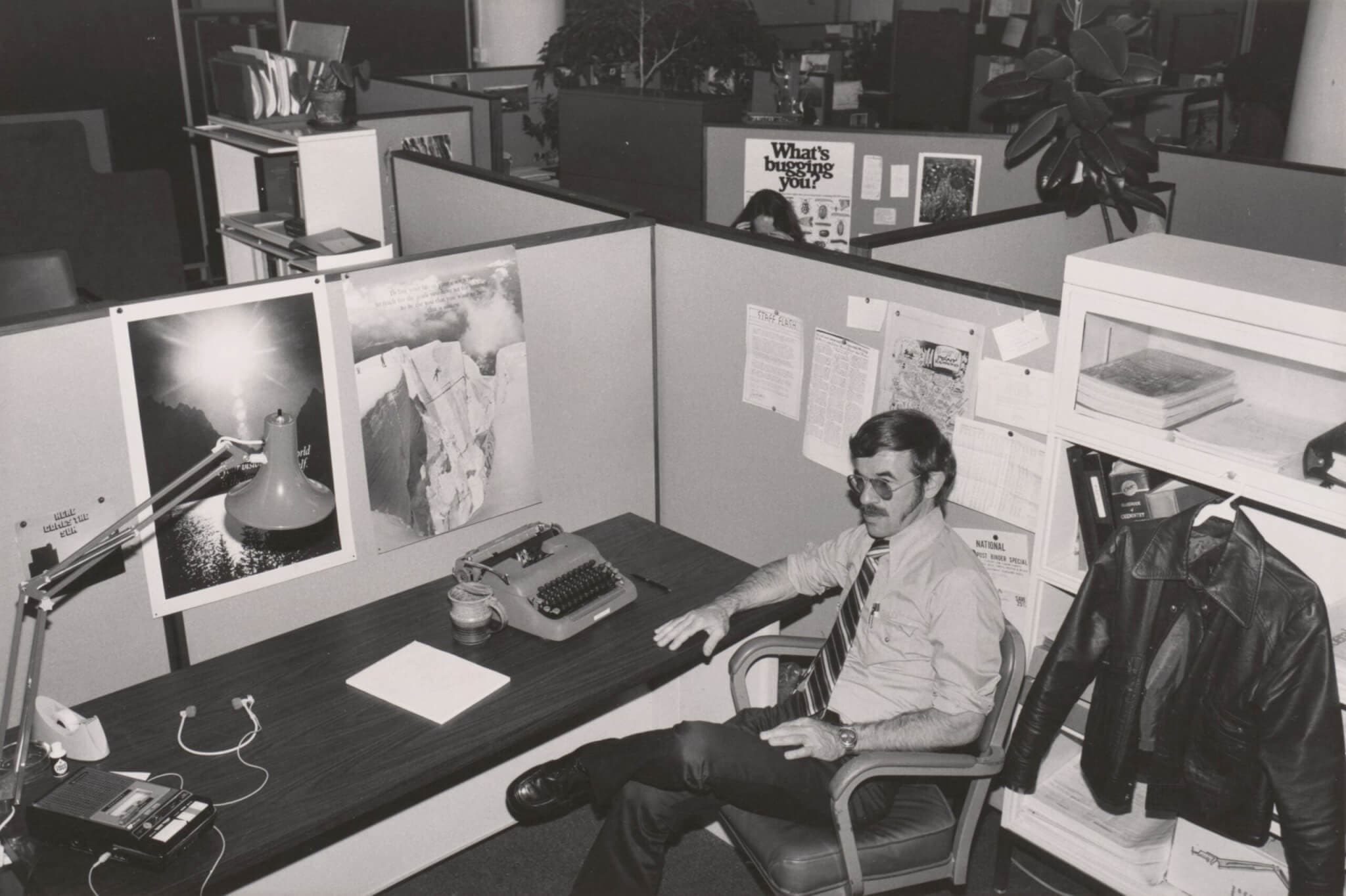
Chauncey Hare, Self-portrait at the EPA, 1980. Chauncey Hare photograph archive, The Bancroft Library. This photograph was made by Chauncey Hare to protest and warn against the growing domination of working people by multi-national corporations and their elite owners and managers.
While Hare’s work captures the similarities between corporate America and the art world, it also underlines some real differences, further heightening the sense of disillusionment; celebrating artwork about exploitative work conditions might mean recognizing and rewarding the artist but this does not necessarily translate into an effort to improve these very conditions. A tension emerges here between institutional critique focused on artistic labor and the other forms of labor—domestic, enslaved, racialized, gendered, reproductive—tackled in some of the works. “Performing Conditions” defines the category of labor quite broadly, which risks obscuring meaningful distinctions between its varied forms. This tension is apparent in the inclusion of a number of works in the exhibition that focus on gendered labor, especially that of Black women. An abbreviated, made-for-television version of Blondell Cummings’s iconic work Chicken Soup (1981) reclaims the kitchen as a powerful space of ancestral gathering for Black women. On a set reminiscent of a 1950s kitchen, visual shorthand for the modern woman’s domain, Cummings performs a series of movements that reference domestic labor. She begins seated at the table: “The kitchen was the same. The table was the enameled table common to our class,” a woman’s voice soothingly narrates. However, as the video progresses, Cummings’s movements become increasingly striking and dramatic; as she moves through the spacious kitchen, asserting her presence over it with her body, she transforms it from a space associated with Black women’s subjugation to an archive of inherited and embodied memory.
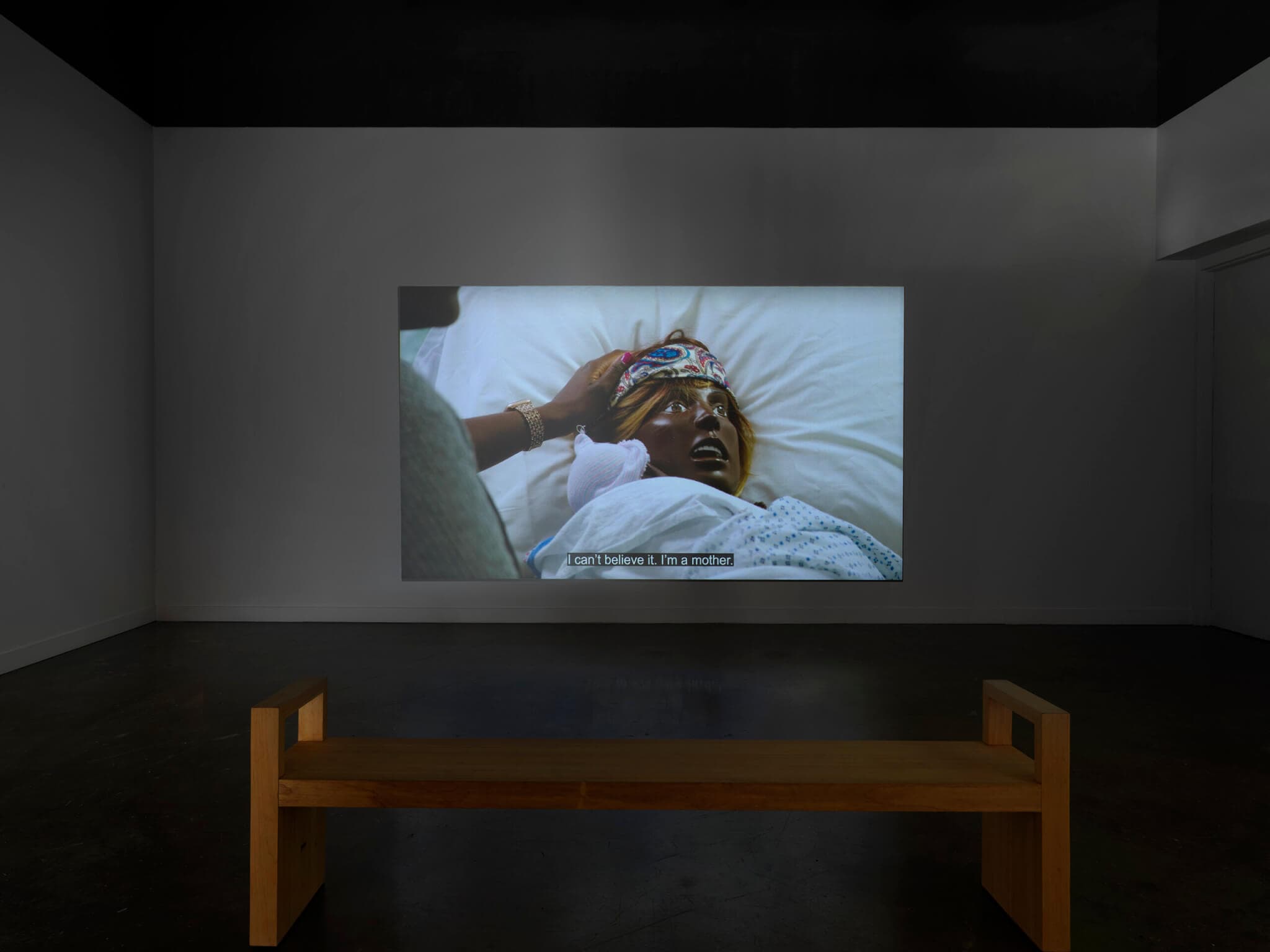
Carolyn Lazard, Fiction Contract, 2025. Installation view, “Performing Conditions: Artistic Labor and Dependency as Form,” MIT List Visual Arts Center, Cambridge, 2026. Photo by Dario Lasagni. Courtesy MIT List Visual Arts Center.
Generational maternal labor is blown up into a party banner in Autumn Knight’s IM SORRY MOM (2026). The plush, flesh-colored letters, stitched by hand, hang across a window in the gallery, visible to passersby. The size of the apology is in tension with its softness, communicating the complex of emotions that sustain relationships across generations: debt, gratitude, guilt. In Fiction Contract (2025), Carolyn Lazard, whose work often explores racialized experiences of illness and medical treatment, navigates multiple valences of labor in a maternity ward in a Queens public hospital. The film documents the simulation of childbirth, enacted with and through Jada, a Black birthing mannequin, during which participants suspend disbelief and engage with the scenario as if it were real for training purposes. Jada both animates the performance and is animated by it; she is caught in a permanent state of reenactment.
In a series of six photographs, Dread Scott documents his restaging of the German Coast Uprising, the largest rebellion of enslaved people in United States history which broke out in Louisiana in 1811. Slave Rebellion Reenactment (2019), an enormous production which involved more than 300 Black and Indigenous people marching twenty-six miles over two days, centers the liberatory experience of the uprising rather than its brutal suppression. What is perhaps most captivating about the photographs is that they do not attempt to conceal the contemporary conditions of the reenactment in pursuit of some imagined notion of authenticity or fidelity. Instead, the restaging is as much about contemporary conditions and possibilities for resistance as a recognition of this important history. The image of the march proceeding down Cancer Alley, oil refineries in the background, is especially striking, as Standing Rock protests immediately come to mind. The distinctions of historical time are collapsed in favor of immediacy and continuity.
Labor emerges as something of a moving target in “Performing Conditions,” which is, in itself, thought-provoking. In its much-needed attempt to expand our understanding of labor, and to insist on its multiple iterations throughout the art world, it risks at times flattening or abstracting it. While the connections forged across “the many landscapes of labor” are crucial, the distinctions are perhaps worth exploring and at times maintaining. Moreover, the forms of labor captured or reenacted in the artworks are broad in range; the plantation is not the dance studio. “Performing Conditions” is a conceptually generous exhibition that tries to juggle several weighty topics simultaneously, provoking urgent questions about labor in and beyond the art world.
“Performing Conditions: Artistic Labor and Dependency as Form” is on view through August 2, 2026, at the MIT List Visual Arts Center, 20 Ames Street, Cambridge, MA.