At Abigail Ogilvy Gallery, Stephanie Todhunter’s “Latchkey Kids” series continues with her solo exhibition “Stranger Danger.” Using vintage dolls, plaster, and inks, Todhunter captures the “lost-in-place” feeling of the 1970’s latchkey kids generation by accentuating their fading, unsettling, yet captivating features.
The exhibition explores the construction of modern teenage identities with poignant, almost haunting reflections of the past. Todhunter toys with concepts of the young female body and its form by plastering the dolls to highlight their peculiarity, beauty, and unique personalities. Todhunter specifically uses vintage Dawn dolls from the 70s because “they were small, generic, easy to carry and easy to lose.” They act as trivial memorabilia which corroborate with notions of identities both lost and found. Naming and designing them individually, Todhunter gives the girls new personalities beyond their generic, manufactured forms.
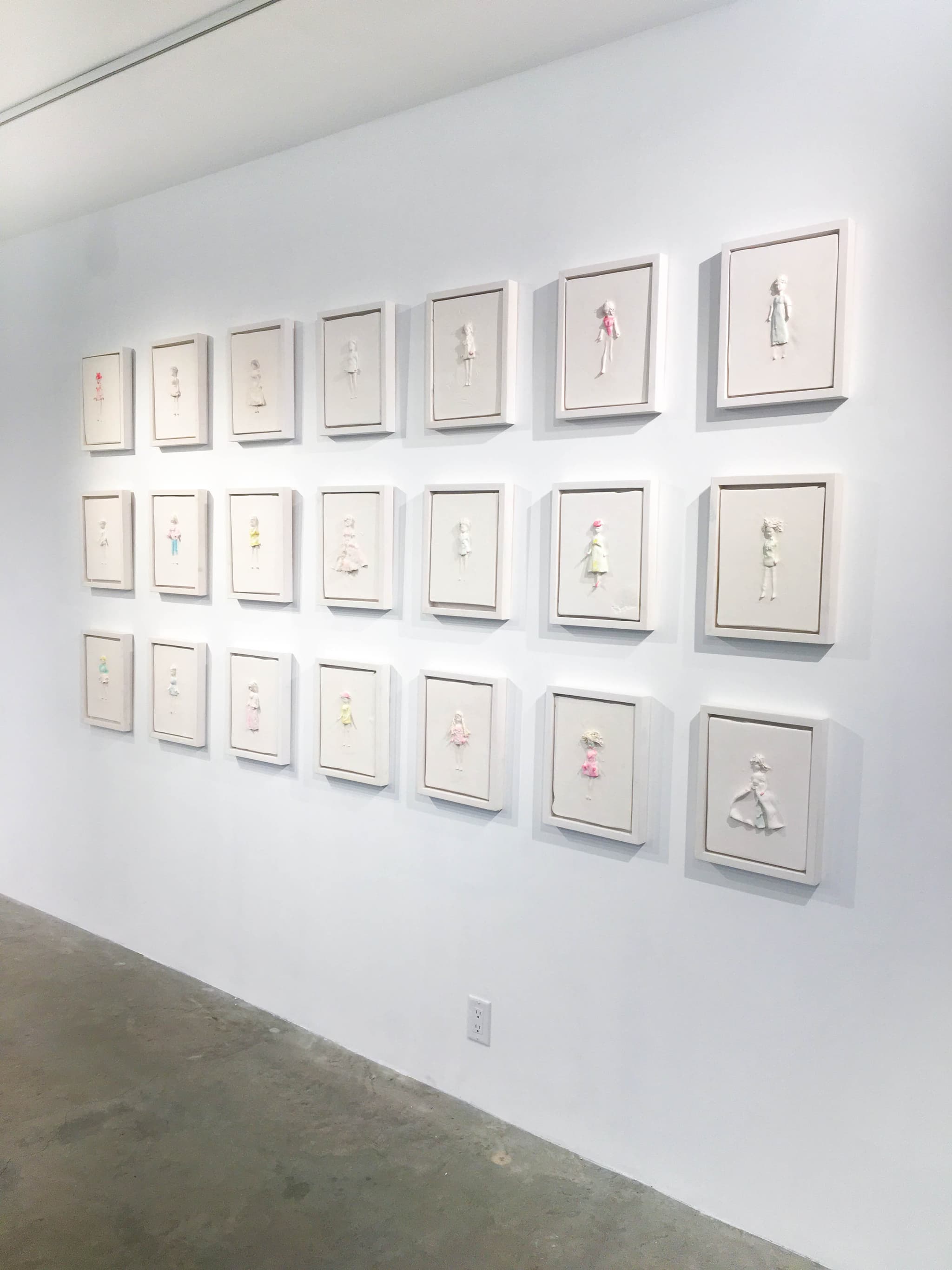
Stephanie Todhunter, Installation View (2018) Image courtesy of Abigail Ogilvy Gallery
The exhibit begins with a series of girls encased with plaster in rectangle frames that resemble the display boxes they might have been originally sold in. Like specimen on display, the girls look into the gallery with a kind of dreamy longing. Todhunter recounts the stark reality of the latchkey kids stating that, “children in the late 70’s and early 80’s were the unfortunate victims of increasing divorce rates, isolation, and lack of parental responsibility.” While her “lost girls” embody the unnamed youth of yesteryear, there is still something very contemporary about her work. The youth of today are faced with a different kind of isolation as constant stimulation, internet access, and helicopter parenting leaves little room for kids to be kids.
To the left of the plaster dolls, a series of enlarged, mixed media prints dominate the wall. Here, Todhunter’s work is metamorphosed as a quartet of girls stand within constructed realities. She gives the girls a grander narrative as their plaster bodies enter the scenes of a Pan-Man user, a trespass warning, and an abandoned neighborhood. Saturated, altered, and ominous, these pieces further illustrate the distorted formation of self. Displayed beside one another, they explore dialectical tensions between real and contrived, pressure and fate. In “Nell Stranger Danger” the girl is faced with unfamiliar simulacra, yet she appears to be unaffected by and indifferent to her surroundings. The tenebrous, lurking girls appear to be isolated from their neon backgrounds, floating through simulatory worlds where they are forced to develop into womanhood alone.
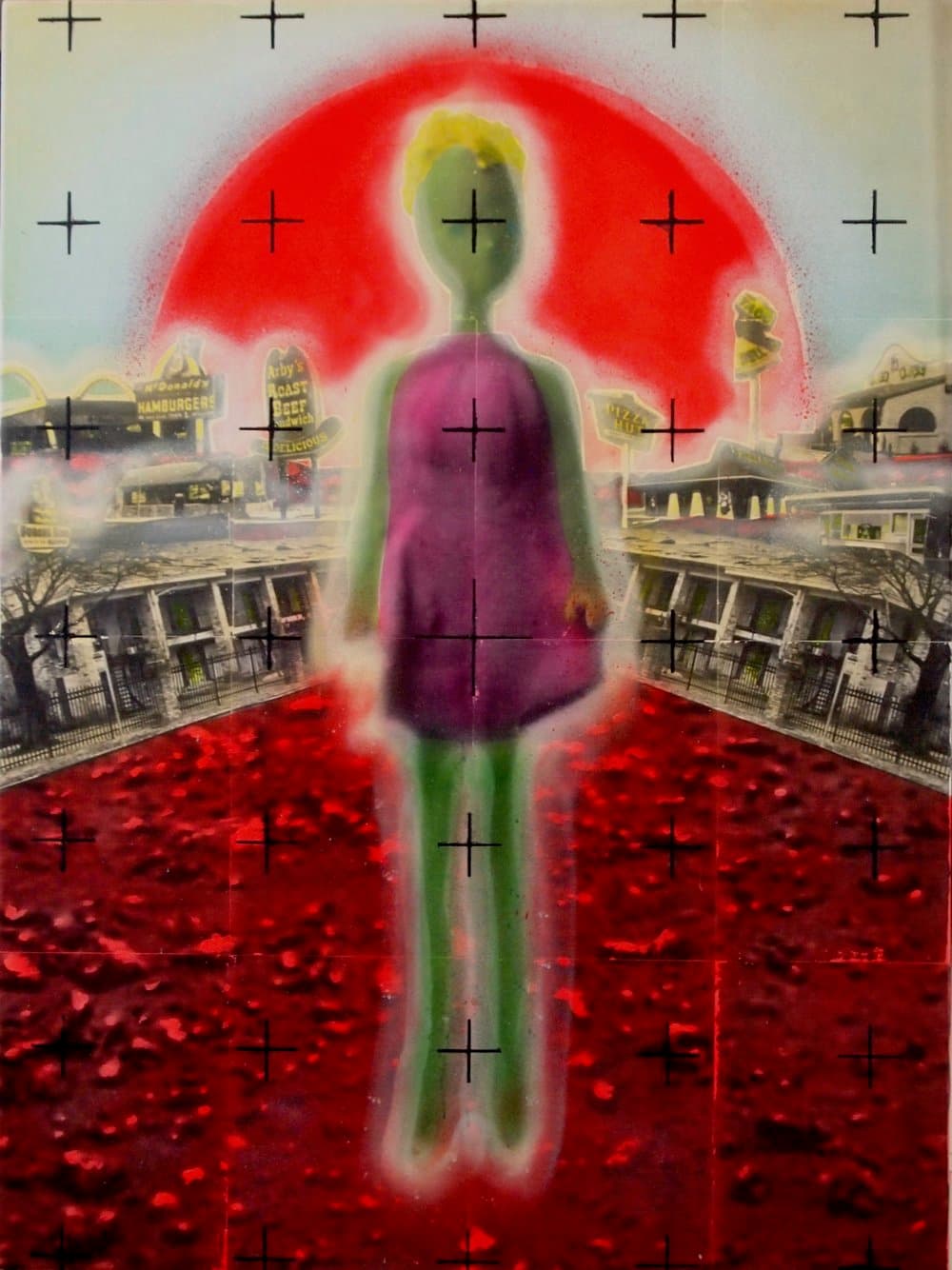
Stephanie Todhunter, Nell + Stranger Danger (2017) Image courtesy of the artist and Abigail Ogilvy Gallery
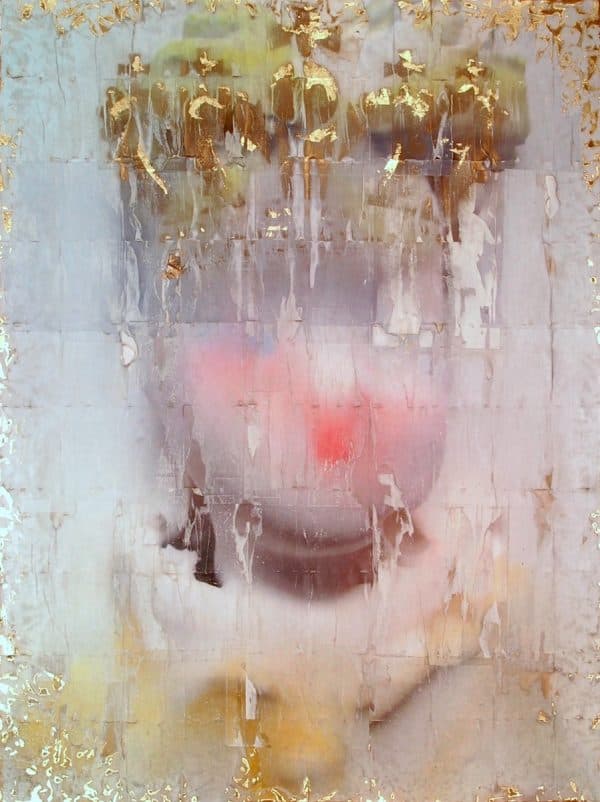
The final series of girls are three photographic portraits, two of which have been hazily imprinted onto the backs of broken pieces of glass. These point to the irreconcilable damage caused by an adolescence void of healthy relationships with one’s surroundings. The glass is strategically broken on the girls’ eyes, rendering them affectless, perhaps a sign of disfiguration after the trials of growing up relatively alone. Todhunter moves seamlessly between past and present, presenting them together to suggest the recurrence and proliferation of the “lost girls” in an age of technological dysphoria. Todhunter demonstrates how easy it is for today’s technological world to reshape, rename, reconstitute and disedify our own “lost girls.”
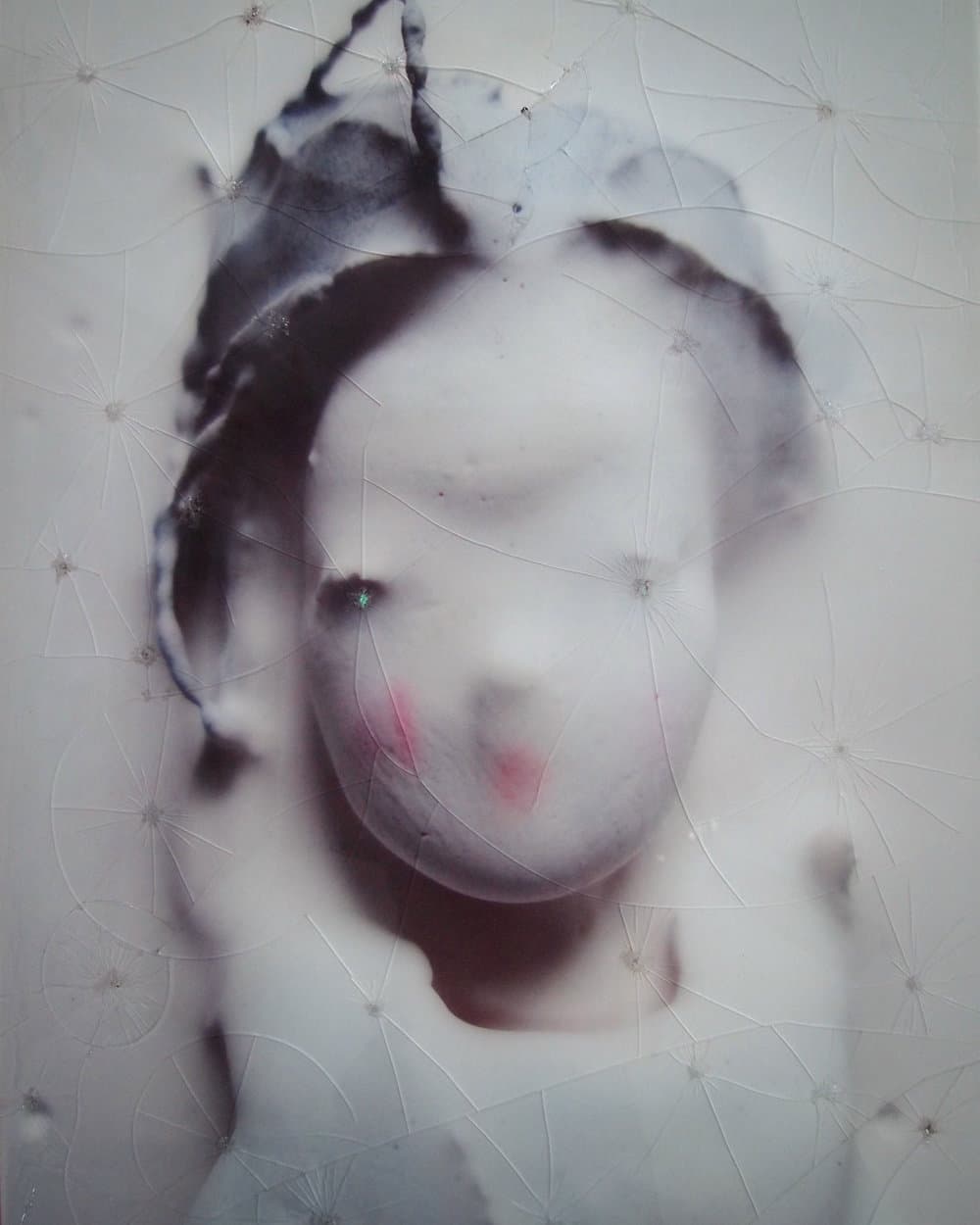
Stephanie Todhunter, Marnie, Glass Chrysanthemum (2016) Image courtesy of the artist and Abigail Ogilvy Gallery
“Stranger Danger” is on view through February 28th at Abigail Ogilvy Gallery.