Summer has somehow acquired a reputation for relaxation that I’m finding increasingly incongruent with 24/7 news cycles and city, state, and federal policy calendars. While the spirit is ever willing to serve at the pleasure of the arts constituency, the flesh is nevertheless weak. So, I took some time to recharge before the fall arts calendar kicks off with the full force of air-kissing through the flu season. We didn’t have time for a full column, so, in an effort to maintain our expected cadence, we are largely skipping the usual intro essay this week and cutting straight to the news roundup.
Though school is only barely back in session, last week was full of movement. From an arts policy perspective, the state of the arts in the US, much like democracy, appears to be continuing its backward slide. Massachusetts is part of the overall trend, with hometown football oligarch Robert Kraft leading an organized effort to block rapper Macklemore from performing after he made pro-Palestinian statements onstage while opening for Ed Sheeran. Several acts have stepped down from Ed Sheeran’s tour in solidarity with Macklemore and Palestine. It brings to mind the 2023 campaign by a high-profile collector who organized an attack against artists and gallerists after they signed an open letter, published in Artforum, expressing solidarity with Palestinians and supporting a ceasefire. A week after the letter was published, Artforum editor in chief David Velasco was fired by Penske Media Corporation. In many respects, Velasco’s firing and the subsequent calls to boycott the magazine marked a reputational turning point for the art industry’s signature trade publication—a reputation it continues to try to rebuild.
The Boston Globe’s Adrian Walker highlights a common thread between the censorship of Macklemore and the threats to the Kennedy Center: the Krafts. Kraft’s wife, Dr. Dana Blumberg, was appointed to the Kennedy Center’s board by Trump in February 2025. “Her only apparent qualification for service—other than a willingness to follow even the most disgusting orders—is being married to Trump’s buddy, Kraft,” Walker wrote.
Internationally, however, some stories offer inspirational models for arts policy and what the sector could do. The Scottish government confirmed plans to pilot a basic income for artists by 2031, and President Emmanuel Macron called for a “new multilateralism” across creative industries in an op-ed that highlights the role of images and culture in shaping the fabric of life, markets, and international relations. As part of this call, France and South Korea have pledged more than $1 billion to support the global screen industries from 2027 to 2031.
Without further ado, let’s jump in.
Local Headlines
[Greater] Boston’s Robert Kraft Censors Art at Gillette Stadium
Greater Boston (fine, Brookline) resident billionaire Robert Kraft leads the scoreboard this week in the orchestrated silencing of artists. Macklemore has accused the Patriots and Gillette Stadium owner of being behind the decision to drop him from Ed Sheeran’s tour after he expressed support for Palestine during a recent concert in New Jersey. Sheeran alleges that Kraft secured support from other NFL stadium owners to boot Macklemore from their venues as well. Kraft confirmed this in his own statement.
In response to Macklemore’s announcement and a cascade of other artists dropping out of the tour in solidarity, Representative Alexandria Ocasio-Cortez weighed in, identifying the broader problem as the structural and systemic ways in which the arts and entertainment industries are disproportionately controlled by a small group of billionaires with the power to limit freedom of expression. “This is about how just a handful of stadium owners and the elite can prevent an entire, massive issue—in this case, the genocide in Gaza, but it doesn’t stop there. It could be speaking out about AI. It could be speaking out about any issue,” she told TMZ DC.
Boston Preservation Alliance Sounds the Alarm Over Changes to the National Historic Preservation Act
Nonprofit Boston Preservation Alliance is sounding the alarm that the Trump administration’s changes to Section 106 of the National Historic Preservation Act of 1966 would put local sites at risk, including the potential for future demolition. Next, a public comment period will open before the administration’s proposed changes are ruled on.
National Headlines
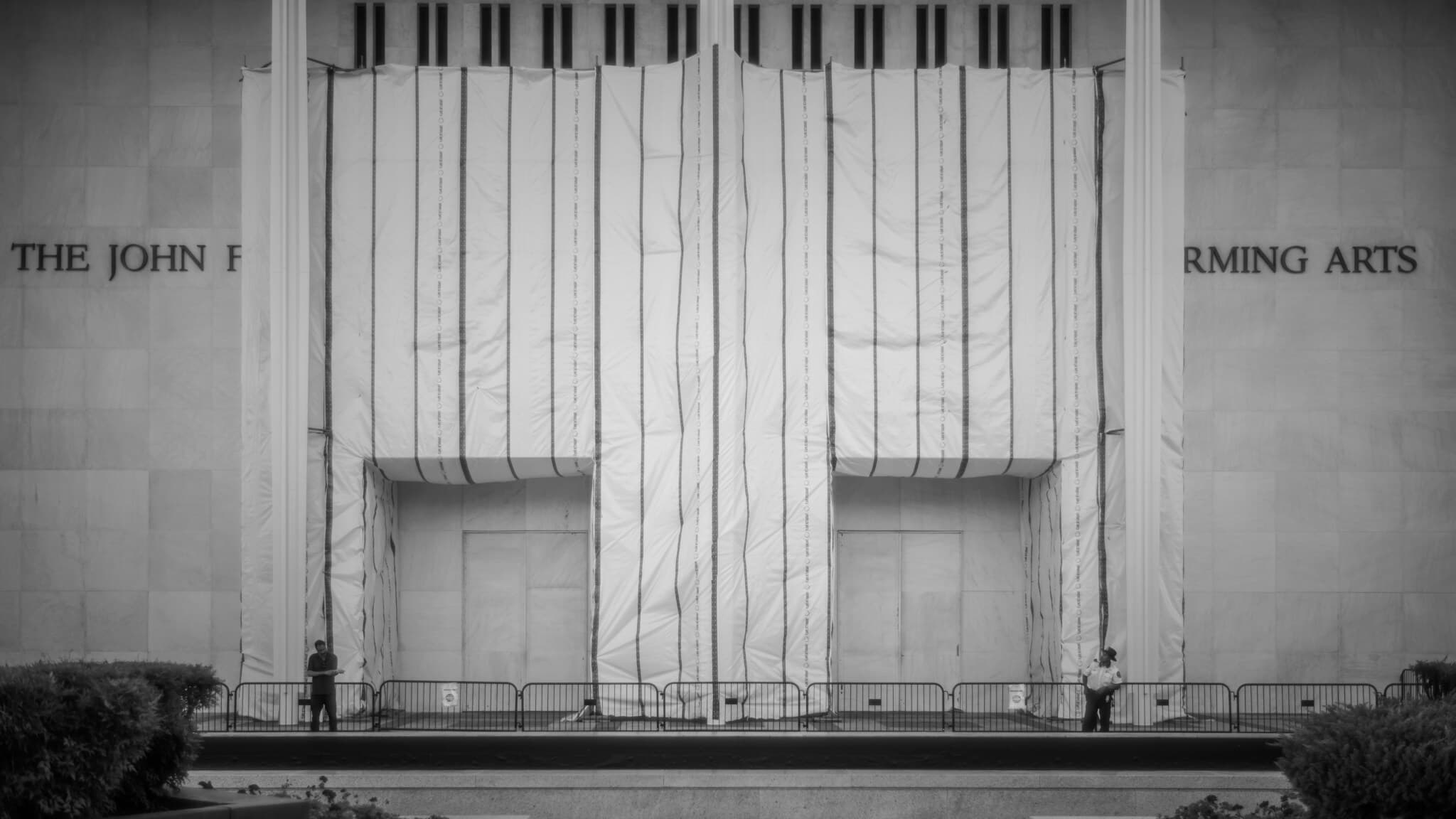
Fighting, Ultimatums, and the Specter of Demolition: The Latest on the Kennedy Center
On Monday, September 14, federal judge Christopher Cooper ruled for a second time that Trump cannot put his name on the Kennedy Center. The ruling marks the latest flashpoint in the battle for control of one of the US’s signature cultural institutions.
In retaliation, Trump said he will cancel a planned renovation of the Kennedy Center unless a higher court reverses the decision. After a section of the ceiling fell due to a recent storm, the board voted to shut down most of the building for two years, citing safety concerns. According to board documents leaked to BAR, the Kennedy Center’s board continues to seek ways to add Trump’s name to the building despite Jude Cooper’s rulings. On Tuesday, September 15, Kennedy Center Executive Director Matt Floca told staff the board had voted to close the center immediately. On Thursday, September 17, Judge Cooper ordered the Trump administration to provide at least thirty days’ notice before taking any steps to demolish the Kennedy Center.
The Atlantic reported that, during a Kennedy Center board meeting, Trump lashed out at Representative Joyce Beatty, who sued him and the Kennedy Center’s board over the attempted renovations in defiance of Judge Cooper’s May ruling, which barred the renaming of the center. With fall weather approaching and the building’s ceiling now compromised, fears persist about the administration’s “mob-like tactics” in the battle over the Kennedy Center. Senator Sheldon Whitehouse is also expanding an investigation into Trump’s alleged mismanagement of federal funding at the Kennedy Center “to the detriment of the building.” The pall over the whole struggle is whether Trump might just East Wing it and order the building demolished before anyone can stop it. On September 16, Trump was photographed on Air Force One looking at a document that said “Kennedy Center Demolished,” lending additional credence to the fear.
This comes after the removal of Joel Shapiro’s Blue sculpture from the Kennedy Center and its subsequent purchase by David Rubenstein. The sculpture had been on the Kennedy Center’s grounds overlooking the Potomac River since 2019. Rubenstein plans to display it at the National Gallery of Art’s Sculpture Garden.
Is This the Turning Point for the Smithsonian?
Lonnie G. Bunch III, the Smithsonian Institution’s secretary, announced that he is stepping down after seven years of leading the institution, where he spent nearly forty years of his career. Bunch has faced months of mounting pressure from the Trump administration, including the release of a 160-page report accusing the institution of “extreme political activism.”
The Smithsonian’s unusual governance structure (it is overseen by a board that includes the vice president) effectively gives the Trump administration the ability to choose Bunch’s successor and to reshape the institution. The move would follow Heritage Foundation’s Mike Gonzalez’s recommendations in his testimony at a July congressional hearing: “You do need to clean out house at the Smithsonian. You have to replace the leadership.”
As the Smithsonian leadership prepares for the transition, Trump has called for the removal of Infinity, a modernist sculpture by José de Rivera that has stood outside the National Museum of American History. He is demanding that the sculpture be replaced with a “Colossus statue” of George Washington.
Museums Moving Forward Finds “Bad Management” Top Driver of Talent Exodus from Art Museums
Museums Moving Forward’s 2026 survey of nearly 700 former art museum workers found that “poor management” was the top reason workers left the field. According to the survey, workers are finding better conditions outside of art museums: “73% have more flexibility, 64% are earning more money, and 55% have more opportunities for advancement,” while “fewer than a quarter” said they would “unequivocally return to work in the sector.”
Will Alicia Keys, Swizz Beatz, and Bonhams Finally Deliver Royalties for US Artists?
Music-making and art-collecting couple Alicia Keys and Kasseem “Swizz Beatz” Dean have announced a new initiative with auction house Bonhams. The (voluntary) program will allow consignors to pay artists royalties for their work when it sells on the secondary market. Visual artists in the US have been notoriously excluded from royalties when their work sells at auction. Droit de suite (the artist’s resale right) is standard in more than ninety countries and in other arts sectors, such as the music recording industry, where Keys and Dean made their fortunes. In a statement to the Art Newspaper, Seth Johnson, chief executive of Bonhams, said, “Artists have told us directly that this is the direction they’ve been asking the market to take for a long time.” Under the program, participants can opt in to pay artists a minimum of $500 from the consignor or 1 percent of the hammer price, whichever is greater. Bonhams will match the percentage of the contribution. While this is a promising start, the proposed royalties paid to artists are minimal compared with the auction house’s sales fees. The initiative comes shortly after Bonhams announced new buyer’s fees. The auction house now charges 30 percent on sales up to £25,000 (around $33,000); the fee drops to 14 percent on sales over £5 million (around $6.7 million).
Trust in Museums Grows Across Party Lines
The American Alliance of Museums has launched a data story on its 2025 survey of museum-goers. The study found that trust in museums is growing across party lines.
International Headlines
French President Emmanuel Macron Calls for a “New Multilateralism” Across Creative Industries
On the eve of the Lumière Summit, French President Emmanuel Macron published an op-ed in Variety that considers the role of moving images in contemporary life. Arguing that we have never been so saturated with images—yet have never paid so little attention to them—Macron identified the need for new multilateral frameworks to support culture in the digital age.
“We built a civilization of images. We should not resign ourselves to watching it deteriorate. The same screens that have become part of the problem can also carry the solution: greater access, greater choice, new forms of creation, new encounters between cultures,” Macron wrote.
During the summit, Macron and South Korean President Lee Jae Myung pledged more than $1 billion to support “the global screen industries” from 2027 to 2031. According to Lee, South Korea would take the lead “in producing content which resonates with humanity and transcends borders and language barriers.”
Scottish Government Confirms Universal Basic Income Pilot Program for Artists
Scottish First Minister John Swinney announced a plan to add £100 million (around $133 million) to the culture budget by 2028/2029 and to pilot a £15,000-per-year (around $20,000) basic income scheme for artists by 2031, inspired by a similar program in Ireland. The plan is part of a broader strategy to position Scotland as “the most attractive place in the UK for inward investment outside of London and the South East.”
Kremlin “Ends” Germany’s Cultural Presence in Russia
Russian Foreign Minister Sergey Lavrov ordered the closure of Germany’s Goethe-Institut cultural centers in three Russian cities after Germany blamed Russia for an attempted drone attack at the Leipzig/Halle Airport. Germany has also closed a Russian consulate general in Bonn and a cultural center in Berlin. Russia’s first Goethe-Institut opened in Moscow in 1992.
Calls to Action
Boston City Hall Sessions
The Mayor’s Office of Arts and Culture (MOAC) is hosting City Hall Sessions, an art and music gathering, on September 24. MOAC is advertising the event as a way to get to know Boston’s creative workforce, meet potential collaborators, and get support from the City. More information can be found here.
September Is Spooky Season for Overstuffed and After-Hours Arts Calendars. “Celebrate” by Sharing Your Art Labor Horror Stories
Arts service organization Fractured Atlas has an open call for art worker horror stories. Get in on the mutual schadenfreude here.
Help Build Understanding with the Arts Service Organization Survey
ADC Consulting is working on a survey of arts service organizations operating in the US. Help the team by contributing your experiences here.