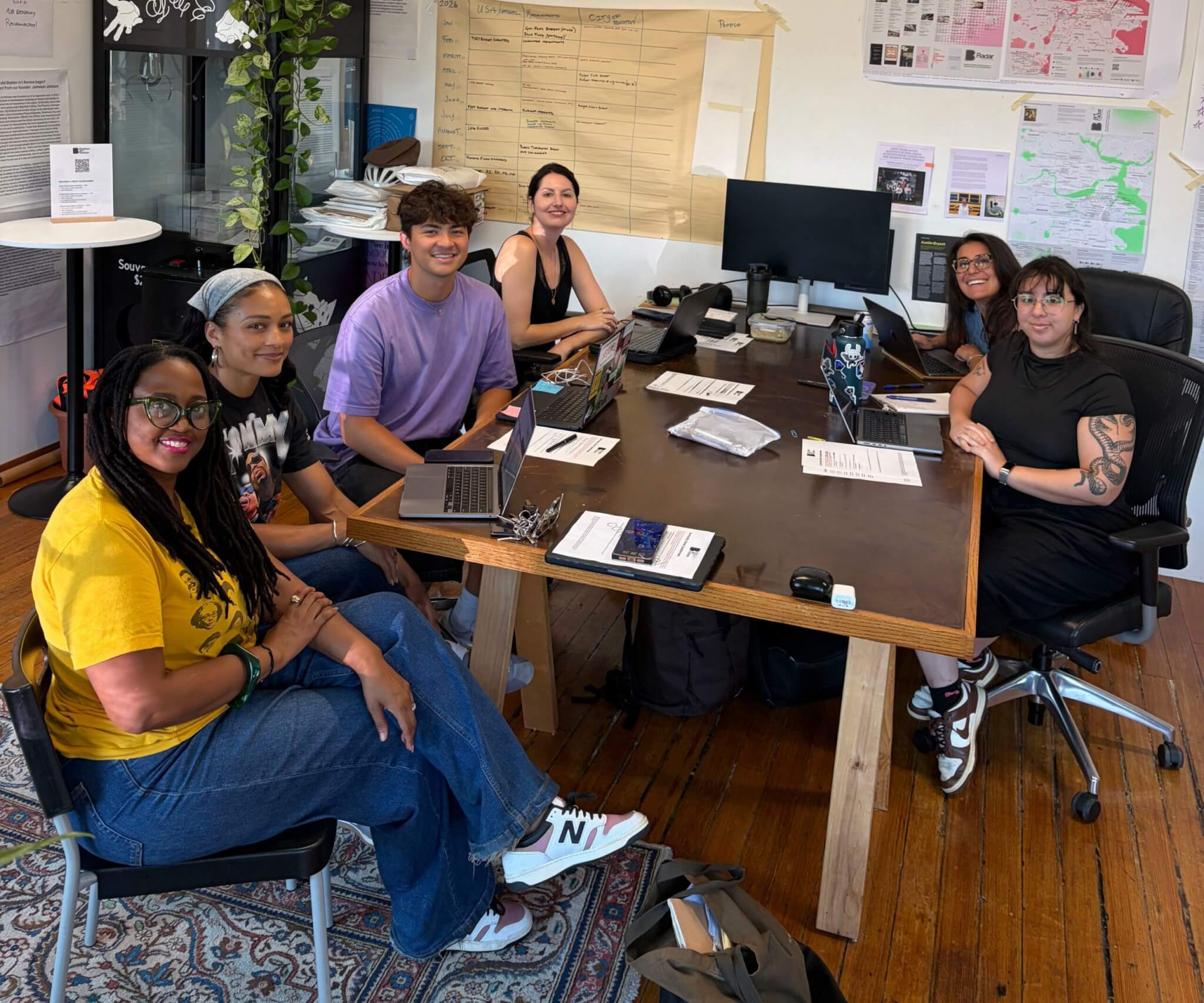
The singular large table inside our office functions a lot like the kitchen table of a busy home. We co-work around it, eat lunch, package shipments, spread out proofs, and even hold our board meetings there. A few weeks ago, we were crowded around it for a brainstorming meeting for our Un-monument editorial project. Though not a particularly unique meeting, I looked around and realized we really need a bigger table. Boston Art Review started as a living room project that migrated across coffee shops. When we landed our office at the Boston Center for the Arts over five years ago and inherited this table from the previous tenant, artist Jim Cambronne, I never imagined we would one day outgrow a table with room for eight.
That feeling of growing into something, and occasionally outgrowing things along the way, has come up a lot this summer. The Civic Culture Desk has taken Kim Córdova’s reporting from Boston to DC, Montreal, and Boulder. Just last week, we released the fourth edition of the Boston Art Radar map, now documenting more than 200 cultural spaces across Greater Boston. Earlier this week, we sent our largest Weekly Happenings email to date. And this November, we’ll co-present the Boston Art Book Fair, our largest event partnership yet.
In July, I joined colleagues from peer publications at a convening hosted by Momus in Montreal. We talked a lot about the bigger changes happening across our field and the gaps smaller publications like ours are being asked to fill as larger publications disappear or shift their cultural coverage. Local publishing is part of the infrastructure that supports the creative work happening around us. We’re documenting what’s happening, developing writers, connecting audiences, and preserving a cultural record all while there are fewer resources available to support that work.
This fall, three longtime BAR team members are stepping into expanded roles. Jessica Shearer joins us as editorial director, Camila Bohan Insaurralde is now our full-time programs & partnerships manager, and Ava Mancing is broadening her role as editorial production manager. We’re also welcoming Tycho Horan into a newly developed operations manager role. On our editorial team, Alisa Prince steps into a senior editorial role and Ramona Ngin and Morgan Ridgway join us as contributing editors. More on all of these exciting new roles below.
For years, growth at BAR has meant finding ways to do more with what we have: commissioning more writers and artists, publishing more ambitious work, and creating new resources for our community. After a few seasons of rapid programmatic growth, we’ve learned that growing sustainably also means investing in the people and infrastructure behind that work. So while there’s no new table yet, we’ve certainly pulled up a few more chairs.
There’s a lot more below about what we’ve been up to and what’s ahead this fall. I hope you’ll read along, come see us in person, and support the work if you can.
NEW TO THE BAR TEAM
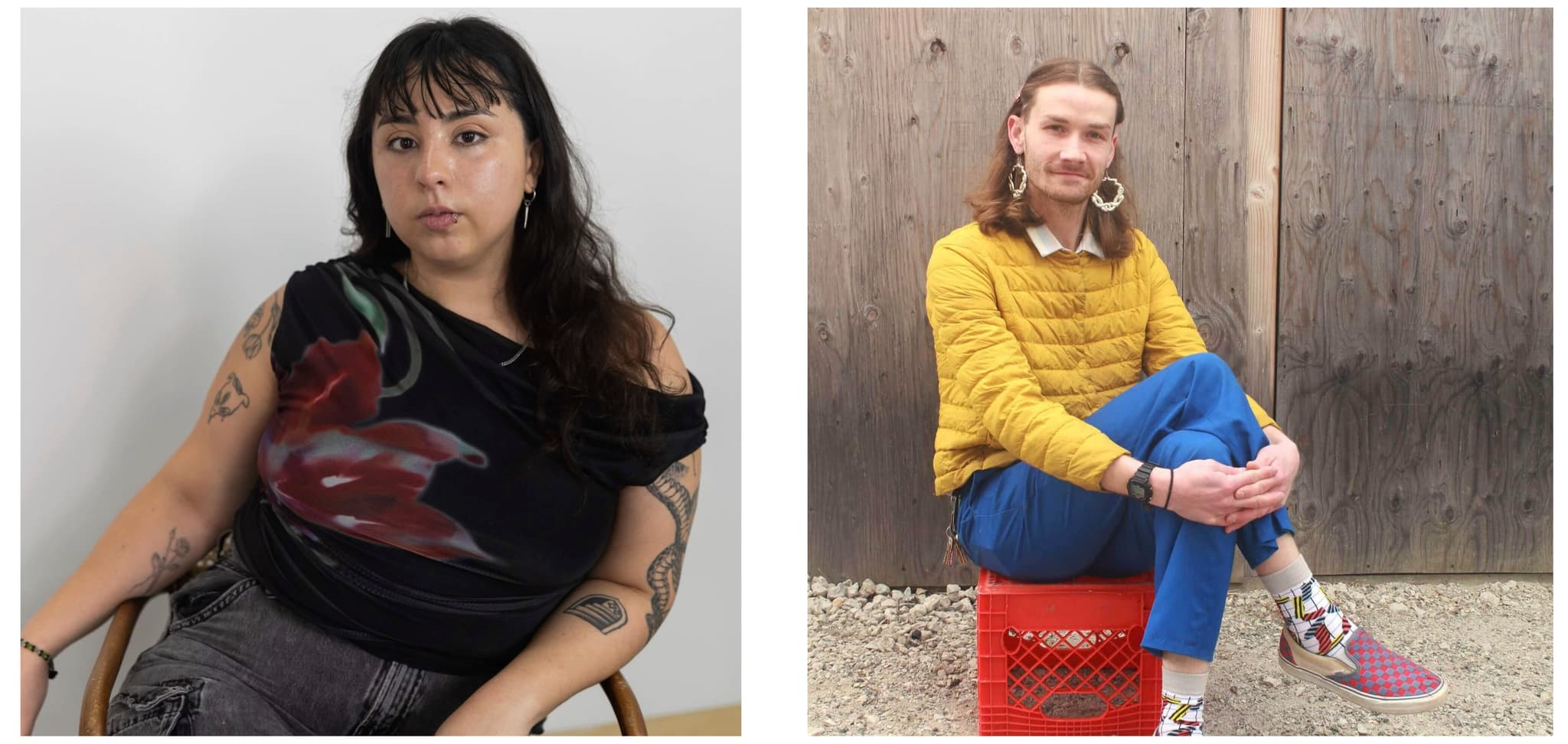
Camila Bohan Insaurralde
Programs & Partnerships Manager
Camila Bohan Insaurralde is a community builder whose work is rooted in collaboration and long-term sustainability for artists and cultural workers. Previously, she served as program coordinator for Tufts University’s Collective Futures Fund, supporting artist-run activity across Greater Boston. Her experience informs her thoughtful approach to program development, outreach, and relationship building. At BAR, she helps shape public programs and partnerships, including the Emerging Art Writing Fellowship, and supports the organization’s growing civic and community initiatives.
Tycho Horan
Operations Manager
Tycho Horan is a designer, printer, publisher, and occasional RISD and SMFA professor. Over the last twelve years, she co-created numerous community arts spaces on unseeded Narragansett land, Providence, RI. Tycho founded the Binch Press / Queer.Archive.Work studio and the Queer & Trans Zinefest, and before that was AS220’s printshop community manager and a lead organizer of the Rhode Island Independent Publishing Expo. As a Virgo, she is a self-described spreadsheet wizard and loves the behind-the-scenes hustle that makes collectivity possible.
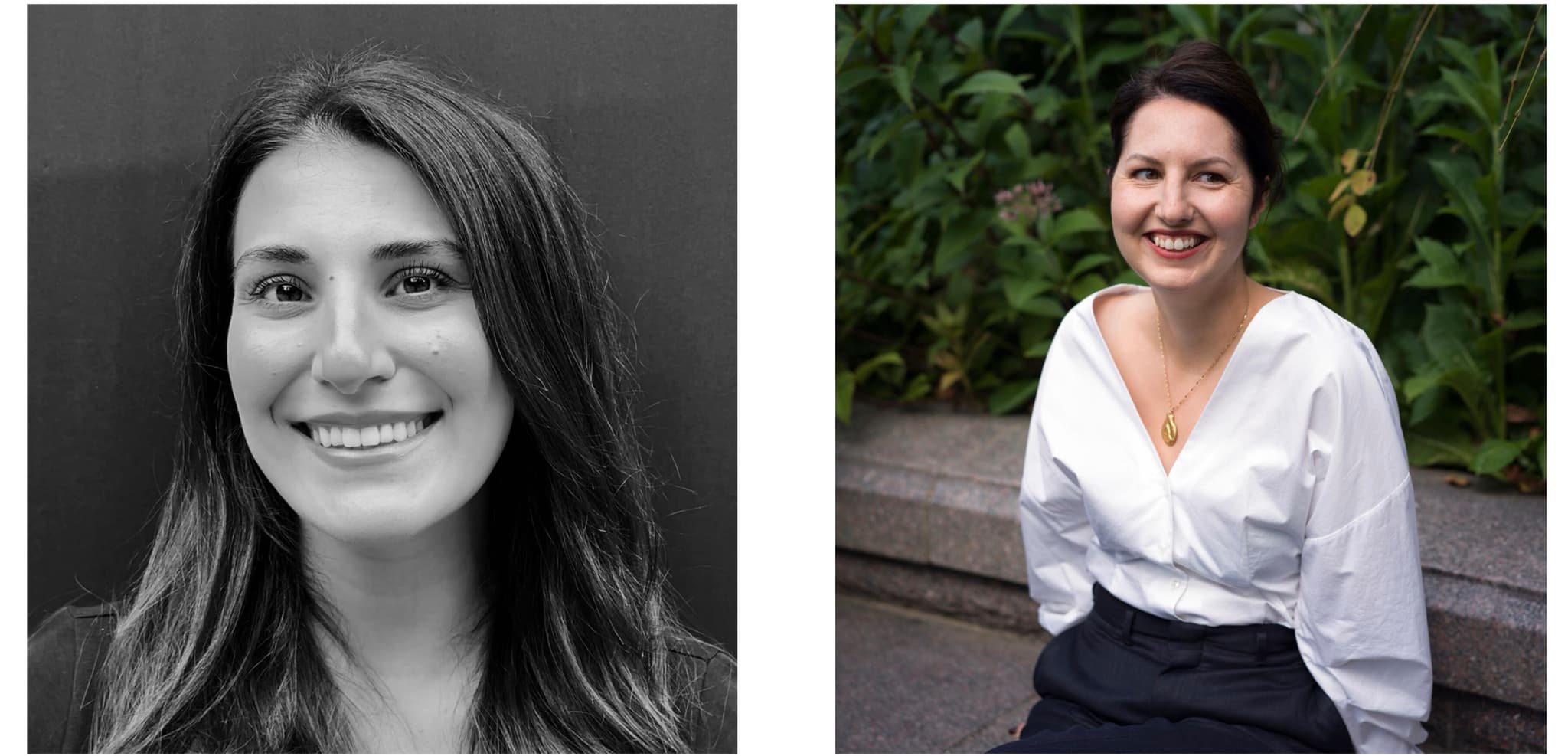
Ava Mancing
Editorial Production Manager
Ava Mancing joined the editorial team in 2024 as a freelance copyeditor. Since then, she’s dug her hands into all things BAR, overseeing the many moving parts of the editorial process, with a particular focus on copyediting, proofreading, image sourcing, and web publication. As the editorial production manager, she will continue to work closely with BAR’s editors, contributors, and designer to shepherd each issue from the early stages of production into its final print form.
Jessica Shearer
Editorial Director
Jessica Shearer has served Boston Art Review as a senior editor for nearly five years, shaping its editorial voice and strengthening its publishing practices. Bringing nearly twenty years of experience in communications and editorial strategy, she steps into the newly created role of editorial director to lead BAR’s editorial and production systems, support and develop writers, deepen audience engagement, and guide the organization’s next stage of growth. Her work will keep BAR’s publishing rigorous, intentional, and artist‑centered.
Ramona Ngin
Contributing Editor
Ramona Ngin is an art worker, writer, and editor based in Providence, RI, and has been a regular contributor to Boston Art Review for several years. She is also an art editor at n+1 and previously served as the curatorial assistant at the MIT List Visual Arts Center. Her writing has appeared in Momus, The Drift, C Magazine, e-flux, and The Amp. Her most recent essay, “Love Letter Incinerators,” is about Martin Wong’s prison paintings.
Alisa Prince
Senior Editor
Alisa Prince, PhD, has been a contributing editor at Boston Art Review since 2024. An art historian, her work focuses on modern and contemporary Black art and visual culture, photography, Black feminist traditions, and archival theory. Her research has been supported by ArtTable, the Henry Luce Foundation and the American Council of Learned Societies, the Metropolitan Museum of Art, and others. She is also a curatorial assistant for the Mayor’s Office of Arts and Culture.
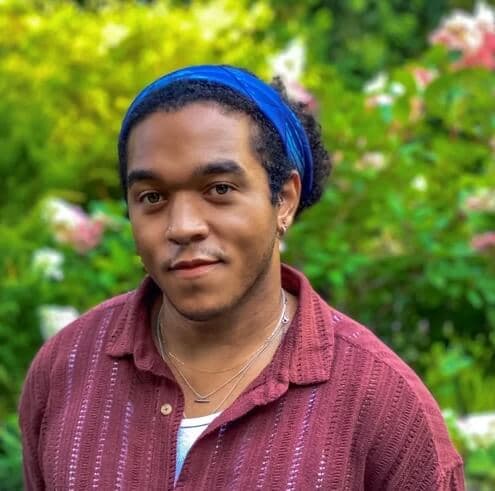
Morgan Ridgway
Contributing Editor
Morgan is a Cambridge-based writer, editor, and researcher whose work spans publishing, public history, higher education, and nonprofit organizations. They hold a PhD in history and a graduate certificate in Native American and Indigenous studies from the University of Illinois Urbana-Champaign, where their research focused on Indigenous gathering practices in twentieth-century Philadelphia. Their writing has appeared in WSQ: Women’s Studies Quarterly, Eunoia Review, Exposition Review, the Journal for the History of Ideas Blog, and NPR-affiliate WHYY’s The Why, among other outlets.